
Synonym for breathe help writers describe respiration, emotional relief, and physical recovery with vivid accuracy in any piece of text.
After running up three flights of stairs, a tired student steps outside into the cool evening air to breathe deeply and rest.
Learning a new synonym for breathe allows you to express physical actions and calm feelings clearly across both formal and casual settings.
Mastering a synonym for breathe improves your descriptive vocabulary, so it benefits students, bloggers, content writers, and daily speakers.
What Does “Breathe” Really Mean?
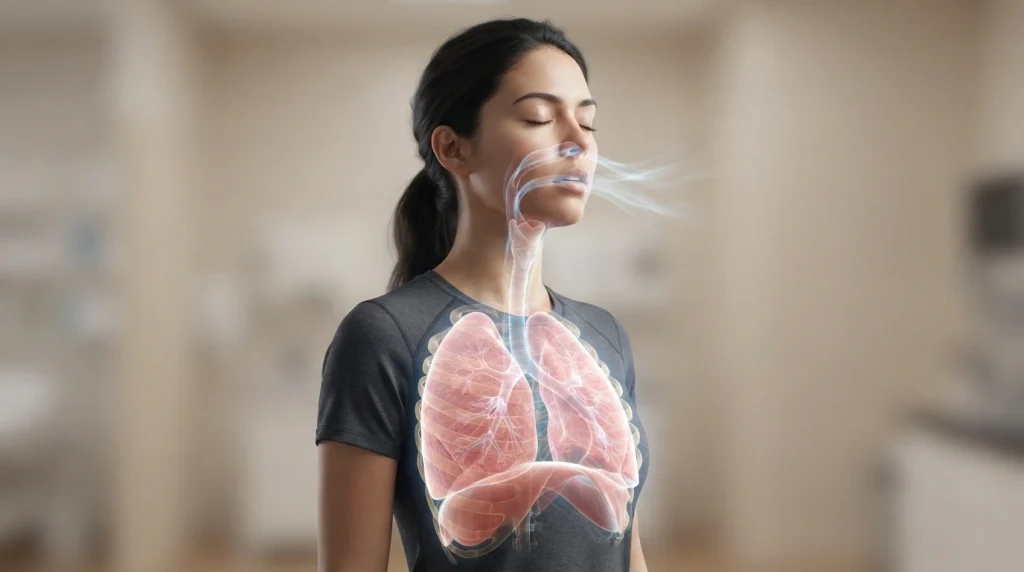
The word “breathe” is a verb that means taking air into the lungs and sending it back out again.
In simple terms, it describes the essential process of respiration that keeps living beings alive every single second.
Native speakers also use it figuratively to mean taking a quick pause, relaxing after stress, or letting air circulate through something.
You will often see this word in medical guides, health blogs, dramatic novels, mindfulness articles, and sports commentary.
Connotative Meaning
Connotation is the emotional feeling or cultural idea that a word carries beyond its direct dictionary definition.
- Positive tone: Represents relief, fresh life, peaceful mindfulness, deep relaxation, and emotional recovery after hard stress.
- Negative tone: Highlights breathing difficulties, choking, gasping for air, panic attacks, or overwhelming physical exhaustion.
- Neutral tone: Describes the basic biological function of moving air in and out of the lungs without added emotion.
Etymology
The verb “breathe” comes from the Old English noun brǣþ, which originally meant vapor, heat, exhalation, or odor.
In Old English (450–1100), people used the root word to talk about smells, steam, and warm exhalations from the body.
During Middle English (1100–1500), the term changed into brethen, meaning to emit an odor or blow air gently.
In Modern English (1500–Present), it became the standard verb “breathe” to describe human biological respiration and figurative pauses.
Pronunciation (US & UK – IPA)
- US: /briːð/
- UK: /briːð/
Syllables
- Syllable Breakdown: breathe (1 syllable)
- Affixation Pattern: Root Word
- Root: breathe
- Prefix: None
- Suffix: None
Synonyms List
Inhale (Verb) — US: /ɪnˈheɪl/ | UK: /ɪnˈheɪl/
- Meaning: To draw air, gas, or smoke into the lungs through the nose or mouth.
- Tone/Register: Formal, Medical, Technical
- Example 1: The doctor asked the patient to inhale deeply through her nose.
- Example 2: Yoga instructors often instruct students to inhale slowly before moving.
Exhale (Verb) — US: /eksˈheɪl/ | UK: /eksˈheɪl/
- Meaning: To breathe air or steam out of the lungs through the mouth or nose.
- Tone/Register: Formal, Health, Scientific
- Example 1: She closed her eyes and exhaled a long breath to release her anxiety.
- Example 2: Cold weather made him exhale visible clouds of white steam into the morning.
Respire (Verb) — US: /rɪˈspaɪər/ | UK: /rɪˈspaɪə/
- Meaning: To carry out the biological act of breathing or cell energy exchange.
- Tone/Register: Scientific, Academic, Biology
- Example 1: All living organisms must respire to maintain cellular energy production.
- Example 2: Plant leaves respire continuously throughout the warm summer months.
Gasp (Verb/Noun) — US: /ɡæsp/ | UK: /ɡɑːsp/
- Meaning: To catch breath suddenly with an open mouth due to shock, pain, or exertion.
- Tone/Register: Dramatic, Emotional, Visual
- Example 1: The diver surfaced from the cold lake and gasped for fresh air.
- Example 2: Everyone in the audience gasped when the surprising news was shared.
Pant (Verb/Noun) — US: /pænt/ | UK: /pænt/
- Meaning: To take short, quick, and heavy breaths after strenuous physical exercise.
- Tone/Register: Informal, Descriptive, Active
- Example 1: The dog sat on the grass and panted happily after running around.
- Example 2: Runners panted heavily at the finish line after completing the race.
Puff (Verb/Noun) — US: /pʌf/ | UK: /pʌf/
- Meaning: To breathe rapidly and noisily during or right after hard physical activity.
- Tone/Register: Casual, Visual, Relatable
- Example 1: He was puffing by the time he reached the top of the steep hill.
- Example 2: The old steam engine puffed clouds of dark smoke into the sky.
Wheeze (Verb/Noun) — US: /wiːz/ | UK: /wiːz/
- Meaning: To breathe with a whistling or rattling sound because of chest tightness.
- Tone/Register: Medical, Distressing, Physical
- Example 1: The child began to wheeze after running through the pollen-filled field.
- Example 2: His heavy chest cold caused him to wheeze during the cold night.
Sigh (Verb/Noun) — US: /saɪ/ | UK: /saɪ/
- Meaning: To let out a long, audible breath expressing sadness, relief, or exhaustion.
- Tone/Register: Emotional, Literary, Relatable
- Example 1: She sighed with immense relief when she heard the good medical news.
- Example 2: He sat down at his computer desk and sighed over the piles of work.
Snort (Verb/Noun) — US: /snɔːrt/ | UK: /snɔːt/
- Meaning: To force air noisily through the nose to express disagreement or humor.
- Tone/Register: Informal, Expressive, Casual
- Example 1: The horse snorted loudly as it trotted across the muddy field.
- Example 2: She snorted with laughter at her brother’s funny joke during dinner.
Huff (Verb/Noun) — US: /hʌf/ | UK: /hʌf/
- Meaning: To blow air out noisily to signal annoyance, anger, or heavy effort.
- Tone/Register: Conversational, Expressive, Informal
- Example 1: The tired teenager huffed before picking up his heavy backpack.
- Example 2: She huffed and walked away after losing the card game.
Draw breath (Verb Phrase) — US: /drɔː breθ/ | UK: /drɔː breθ/
- Meaning: To take air into the lungs or take a moment to pause during speech.
- Tone/Register: Formal, Literary, Expressive
- Example 1: The speaker paused to draw breath before starting the second section.
- Example 2: He hardly had time to draw breath between his busy work meetings.
Catch one’s breath (Verb Phrase) — US: /kætʃ wʌnz breθ/ | UK: /kætʃ wʌnz breθ/
- Meaning: To rest briefly until normal breathing returns after hard effort.
- Tone/Register: Common, Idiomatic, Daily
- Example 1: Let us stop on this bench for five minutes to catch our breath.
- Example 2: She paused on the trail stairs to catch her breath before climbing.
Take a breath (Verb Phrase) — US: /teɪk ə breθ/ | UK: /teɪk ə breθ/
- Meaning: To inhale once slowly to regain emotional calm or composure.
- Tone/Register: Friendly, Supportive, Conversational
- Example 1: Just take a breath and tell me what happened at school today.
- Example 2: He took a deep breath before stepping onto the stage to sing.
Blow (Verb) — US: /bloʊ/ | UK: /bləʊ/
- Meaning: To send out a strong current of air from the mouth or lungs.
- Tone/Register: Simple, Everyday, Direct
- Example 1: The child blew out all seven birthday candles on the cake.
- Example 2: Cold autumn winds blew strongly through the quiet park trees.
Aerate (Verb) — US: /ˈeə.reɪt/ | UK: /ˈeə.reɪt/
- Meaning: To expose a liquid or substance to circulating air or gas.
- Tone/Register: Technical, Culinary, Scientific
- Example 1: You should aerate the soil in your garden to help plants grow.
- Example 2: The waiter used a glass carafe to aerate the red wine before serving.
Ventilate (Verb) — US: /ˈven.tɪ.leɪt/ | UK: /ˈven.tɪ.leɪt/
- Meaning: To cause fresh air to enter and circulate through a room or space.
- Tone/Register: Formal, Architectural, Health
- Example 1: Open the kitchen windows wide to ventilate the room while cooking.
- Example 2: Modern office buildings require proper systems to ventilate indoor spaces.
Oxygenate (Verb) — US: /ˈɑːk.sɪ.dʒə.neɪt/ | UK: /ˈɒk.sɪ.dʒə.neɪt/
- Meaning: To supply, treat, or enrich a substance or bloodstream with oxygen.
- Tone/Register: Scientific, Medical, Highly Formal
- Example 1: Regular aerobic exercise helps oxygenate your blood and organs effectively.
- Example 2: Water plants help oxygenate the garden pond for healthy fish.
Gulp (Verb/Noun) — US: /ɡʌlp/ | UK: /ɡʌlp/
- Meaning: To swallow air or liquid greedily, hurriedly, or in large amounts.
- Tone/Register: Informal, Descriptive, Expressive
- Example 1: He gulped fresh air as soon as he came out of the dusty basement.
- Example 2: She gulped down a big glass of cold water after her workout.

Suckle (Verb) — US: /ˈsʌk.əl/ | UK: /ˈsʌk.əl/
- Meaning: To feed at the breast or take in nourishment through a gentle breathing rhythm.
- Tone/Register: Biological, Traditional, Formal
- Example 1: The mother cat rested while her newborn kittens suckled peacefully.
- Example 2: Calves suckle milk from their mothers during their early growth weeks.
Choke (Verb/Noun) — US: /tʃoʊk/ | UK: /tʃəʊk/
- Meaning: To struggle for air because the windpipe is blocked or constricted.
- Tone/Register: Urgent, Medical, Dramatic
- Example 1: The smoke was so thick that he began to choke and cough.
- Example 2: Be careful with small toys so young children do not choke on them.
Suffocate (Verb) — US: /ˈsʌf.ə.keɪt/ | UK: /ˈsʌf.ə.keɪt/
- Meaning: To die or suffer from being completely deprived of oxygen air.
- Tone/Register: Severe, Legal, Medical
- Example 1: Never leave pets in closed cars where they might suffocate in summer.
- Example 2: Heavy indoor dust made her feel like she was starting to suffocate.
Smother (Verb) — US: /ˈsmʌð.ɚ/ | UK: /ˈsmʌð.ər/
- Meaning: To kill or overpower something by cutting off its airflow completely.
- Tone/Register: Serious, Dramatic, Physical
- Example 1: Firefighters used a thick blanket to smother the small flames.
- Example 2: Heavy wool blankets seemed to smother him under their extreme heat.
Strangle (Verb) — US: /ˈstræŋ.ɡəl/ | UK: /ˈstræŋ.ɡəl/
- Meaning: To squeeze the neck tightly to prevent breathing and cut off oxygen.
- Tone/Register: Legal, Severe, Violent
- Example 1: The tight necktie felt like it was starting to strangle him at work.
- Example 2: Thick invasive vines can strangle young trees in dense forests.
Snort out (Verb Phrase) — US: /snɔːrt aʊt/ | UK: /snɔːt aʊt/
- Meaning: To expel air or breath suddenly through the nose with force.
- Tone/Register: Informal, Visual, Action
- Example 1: The angry bull snorted out warm steam on the chilly morning.
- Example 2: He snorted out a laugh when his friend told a ridiculous joke.
Sniff (Verb/Noun) — US: /snɪf/ | UK: /snɪf/
- Meaning: To draw air in through the nose quickly and audibly to smell something.
- Tone/Register: Daily, Conversational, Sensory
- Example 1: The curious puppy sniffed around the new leather shoes near the door.
- Example 2: She sniffed the fresh red flowers to enjoy their sweet garden scent.
Ingest (Verb) — US: /ɪnˈdʒest/ | UK: /ɪnˈdʒest/
- Meaning: To take a substance into the body by swallowing or absorbing it.
- Tone/Register: Scientific, Academic, Formal
- Example 1: Humans can ingest airborne dust particles if they do not wear protective masks.
- Example 2: Medical guidelines warn patients not to ingest chemical cleaning products.
Transpire (Verb) — US: /trænˈspaɪər/ | UK: /trænˈspaɪə/
- Meaning: To pass off vapor through the pores of skin or plant surfaces.
- Tone/Register: Scientific, Botanical, Highly Formal
- Example 1: Leaves transpire moisture into the atmosphere during hot, sunny days.
- Example 2: The skin transpires sweat to cool down the body naturally after exercise.
Reanimate (Verb) — US: /riːˈæn.ə.meɪt/ | UK: /riːˈæn.ɪ.meɪt/
- Meaning: To bring something back to life or restore breathing and consciousness.
- Tone/Register: Dramatic, Literary, Scientific
- Example 1: Paramedics worked quickly to reanimate the unconscious swimmer on the beach.
- Example 2: Fresh morning air seemed to reanimate her tired spirits completely.
Revive (Verb) — US: /rɪˈvaɪv/ | UK: /rɪˈvaɪv/
- Meaning: To restore life, health, strength, or normal breathing after unconsciousness.
- Tone/Register: Formal, Medical, General
- Example 1: Cold water helped revive the runner who fainted from extreme heat.
- Example 2: A hot cup of tea revived his energy after a long workday.
Resuscitate (Verb) — US: /rɪˈsʌs.ə.teɪt/ | UK: /rɪˈsʌs.ɪ.teɪt/
- Meaning: To revive someone from unconsciousness or apparent death using CPR techniques.
- Tone/Register: Medical, High Formal, Technical
- Example 1: Emergency responders tried to resuscitate the victim immediately at the scene.
- Example 2: The medical staff successfully resuscitated the patient in the room.
Rest (Verb/Noun) — US: /rest/ | UK: /rest/
- Meaning: To cease work or movement to relax and recover energy.
- Tone/Register: Daily, General, Common
- Example 1: You should rest for a few minutes after working out in the sun.
- Example 2: He sat on the bench to rest his legs and catch his breath.
Pause (Verb/Noun) — US: /pɔːz/ | UK: /pɔːz/
- Meaning: To stop briefly in an action before continuing again.
- Tone/Register: Neutral, Everyday, Professional
- Example 1: The teacher paused to let students finish taking their notes.
- Example 2: She paused for a breath before answering the tough job question.
Relax (Verb) — US: /rɪˈlæks/ | UK: /rɪˈlæks/
- Meaning: To become less tense, anxious, or rigid in body or mind.
- Tone/Register: Friendly, Everyday, Supportive
- Example 1: Try to relax your shoulder muscles while taking deep breaths.
- Example 2: Listening to calm music helps her relax after a busy schedule.
Unwind (Verb) — US: /ˌʌnˈwaɪnd/ | UK: /ˌʌnˈwaɪnd/
- Meaning: To release mental tension and relax after hard work or stress.
- Tone/Register: Casual, Conversational, Modern
- Example 1: Reading a good novel helps him unwind before going to sleep.
- Example 2: They went for a quiet walk along the beach to unwind after exams.

Whisper (Verb/Noun) — US: /ˈwɪs.pɚ/ | UK: /ˈwɪs.pər/
- Meaning: To speak very softly using breath rather than the vocal cords.
- Tone/Register: Quiet, Intimate, Descriptive
- Example 1: She leaned closer to whisper a secret in her best friend’s ear.
- Example 2: Wind began to whisper through the tall pine trees in the forest.
Exhale out (Verb Phrase) — US: /eksˈheɪl aʊt/ | UK: /eksˈheɪl aʊt/
- Meaning: To push air or breath completely out of the chest.
- Tone/Register: Casual, Health, Fitness
- Example 1: Exhale out all the stale air before starting the next yoga pose.
- Example 2: He exhaled a cloud of steam into the chilly winter morning air.
Draw in (Verb Phrase) — US: /drɔː ɪn/ | UK: /drɔː ɪn/
- Meaning: To pull air, breath, or vapor deep into the lungs.
- Tone/Register: Descriptive, General, Visual
- Example 1: She drew in a deep breath of clean ocean air on the beach.
- Example 2: Draw in air slowly to help calm your racing heart rate down.
Blow out (Verb Phrase) — US: /bloʊ aʊt/ | UK: /bləʊ aʊt/
- Meaning: To send out air forcefully to extinguish or move something.
- Tone/Register: Everyday, Action, Simple
- Example 1: Make sure to blow out the candle before you leave the bedroom.
- Example 2: He blew out a quick puff of breath to dust off the old book cover.
Soft-breathe (Verb) — US: /sɑːft briːð/ | UK: /sɒft briːð/
- Meaning: To breathe very gently and quietly without making noise.
- Tone/Register: Literary, Rare, Poetic
- Example 1: The sleeping baby soft-breathed in her crib throughout the quiet night.
- Example 2: She sat in quiet meditation and soft-breathed to maintain total inner calm.
Hyperventilate (Verb) — US: /ˌhaɪ.pɚˈven.t̬ə.leɪt/ | UK: /ˌhaɪ.pəˈven.tɪ.leɪt/
- Meaning: To breathe at an abnormally rapid rate due to extreme anxiety or panic.
- Tone/Register: Medical, Technical, Urgent
- Example 1: Panic caused the nervous patient to hyperventilate during the flight turbulence.
- Example 2: The coach helped the runner calm down so she would not hyperventilate.
Synonyms by Tone
Selecting the correct tone ensures that your writing matches your audience and goals. Consequently, selecting an improper synonym can create confusion or distort your intended emotional meaning.
Positive Tone
- Revive
- Unwind
- Relax
- Reanimate
- Aerate
These terms focus on recovery, mental relief, emotional calm, fresh energy, and healthy restoration.
Neutral Tone
- Inhale
- Exhale
- Respire
- Pause
- Ventilate
These words describe biological respiration and physical airflow objectively without emotional bias.
Negative Tone
- Choke
- Suffocate
- Wheeze
- Gasp
- Hyperventilate
These synonyms emphasize physical suffering, medical danger, lack of oxygen, and intense anxiety.
Playful / Informal Tone
- Pant
- Puff
- Huff
- Snort
- Sniff
These lighthearted choices work well in casual conversations, pet descriptions, and personal blogging.
Mini Comparison
Breathe vs. Inhale vs. Gasp
Understanding these clear distinctions helps writers choose the best term for every scenario.
Breathe refers to the complete, regular cycle of taking air in and pushing air out of the lungs naturally.
Inhale specifies drawing air or gas into the lungs, serving as just one half of the total respiration cycle.
Gasp describes a sudden, desperate attempt to take in air due to shock, fear, or physical exhaustion.
- Meaning Difference: “Breathe” covers the entire respiratory cycle, “inhale” means drawing air in, and “gasp” means catching air suddenly in shock.
- Tone Difference: “Inhale” is formal and technical, “breathe” is neutral and common, while “gasp” is dramatic and emotional.
- When to Use: Use “inhale” in medical instructions, “breathe” for everyday living, and “gasp” for dramatic storytelling scenes.
Context-Based Usage
Daily Conversation
In everyday speech, people prefer simple expressions like take a breath, catch your breath, or relax.
These familiar phrases explain physical effort and relaxation clearly without sounding overly formal or technical.
Writing or Blogging
Bloggers and online content writers use descriptive terms like unwind, sigh, puff, or pant to paint clear pictures.
These words help build personal connections with digital readers by describing real human experiences vividly.
Professional or Academic Tone
Medical guides, science reports, and academic articles rely on precise vocabulary like respire, ventilate, oxygenate, or resuscitate.
These formal terms maintain professional authority while explaining health and atmospheric processes accurately.
Creative or Informal Use
Fiction writers use dramatic words like gasp, wheeze, soft-breathe, or choke to create emotional tension.
These sensory verbs help readers feel the characters’ panic, relief, or exhaustion directly.
Common Mistakes & Native Usage
Common Mistakes Learners Make
- Confusing “breath” and “breathe”: Writing “take a deep breathe” instead of using the noun “breath.”
- Using medical terms casually: Saying “I am hyperventilating” when you are simply slightly out of breath.
- Overusing “breathe”: Repeating “breathe” constantly in descriptive stories reduces its narrative power.
Register Notes
- Spoken English favors phrases like catch your breath, puff, sniff, and pant.
- Written English utilizes formal terms like inhale, exhale, respire, and ventilate.
Developing your knowledge of strong verbs alongside sentence mechanics builds reliable communication skills for all tasks.
Real-Life Mini Scenarios
Workplace
During a high-stakes project presentation, the speaker paused to take a breath before delivering her closing figures.
This simple pause helped her regain composure and deliver an authoritative summary.
Social Situations
After finishing a morning jog through the neighborhood park, two friends sat on a wooden bench to catch their breath.
They enjoyed the fresh morning air while chatting about their upcoming weekend plans.
Media / Pop Culture
In the action movie climax, the hero surfaced from the sinking ship and gasped for air just in time.
The dramatic scene kept audience members on the edge of their seats until the final rescue.
Writing or Storytelling
The tired hiker stood at the top of the mountain peak and inhaled the crisp, fresh pine air deeply.
This sensory detail communicated both physical triumph and natural beauty in a single sentence.
Interactive Practice Quiz
Test your understanding of synonyms, tones, and contexts with these practice questions.
- Which formal medical term means to draw air into the lungs?
A) Exhale
B) Inhale
C) Puff
D) Huff - Identify the dramatic synonym that describes catching air suddenly in shock:
A) Respire
B) Ventilate
C) Gasp
D) Aerate - Which word best describes a dog breathing rapidly with its tongue out after running?
A) Resuscitate
B) Pant
C) Oxygenate
D) Ingest - Select the formal term used to describe opening windows to let fresh air circulate:
A) Wheeze
B) Ventilate
C) Suffocate
D) Choke - Which word suggests letting out a long breath to express relief or sadness?
A) Snort
B) Sigh
C) Gulp
D) Strangle - Choose the scientific word that describes how living cells exchange gases and energy:
A) Respire
B) Puff
C) Unwind
D) Sniff - Which phrase works best when asking a stressed friend to calm down during a conversation?
A) Hyperventilate
B) Take a breath
C) Suffocate
D) Transpire - Select the negative word that means struggling for air due to a blocked throat:
A) Aerate
B) Revive
C) Choke
D) Reanimate - What word best describes breathing with a high-pitched whistling sound during an asthma attack?
A) Wheeze
B) Unwind
C) Inhale
D) Pause - Which word fits best when medical personnel bring an unconscious person back to life? A) Suffocate
B) Resuscitate
C) Huff
D) Snort
Reflection Task: Write one original sentence using the phrase catch one’s breath to describe a situation where you needed a short pause after physical effort.
Answer Key: 1: B | 2: C | 3: B | 4: B | 5: B | 6: A | 7: B | 8: C | 9: A | 10: B
Frequently Asked Questions
What is the most common synonym for breathe in everyday conversation?
The most common casual terms for breathe are take a breath, inhale, or exhale. In daily speech, native speakers frequently use everyday phrases like catch your breath when talking about resting after exercise, or take a deep breath when managing stress.
What is the difference between breath and breathe?
Breath is a noun that refers to the air taken into and let out of the lungs. Breathe is a verb that describes the actual physical action of drawing air in and pushing it out. For example, you take a deep breath (noun) when you breathe (verb).
Is inhale a full synonym for breathe?
No, inhale is only a partial synonym. Inhale refers specifically to drawing air into the lungs, which is just the first half of the breathing cycle. Breathe covers both inhaling air and exhaling it back out.
What is a scientific synonym for breathe?
The primary scientific term for breathe is respire. Biologists and doctors use respire to describe how cells and organisms exchange oxygen and carbon dioxide gases to generate life-sustaining energy.
What word describes breathing with difficulty due to illness?
Words like wheeze, gasp, or hyperventilate describe difficult breathing. Wheeze refers to whistling chest sounds, gasp describes catching air in shock, and hyperventilate means breathing rapidly due to extreme anxiety.
Which synonym for breathe works best for creative relaxation writing?
For relaxation or wellness writing, terms like unwind, draw in, soft-breathe, or exhale out work best. These soft, sensory words evoke peace, mindfulness, and physical relief for readers.
Conclusion
Expanding your vocabulary with a precise synonym for breathe opens up wonderful ways to describe physical health, emotional relief, and peaceful recovery in your writing.
Learning subtle semantic differences around a synonym for breathe transforms ordinary drafts into engaging, high-quality essays, blog posts, and creative stories.
Mastering tone variations with each synonym for breathe lets you convey human experiences with remarkable accuracy and professional skill.
Try using three new synonyms from this comprehensive guide in your next email, essay, or blog post to make your descriptions shine today!

Sawera Rani is the founder and content creator behind VocabularyFinder.com, a platform designed to help learners improve their English vocabulary simply and effectively. With a passion for language learning, Sawera Rani creates easy-to-understand vocabulary guides, word meanings, definitions, and practical examples that make learning new words easier. She aims to provide useful and reliable resources for students, professionals, and English learners who want to improve their communication skills. Through VocabularyFinder.com, she focuses on making vocabulary learning more accessible, engaging, and helpful for everyday use.