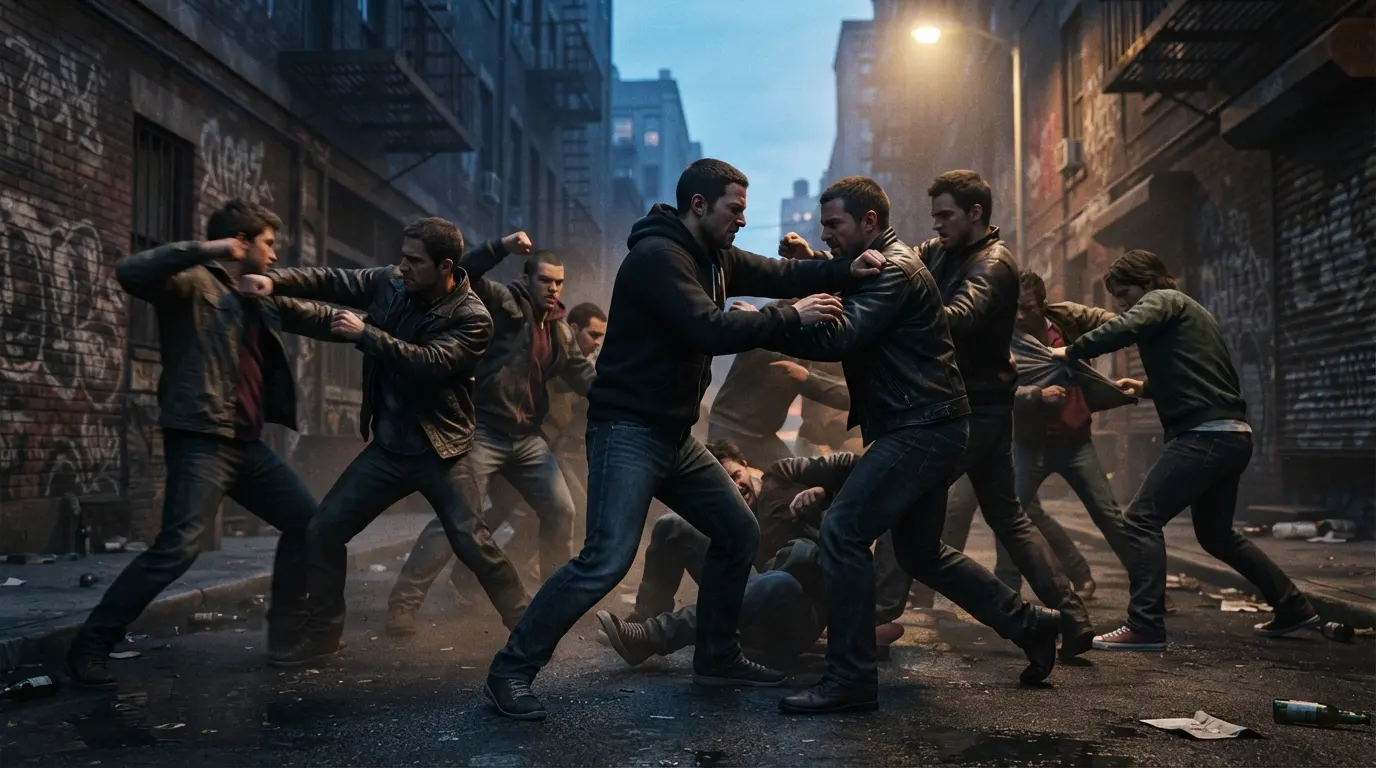
Synonym for brawl help writers choose exact terms to describe chaotic fights and heated arguments in stories.
A heated argument at a local sports event can quickly turn into a noisy brawl between rival fans.
Learning a new synonym for brawl allows you to express conflict clearly across formal and casual contexts.
Mastering a synonym for brawl improves your vocabulary while making your articles and essays more engaging.
What Does “Brawl” Really Mean?
The word “brawl” functions as both a noun and a verb in everyday English.
As a noun, it describes a rough, noisy, and uncontrolled physical fight or loud public quarrel.
As a verb, it means to fight or quarrel noisily, usually involving several people in a disorderly way.
Native English speakers understand a brawl as a sudden outburst of chaos where control is completely lost.
You will commonly encounter this word in news reports, crime fiction, sports commentary, and historical narratives.
Connotative Meaning
Connotation is the emotional feeling or cultural idea that a word carries beyond its direct dictionary definition.
- Positive tone: Rarely used positively, though sometimes describes energetic, high-spirited, playful scuffles among friends or sports teams.
- Negative tone: Highlights wild violence, lawless disorder, dangerous physical aggression, public humiliation, or chaos.
- Neutral tone: Describes a physical altercation or chaotic conflict objectively in news reports or legal summaries.
Etymology
The word “brawl” likely entered the language from Middle Dutch or Middle Low German brallen, which meant to boast, roar, or make noise.
In Old English (450–1100), early Germanic root words focused on loud vocal noises rather than physical fighting.
During the Middle English period (1100–1500), the term evolved into brawler, describing a loud, quarrelsome person who created public disturbances.
In Modern English (1500–Present), “brawl” shifted fully to describe noisy physical fights, group scuffles, and chaotic public altercations.
Pronunciation (US & UK – IPA)
- US: /brɑːl/
- UK: /brɔːl/
Syllables
- Syllable Breakdown: brawl (1 syllable)
- Affixation Pattern: Root Word
- Root: brawl
- Prefix: None
- Suffix: None
Synonyms List
Fight (Noun/Verb) — US: /faɪt/ | UK: /faɪt/
- Meaning: A physical or verbal struggle between two or more people seeking victory.
- Tone/Register: Neutral, Everyday, Common
- Example 1: Security officers quickly stopped the fight outside the stadium.
- Example 2: The two neighbors began to fight over the property boundary line.
Melee (Noun) — US: /ˈmeɪ.leɪ/ | UK: /ˈmel.eɪ/
- Meaning: A confused, wild hand-to-hand fight among a large group of people.
- Tone/Register: Dramatic, Descriptive, Literary
- Example 1: A wild melee broke out on the field after the final whistle blew.
- Example 2: Police struggled to control the melee spreading through the marketplace.
Scuffle (Noun/Verb) — US: /ˈskʌf.əl/ | UK: /ˈskʌf.əl/
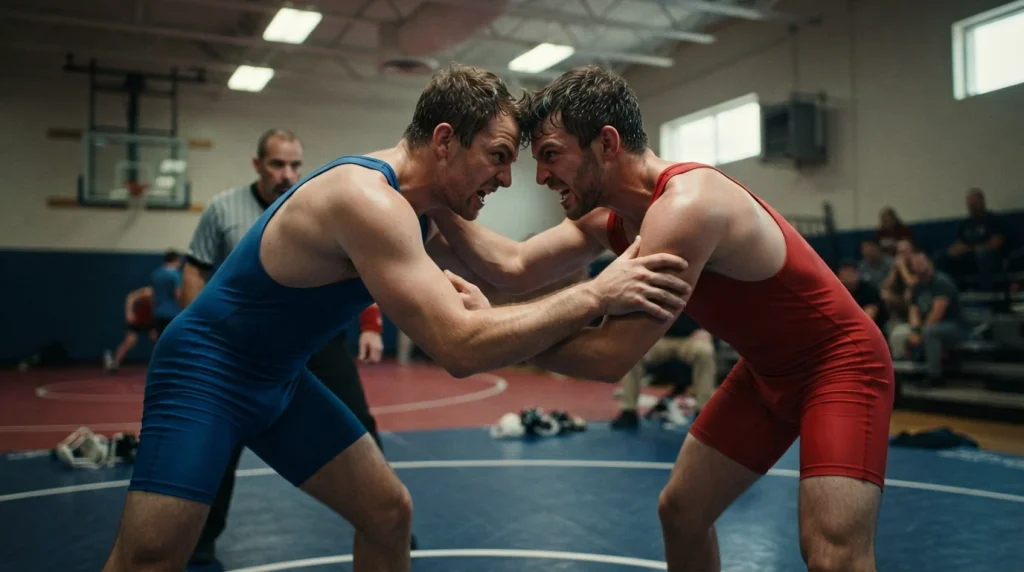
- Meaning: A short, confused, and relatively minor physical fight or struggle.
- Tone/Register: Informal, Minor, Action-Oriented
- Example 1: The suspect was arrested after a brief scuffle with law enforcement.
- Example 2: Two players began to scuffle near the sideline during practice.
Fracas (Noun) — US: /ˈfreɪ.kəs/ | UK: /ˈfræk.ɑː/
- Meaning: A noisy, disorderly quarrel or physical fight in a public place.
- Tone/Register: Formal, Journalistic, Literary
- Example 1: The restaurant manager called the police to report a sudden fracas.
- Example 2: Several bystanders were injured during the unexpected political fracas.
Skirmish (Noun/Verb) — US: /ˈskɝː.mɪʃ/ | UK: /ˈskɜː.mɪʃ/
- Meaning: A minor or short fight, especially between small military units or political groups.
- Tone/Register: Formal, Military, Tactical
- Example 1: Border guards engaged in a brief skirmish late last night.
- Example 2: Protesters began to skirmish with local police along the main avenue.
Altercation (Noun) — US: /ˌɑːl.tɚˈkeɪ.ʃən/ | UK: /ˌɒl.təˈkeɪ.ʃən/
- Meaning: A noisy and heated argument or dispute, usually taking place in public.
- Tone/Register: Formal, Legal, Official
- Example 1: The police officer asked the witnesses about the verbal altercation.
- Example 2: An altercation between motorists blocked traffic during the morning rush.
Tussle (Noun/Verb) — US: /ˈtʌs.əl/ | UK: /ˈtʌs.əl/
- Meaning: A vigorous, energetic struggle or scuffle, often over an object or position.
- Tone/Register: Casual, Conversational, Descriptive
- Example 1: The brothers had a quick tussle over the television remote control.
- Example 2: Players tussled for the loose ball near the center of the court.
Riot (Noun/Verb) — US: /ˈraɪ.ət/ | UK: /ˈraɪ.ət/
- Meaning: A violent public disturbance by a large crowd of angry people.
- Tone/Register: Severe, Dramatic, Legal
- Example 1: City authorities declared a curfew after a sudden riot broke out downtown.
- Example 2: Thousands of citizens rioted against the unfair tax increases.
Free-for-all (Noun) — US: /ˌfriː.fɚˈɑːl/ | UK: /ˌfriː.fərˈɔːl/
- Meaning: An uncontrolled fight or competition in which anyone present can take part.
- Tone/Register: Informal, Figurative, Expressive
- Example 1: The debate devolved into a noisy free-for-all among the candidates.
- Example 2: Bargain hunters turned the holiday sale into a chaotic free-for-all.
Fray (Noun) — US: /freɪ/ | UK: /freɪ/
- Meaning: An intense fight, struggle, or fiercely competitive situation.
- Tone/Register: Literary, Dramatic, Journalism
- Example 1: The brave young knight jumped eagerly into the thick of the fray.
- Example 2: New political startups are preparing to enter the election fray.
Row (Noun/Verb) — US: /raʊ/ | UK: /raʊ/
- Meaning: A noisy, angry argument or public disagreement between people.
- Tone/Register: Informal (UK), Conversational, Direct
- Example 1: The married couple had a loud row over their monthly vacation plans.
- Example 2: Politicians continued to row over the newly proposed budget cuts.
Dispute (Noun/Verb) — US: /dɪˈspjuːt/ | UK: /dɪˈspjuːt/
- Meaning: An official or formal disagreement or argument over an issue.
- Tone/Register: Formal, Business, Legal
- Example 1: The union resolved its long wage dispute with factory management.
- Example 2: Neighbors disputed the exact boundary line for their fences.
Quarrel (Noun/Verb) — US: /ˈkwɔːr.əl/ | UK: /ˈkwɒr.əl/
- Meaning: An angry disagreement between people, usually involving personal matters.
- Tone/Register: Traditional, Personal, Emotional
- Example 1: They ended their old family quarrel and shook hands warmly.
- Example 2: The best friends’ quarrel rooted in a minor misunderstanding.
Feud (Noun/Verb) — US: /fjuːd/ | UK: /fjuːd/
- Meaning: A bitter, prolonged hostility or conflict between families or groups.
- Tone/Register: Historical, Dramatic, Intense
- Example 1: A bitter feud between rival families lasted for over three decades.
- Example 2: The two tech executives have feuded openly on social media.
Clash (Noun/Verb) — US: /klæʃ/ | UK: /klæʃ/
- Meaning: A short, sharp confrontation or disagreement between opposing forces.
- Tone/Register: Direct, News, Action
- Example 1: Demonstrators clashed with security forces outside the Supreme Court.
- Example 2: There was a violent clash between rival soccer fans yesterday.
Donnybrook (Noun) — US: /ˈdɑː.ni.brʊk/ | UK: /ˈdɒn.i.brʊk/
- Meaning: An extremely wild, chaotic, and noisy argument or physical fight.
- Tone/Register: Informal, Rare, Colorfully Descriptive
- Example 1: The town meeting descended into an absolute donnybrook over taxes.
- Example 2: What started as a minor debate ended in a full donnybrook.
Disturbance (Noun) — US: /dɪˈstɝː.bəns/ | UK: /dɪˈstɜː.bəns/
- Meaning: A disruption of public peace, quiet, or order caused by violent behavior.
- Tone/Register: Formal, Police, Official
- Example 1: Officers responded quickly to a public disturbance at the local park.
- Example 2: Loud music caused a severe late-night disturbance in the neighborhood.
Broil (Noun/Verb) — US: /brɔɪl/ | UK: /brɔɪl/
- Meaning: A noisy, chaotic quarrel or physical disturbance.
- Tone/Register: Archaic, Literary, Old-Fashioned
- Example 1: The ancient records described a sudden political broil in the square.
- Example 2: Factions broiled fiercely over royal succession rights.

Rumpus (Noun) — US: /ˈrʌm.pəs/ | UK: /ˈrʌm.pəs/
- Meaning: A noisy commotion, disturbance, or playful uproar created by a group.
- Tone/Register: Lighthearted, Casual, Family
- Example 1: The excited children raised a huge rumpus in the living room.
- Example 2: His surprising announcement caused quite a rumpus among the staff.
Commotion (Noun) — US: /kəˈmoʊ.ʃən/ | UK: /kəˈməʊ.ʃən/
- Meaning: A state of confused, noisy, and chaotic disturbance.
- Tone/Register: Neutral, Descriptive, General
- Example 1: She walked outside to investigate the sudden commotion on her street.
- Example 2: Sirens created an alarming commotion in the quiet residential district.
Brawl-up (Noun) — US: /ˈbrɑːl.ʌp/ | UK: /ˈbrɔːl.ʌp/
- Meaning: A sudden outbreak of physical fighting or shouting among a crowd.
- Tone/Register: Slang, Informal, Regional
- Example 1: A sudden brawl-up outside the bar required immediate security assistance.
- Example 2: Fans feared a brawl-up would erupt following the controversial referee call.
Affray (Noun) — US: /əˈfreɪ/ | UK: /əˈfreɪ/
- Meaning: A public fight that disturbs the peace and causes fear to others.
- Tone/Register: Legal, High Formal, Official
- Example 1: Three men were charged with committing an affray in the city center.
- Example 2: The judge issued strict penalties to reduce instances of public affray.
Encounter (Noun/Verb) — US: /ɪnˈkaʊn.t̬ɚ/ | UK: /ɪnˈkaʊn.tər/
- Meaning: An unexpected or hostile meeting or confrontation between opposing sides.
- Tone/Register: Objective, Formal, Neutral
- Example 1: Patrol boats had a tense military encounter near international waters.
- Example 2: The hikers had a dangerous physical encounter with a wild bear.
Battle (Noun/Verb) — US: /ˈbæt.əl/ | UK: /ˈbæt.əl/
- Meaning: A large-scale fight between armed forces or an intense personal struggle.
- Tone/Register: Serious, Historical, Dramatic
- Example 1: Soldiers fought bravely in the historic battle to defend their homeland.
- Example 2: The business leaders prepared for a tough courtroom battle today.
Conflict (Noun/Verb) — US: /ˈkɑːn.flɪkt/ | UK: /ˈkɒn.flɪkt/
- Meaning: A serious disagreement, argument, or prolonged physical struggle.
- Tone/Register: Academic, Formal, General
- Example 1: Diplomacy remains the best method to resolve international conflict peacefully.
- Example 2: Their interests conflicted sharply during the contract negotiation.
Contention (Noun) — US: /kənˈten.ʃən/ | UK: /kənˈten.ʃən/
- Meaning: Heated disagreement, rivalry, or asserting a strong argument.
- Tone/Register: Academic, High Formal, Strategic
- Example 1: The proposed highway expansion became a point of fierce contention.
- Example 2: Her legal contention was supported by solid scientific evidence.
Confrontation (Noun) — US: /ˌkɑːn.frənˈteɪ.ʃən/ | UK: /ˌkɒn.frʌnˈteɪ.ʃən/
- Meaning: A hostile or defiant face-to-face meeting or argument.
- Tone/Register: Serious, Psychological, Direct
- Example 1: She wanted to avoid an angry confrontation with her aggressive manager.
- Example 2: The confrontation between the political rivals dominated headlines.
Squabble (Noun/Verb) — US: /ˈskwɑː.bəl/ | UK: /ˈskwɒ.bəl/
- Meaning: A noisy argument about something petty or unimportant.
- Tone/Register: Casual, Dismissive, Everyday
- Example 1: Siblings often squabble over who gets to sit in the front seat.
- Example 2: Stop squabbling over trivial matters and focus on your homework.
Wrangling (Noun) — US: /ˈræŋ.ɡəl.ɪŋ/ | UK: /ˈræŋ.ɡəl.ɪŋ/
- Meaning: Having a lengthy, complex, and noisy argument or dispute.
- Tone/Register: Political, Journalistic, Formal
- Example 1: Weeks of political wrangling delayed the passing of the national budget.
- Example 2: Legal wrangling over copyright claims continued for several years.
Scrimmage (Noun/Verb) — US: /ˈskrɪm.ɪdʒ/ | UK: /ˈskrɪm.ɪdʒ/
- Meaning: A confused struggle or a practice game in team sports.
- Tone/Register: Sports, Physical, Action
- Example 1: The football players held a hard scrimmage during morning practice.
- Example 2: A brief scrimmage broke out near the goal line during the third quarter.
Tangling (Noun/Verb) — US: /ˈtæŋ.ɡəl.ɪŋ/ | UK: /ˈtæŋ.ɡəl.ɪŋ/
- Meaning: Becoming involved in a chaotic conflict, fight, or argument.
- Tone/Register: Informal, Visual, Relatable
- Example 1: Avoid tangling with the aggressive stray dogs near the construction site.
- Example 2: Their legal tangling caused massive project delays for the city.
Shindy (Noun) — US: /ˈʃɪn.di/ | UK: /ˈʃɪn.di/
- Meaning: A noisy disturbance, quarrel, or wild party.
- Tone/Register: Old-Fashioned, Slang, Rare
- Example 1: The loud music caused quite a shindy in the quiet apartment block.
- Example 2: Neighbours complained about the late-night shindy happening next door.
Dust-up (Noun) — US: /ˈdʌst.ʌp/ | UK: /ˈdʌst.ʌp/
- Meaning: A brief, spontaneous fight, argument, or scuffle.
- Tone/Register: Informal, Conversational, Modern
- Example 1: They had a minor dust-up at the gas station over a parking space.
- Example 2: The political commentary triggered a brief dust-up on social media.
Scrap (Noun/Verb) — US: /skræp/ | UK: /skræp/
- Meaning: A short, aggressive fight or competitive struggle.
- Tone/Register: Informal, Casual, Street
- Example 1: The stray cats had a noisy scrap behind the local restaurant.
- Example 2: He was always ready to scrap whenever someone challenged his opinion.
Agitation (Noun) — US: /ˌædʒ.əˈteɪ.ʃən/ | UK: /ˌædʒ.ɪˈteɪ.ʃən/
- Meaning: A state of anxiety, nervous excitement, or public turmoil.
- Tone/Register: Psychological, Formal, Descriptive
- Example 1: The political speech caused widespread public agitation in the capital.
- Example 2: She tried to hide her growing emotional agitation during the interview.
Uproar (Noun) — US: /ˈʌp.rɔːr/ | UK: /ˈʌp.rɔː/
- Meaning: A violent or noisy disturbance created by a large group of angry people.
- Tone/Register: Expressive, News, Dramatic
- Example 1: The unexpected policy announcement caused a massive public uproar.
- Example 2: Outraged citizens created an uproar outside the mayor’s office.
Tumult (Noun) — US: /ˈtuː.məlt/ | UK: /ˈtjuː.məlt/
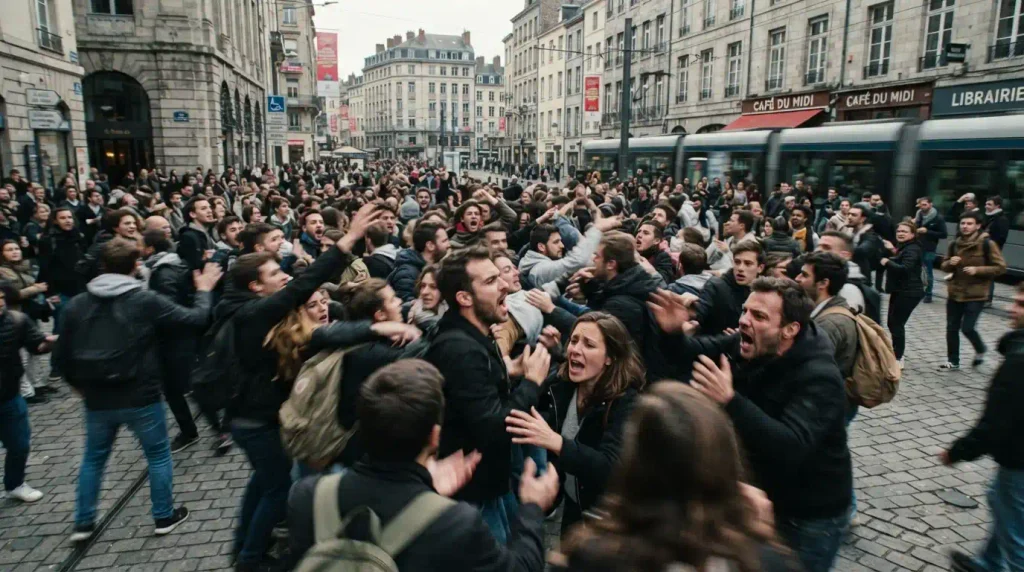
- Meaning: A loud, confused noise, especially one caused by a large mass of people.
- Tone/Register: Literary, High Formal, Dramatic
- Example 1: The city was thrown into a wild tumult after the election results were announced.
- Example 2: He could barely think above the rising tumult of the crowd.
Turmoil (Noun) — US: /ˈtɝː.mɔɪl/ | UK: /ˈtɜː.mɔɪl/
- Meaning: A state of great disturbance, confusion, or uncertainty.
- Tone/Register: Serious, Emotional, Formal
- Example 1: The company experienced financial turmoil after the market crashed.
- Example 2: Her mind was in complete turmoil after hearing the terrible news.
Outbreak (Noun) — US: /ˈaʊt.breɪk/ | UK: /ˈaʊt.breɪk/
- Meaning: A sudden or violent appearance of something unwelcome, like violence or disease.
- Tone/Register: Direct, News, Official
- Example 1: Police responded quickly to prevent an outbreak of street violence.
- Example 2: The sudden outbreak of fighting forced shops to close early.
Brush (Noun) — US: /brʌʃ/ | UK: /brʌʃ/
- Meaning: A short, brief, and hostile encounter or conflict with someone.
- Tone/Register: Casual, Idiomatic, Concise
- Example 1: He had a quick brush with the law during his teenage years.
- Example 2: Her brief brush with the aggressive security guard left her shaken.
Synonyms by Tone
Choosing the proper tone ensures that your writing matches your audience and content goals.
Using an incorrect synonym can misrepresent a situation, making a minor argument sound like a violent war.
Positive Tone
- Scrimmage
- Rumpus
- Tussle
These words describe playful, controlled, or lighthearted physical action without severe danger or malice.
Neutral Tone
- Fight
- Clash
- Commotion
- Encounter
- Conflict
- Outbreak
These terms convey physical or verbal confrontations objectively without adding dramatic or emotional bias.
Negative Tone
- Riot
- Altercation
- Melee
- Affray
- Feud
- Turmoil
These words reflect dangerous violence, illegal behavior, deep hatred, or intense social disorder.
Playful / Informal Tone
- Dust-up
- Scrap
- Free-for-all
- Donnybrook
- Squabble
These terms fit casual conversations, creative stories, and informal blogging effortlessly.
Mini Comparison
Brawl vs. Scuffle vs. Altercation
Understanding these subtle distinctions helps writers select the perfect term for any conflict.
Brawl implies a noisy, wild, and uncontrolled physical fight involving multiple people in public.
Scuffle describes a minor, quick, and relatively harmless physical struggle between two or three individuals.
Altercation refers primarily to a heated, loud verbal argument that might occur in official or public settings.
- Meaning Difference: A “brawl” involves wild group physical fighting, a “scuffle” is a minor physical struggle, and an “altercation” is a loud verbal dispute.
- Tone Difference: “Altercation” is formal and legal, “brawl” is dramatic and negative, while “scuffle” is casual and minor.
- When to Use: Use “altercation” in police reports, “scuffle” for minor playground incidents, and “brawl” for wild, multi-person bar fights.
Context-Based Usage
Daily Conversation
In everyday speech, people prefer short, punchy words like fight, dust-up, scrap, or squabble.
These words convey quick conflicts easily without making the situation sound overly dramatic or complex.
Writing or Blogging
Bloggers and online content creators use expressive terms like free-for-all, melee, or clash to grab attention.
These words build vivid mental images that keep modern digital readers fully engaged.
Professional or Academic Tone
Professional reports, legal news, and academic papers rely on precise terms like altercation, affray, conflict, or dispute.
These terms maintain an objective, authoritative tone while documenting incidents accurately.
Creative or Informal Use
Fiction writers leverage evocative synonyms like donnybrook, fracas, tumult, or feud to build dramatic suspense.
These words create rich atmosphere and emphasize deep-seated rivalries between character factions.
Common Mistakes & Native Usage
Common Mistakes Learners Make
- Using violent terms for minor disputes: Calling a simple verbal argument a brawl exaggerates the incident incorrectly.
- Misapplying physical words to pure debates: Using melee to describe a quiet classroom debate creates confusion.
- Ignoring register boundaries: Using slang like dust-up in a formal police report diminishes professional credibility.
Register Notes
- Spoken English favors scrap, fight, squabble, and dust-up.
- Written English utilizes altercation, fracas, affray, and contentious.
Mastering sentence structures alongside new vocabulary builds stronger foundational communication skills for all writers.
Real-Life Mini Scenarios
Workplace
During the executive board meeting, two senior managers had a heated altercation regarding quarterly budget allocations.
The professional disagreement was handled swiftly by the chief executive officer before it derailed the agenda.
Social Situations
At the local community center, excited children created a noisy rumpus while playing indoor tag.
Parents watched happily as the kids burned off excess energy in a safe environment.
Media / Pop Culture
Sports news outlets covered the late-game melee that erupted between rival basketball players after a hard foul.
The league issued suspensions and fines to prevent similar physical incidents in future games.
Writing or Storytelling
In the historical fiction novel, two rival pirate crews met in a wild donnybrook along the foggy harbor docks.
Sabers clashed, and torches flickered as the heroes fought their way toward the escaping ship.
Interactive Practice Quiz
Test your understanding of synonyms, tones, and contexts with these practice questions.
- Which word best describes a formal, loud verbal argument reported by police?
A) Scuffle
B) Altercation
C) Rumpus
D) Scrimmage - Identify the synonym with a lighthearted, playful tone involving energetic children:
A) Riot
B) Affray
C) Rumpus
D) Turmoil - Which term best fits a minor, quick physical struggle between two athletes?
A) Donnybrook
B) Feud
C) Scuffle
D) Turmoil - Select the formal legal term used for a public fight that disturbs peace:
A) Dust-up
B) Scrap
C) Affray
D) Squabble - Which word suggests a long-lasting, bitter hostility between families?
A) Feud
B) Brush
C) Fracas
D) Row - Choose the informal term that describes a sudden, wild, multi-person free fight:
A) Altercation
B) Donnybrook
C) Dispute
D) Contention - Which word works best for describing a minor argument between siblings over a toy?
A) Riot
B) Melee
C) Squabble
D) Affray - Select the neutral word that refers to a general physical or verbal struggle:
A) Fight
B) Grovel
C) Kowtow
D) Succumb - What word best describes an organized practice game in sports?
A) Melee
B) Scrimmage
C) Fracas
D) Riot - Which word fits best when describing a sudden, massive public disorder in a city?
A) Brush
B) Riot
C) Squabble
D) Tussle
Reflection Task: Write one original sentence using the word altercation to describe a disagreement you witnessed or read about recently.
Answer Key: 1: B | 2: C | 3: C | 4: C | 5: A | 6: B | 7: C | 8: A | 9: B | 10: B
Frequently Asked Questions
What is the most common synonym for brawl in daily speech?
The most common casual synonym for brawl is fight. Native speakers use fight continuously in everyday conversation to describe physical altercations, loud arguments, or competitive struggles. Words like scrap, scuffle, or dust-up are also frequently used in casual settings.
Can a brawl be purely verbal without physical contact?
While a brawl usually implies wild physical fighting, it can occasionally describe extremely loud, chaotic, and aggressive public shouting matches. However, for purely verbal disputes, terms like altercation, row, or argument are far more accurate.
How does an altercation differ from a brawl in official reports?
An altercation refers primarily to a heated verbal dispute or minor confrontation. A brawl describes a wild, chaotic physical fight involving multiple individuals. Law enforcement uses altercation for loud arguments and brawl for violent physical altercations.
What is a creative synonym for brawl in fiction writing?
For dramatic fiction writing, terms like melee, fracas, donnybrook, or free-for-all work exceptionally well. These words evoke intense visual imagery, helping readers picture the exact noise, crowd size, and chaos of the scene.
Is the word fracas formal or informal?
Fracas is considered a formal or elevated journalistic term. It is commonly used in news reports, legal documentation, and literature to describe a noisy public disturbance or physical quarrel without relying on everyday street slang.
What does the slang term dust-up mean?
Dust-up is an informal slang synonym for a brief, spontaneous fight, argument, or physical scuffle. It implies a minor conflict that flares up quickly and ends without causing long-term damage or serious legal consequences.
Conclusion
Expanding your vocabulary with a clear synonym for brawl opens up fresh opportunities to write captivating, precise, and highly engaging stories across all mediums.
Learning subtle semantic differences around a synonym for brawl transforms repetitive drafts into polished, professional articles, essays, and creative pieces.
Mastering specific tone variations with each synonym for brawl empowers your writing to communicate conflict with exact emotional resonance and professional accuracy.
Try applying three new synonyms from this guide in your next essay or story to make your descriptive writing stand out today!

Sawera Rani is the founder and content creator behind VocabularyFinder.com, a platform designed to help learners improve their English vocabulary simply and effectively. With a passion for language learning, Sawera Rani creates easy-to-understand vocabulary guides, word meanings, definitions, and practical examples that make learning new words easier. She aims to provide useful and reliable resources for students, professionals, and English learners who want to improve their communication skills. Through VocabularyFinder.com, she focuses on making vocabulary learning more accessible, engaging, and helpful for everyday use.