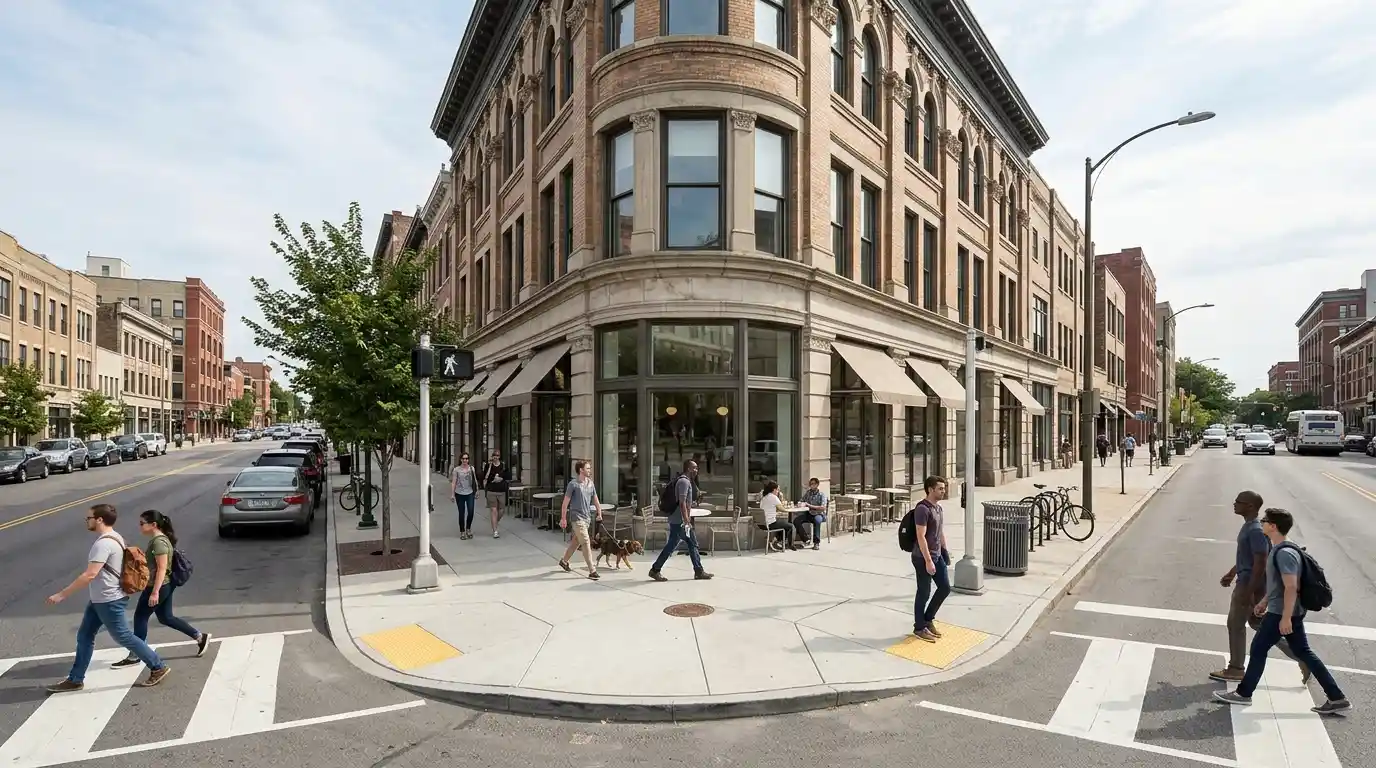
A synonym for corner includes terms like angle, nook, bend, niche, intersection, or dilemma depending on whether the usage refers to a physical space, architectural point, or figurative tight spot. Common alternatives range from spatial nouns like recess to figurative verbs like trap or enclose.
Synonym for corner help you describe architectural spaces and awkward situations without repeating basic words. Imagine walking down a busy city street and stopping at a peaceful little coffee shop tucked into a quiet alley nook.
Using a precise synonym for corner refines your spatial and emotional descriptions instantly across stories and essays. For instance, describing a cozy desk space as a reading niche creates a much more vivid image than calling it a room corner.
Finding a versatile synonym for corner gives students, bloggers, SEO writers, and everyday speakers greater linguistic flexibility. Learning alternative terms prevents repetitive prose while enhancing your descriptive precision across all forms of communication.
What Does “Corner” Really Mean?
Corner refers to the point or area where two converging lines, walls, or surfaces meet. It can also describe a secluded spot or a difficult situation with no easy exit.
In English, it functions as a noun (a street corner), a verb (to corner a market or suspect), and an adjective (a corner office).
Part of Speech: Noun / Verb / Adjective
Definition: The point where two converging edges or surfaces meet, or an enclosed, difficult position.
Connotative Meaning
(Connotation is the emotional feeling or cultural association that a word carries beyond its literal dictionary definition.)
- Positive tone: Expresses cozy warmth, intimacy, protection, and comfortable privacy (e.g., a quiet reading nook).
- Negative tone: Expresses entrapment, pressure, panic, and limitation (e.g., being backed into a corner).
- Neutral tone: Simply describes a geometric point, architectural edge, or geographic intersection.
Etymology and Syllables
The word stems from Anglo-Norman French corner or Old French corniere, derived from Latin cornu, meaning “horn” or “point.”
- Old English (450–1100): Early Anglo-Saxon terms relied on native words like hyrne (angle or horn-like point).
- Middle English (1100–1500): French influences replaced native terms with cornere in architectural descriptions.
- Modern English (1500–Present): Expanded to include figurative meanings like financial monopolies and dilemmas.
Pronunciation (IPA):
- US: /ˈkɔːr.nɚ/
- UK: /ˈkɔː.nər/
Syllables: cor-ner
- Root: Corn (from Latin cornu, meaning horn or projecting angle)
- Prefix: None
- Suffix: -er (noun suffix denoting a physical entity)

Comprehensive List of 45 Synonyms
Nook (Noun) — US: /nʊk/ | UK: /nʊk/
Meaning: A small, quiet, or secluded place nestled in a room or corner.
Tone/Register: Warm, Informal, Descriptive
Examples:
She spent rainy afternoons reading novels in her cozy breakfast nook.
The cat found a warm nook behind the fireplace.
Angle (Noun) — US: /ˈæŋ.ɡəl/ | UK: /ˈæŋ.ɡəl/
Meaning: The space or corner measured between two intersecting lines or surfaces.
Tone/Register: Neutral, Technical, Geometric
Examples:
Architects calculated the exact angle where the brick walls joined.
Sunlight streamed through the sharp angle of the bay window.
Niche (Noun) — US: /nɪtʃ/ | UK: /niːʃ/
Meaning: A shallow recess or specialized hollow space created in a wall structure.
Tone/Register: Formal, Architectural
Examples:
A marble statue rested inside a carved stone niche near the entryway.
The designer created a display niche for the antique vase.
Recess (Noun) — US: /ˈriː.ses/ | UK: /rɪˈses/
Meaning: A small, indented, or set-back section of a wall or room space.
Tone/Register: Formal, Architectural
Examples:
Bookshelves were built directly into the dark recess of the hallway.
Shadows pooled in the deep recess of the cavern wall.
Bend (Noun) — US: /bend/ | UK: /bend/
Meaning: A curve or turn where a road, river, or path changes direction sharply.
Tone/Register: General, Neutral
Examples:
Slow down your vehicle before reaching the dangerous mountain bend.
The cottage sits right past the sharp bend in the river.
Intersection (Noun) — US: /ˌɪn.t̬ɚˈsek.ʃən/ | UK: /ˌɪn.təˈsek.ʃən/
Meaning: The exact point where two or more roads or lines cross each other.
Tone/Register: Formal, Technical, Urban
Examples:
Traffic lights were installed at the busy downtown intersection yesterday.
Pedestrians waited patiently at the crosswalk intersection.
Junction (Noun) — US: /ˈdʒʌŋk.ʃən/ | UK: /ˈdʒʌŋk.ʃən/
Meaning: A place where roads, railway lines, or pathways join together.
Tone/Register: Technical, Transportation
Examples:
Train services paused briefly near the central railway junction.
Turn left at the highway junction to reach the airport road.
Elbow (Noun) — US: /ˈel.boʊ/ | UK: /ˈel.bəʊ/
Meaning: A sharp bend or right-angled turn in a pipe, wall, or passage.
Tone/Register: Technical, Descriptive
Examples:
The plumber replaced the leaking pipe elbow under the kitchen sink.
The corridor took a sudden elbow to the right.
Apex (Noun) — US: /ˈeɪ.peks/ | UK: /ˈeɪ.peks/
Meaning: The highest point, tip, or vertex formed by intersecting sides.
Tone/Register: Formal, Geometric
Examples:
Climbers reached the snowy apex of the mountain ridge at noon.
The triangular roof met sharply at a towering apex.
Vertex (Noun) — US: /ˈvɝː.teks/ | UK: /ˈvɜː.teks/
Meaning: The precise point where two lines meet to form an angle.
Tone/Register: Formal, Mathematical
Examples:
Students marked each vertex of the polygon during geometry class.
The computer model calculates light reflected from each 3D vertex.
Cove (Noun) — US: /koʊv/ | UK: /kəʊv/
Meaning: A sheltered, secluded recess along a coastline or hillside.
Tone/Register: Descriptive, Literary
Examples:
Fishermen anchored their small boats safely inside the rocky cove.
Secret pathways led down to a secluded coastal cove.
Alcove (Noun) — US: /ˈæl.koʊv/ | UK: /ˈæl.kəʊv/
Meaning: A small recessed section or alcove space connected to a room.
Tone/Register: Architectural, Descriptive
Examples:
They placed a small dining table inside the kitchen alcove.
A soft velvet bench fit perfectly into the window alcove.
Turning (Noun) — US: /ˈtɝː.nɪŋ/ | UK: /ˈtɜː.nɪŋ/
Meaning: A place where a road or path branches off or changes direction.
Tone/Register: General, British English
Examples:
Take the second turning on the left after passing the post office.
Drivers missed the dark turning because of heavy fog.
Edge (Noun) — US: /edʒ/ | UK: /edʒ/
Meaning: The outer boundary or sharp line where two surfaces meet.
Tone/Register: Neutral, General
Examples:
She placed her cup near the far edge of the wooden table.
Hikers walked carefully along the rocky edge of the cliff.
Margin (Noun) — US: /ˈmɑːr.dʒɪn/ | UK: /ˈmɑː.dʒɪn/
Meaning: The border or outer perimeter of an area or written page.
Tone/Register: Academic, Formal
Examples:
The teacher wrote helpful study notes in the essay margin.
Wildflowers grew along the outer margin of the cornfield.

Hideaway (Noun) — US: /ˈhaɪd.ə.weɪ/ | UK: /ˈhaɪd.ə.weɪ/
Meaning: A secluded or hidden location suitable for privacy or retreat.
Tone/Register: Informal, Welcoming
Examples:
They built a cozy mountain hideaway for quiet weekend getaways.
The garden cottage served as an artist’s peaceful hideaway.
Sanctuary (Noun) — US: /ˈsæŋk.tʃu.er.i/ | UK: /ˈsæŋk.tʃu.ər.i/
Meaning: A place of safety, peace, or protection from external pressure.
Tone/Register: Formal, Emotional
Examples:
His home library offered a quiet sanctuary from his demanding job.
The natural park provides a protected sanctuary for wildlife.
Refuge (Noun) — US: /ˈref.juːdʒ/ | UK: /ˈref.juːdʒ/
Meaning: A shelter or safe position protecting from danger or trouble.
Tone/Register: Formal, Serious
Examples:
Storm victims sought temporary refuge inside the community center hall.
The small cabin was a welcome refuge from the blizzard.
Dilemma (Noun) — US: /daɪˈlem.ə/ | UK: /dɪˈlem.ə/
Meaning: A difficult situation where a tough choice must be made between options.
Tone/Register: Formal, Academic
Examples:
The board faced an ethical dilemma regarding company spending plans.
She struggled to resolve her personal career dilemma.
Predicament (Noun) — US: /prəˈdɪk.ə.mənt/ | UK: /prɪˈdɪk.ə.mənt/
Meaning: An unpleasantly difficult, confusing, or awkward situation.
Tone/Register: Formal, Serious
Examples:
Losing his passport created an embarrassing predicament at border control.
The manager explained our current financial predicament to investors.
Tight Spot (Idiom / Noun) — US: /taɪt spɑːt/ | UK: /taɪt spɒt/
Meaning: A challenging or stressful situation that is difficult to escape from.
Tone/Register: Informal, Conversational
Examples:
Unexpected repair expenses put our family budget in a tight spot.
He found himself in a tight spot when two meetings overlapped.
Quagmire (Noun) — US: /ˈkwæɡ.maɪr/ | UK: /ˈkwæɡ.maɪər/
Meaning: A hazardous, complex, or bogged-down situation that holds you back.
Tone/Register: Formal, Political
Examples:
Diplomats worked tirelessly to avoid getting drawn into a legal quagmire.
The project bogged down in a bureaucratic quagmire for months.
Trap (Noun / Verb) — US: /træp/ | UK: /træp/
Meaning: A position from which escape is difficult, or to enclose someone completely.
Tone/Register: General, Direct
Examples:
The chess player set a clever trap to corner the enemy king.
Heavy snow threatened to trap travelers on the remote highway.
Enclose (Verb) — US: /ɪnˈkloʊz/ | UK: /ɪnˈkləʊz/
Meaning: To surround or shut in on all sides completely.
Tone/Register: Formal, Structural
Examples:
Tall wooden fences enclose the private garden space behind the house.
Glass panels enclose the interior terrace courtyard.
Hem In (Phrasal Verb) — US: /hem ɪn/ | UK: /hem ɪn/
Meaning: To surround someone or something tightly, restricting movement or freedom.
Tone/Register: Informal, Descriptive
Examples:
Crowds began to hem in the performer after the street show finished.
Strict regulations hemmed in the company’s expansion plans.
Pin Down (Phrasal Verb) — US: /pɪn daʊn/ | UK: /pɪn daʊn/
Meaning: To restrict someone’s movement or force them to make a clear decision.
Tone/Register: Informal, Conversational
Examples:
Reporters tried to pin down the minister on specific tax numbers.
Heavy rain pinned down the troops near the base camp overnight.
Corner the Market (Idiom / Verb) — US: /ˈkɔːr.nɚ ðə ˈmɑːr.kɪt/ | UK: /ˈkɔː.nər ðə ˈmɑː.kɪt/
Meaning: To control enough of a stock or commodity to dominate market prices.
Tone/Register: Business, Financial
Examples:
The firm attempted to corner the market on rare earth minerals.
A tech giant cornered the artificial intelligence chip supply.
Corner a Suspect (Verb Phrase) — US: /ˈkɔːr.nɚ ə ˈsʌs.pekt/ | UK: /ˈkɔː.nər ə ˈsʌs.pekt/
Meaning: To force a person into a position where escape is impossible.
Tone/Register: Legal, Action
Examples:
Officers cornered the suspect in a dead-end city alleyway.
Detectives cornered the fugitive after a long foot chase.
Dead-end (Noun / Adjective) — US: /ˌdedˈend/ | UK: /ˌdedˈend/
Meaning: A street, passage, or situation with no exit at the far end.
Tone/Register: General, Descriptive
Examples:
They accidentally turned down a quiet, narrow dead-end street.
Staying in a dead-end role harmed his long-term career growth.
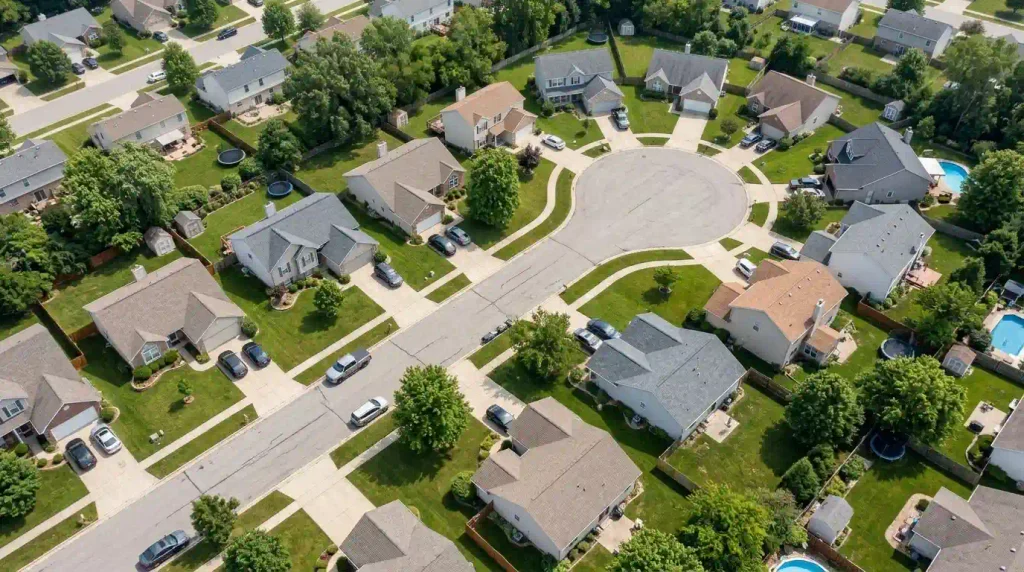
Cul-de-sac (Noun) — US: /ˈkʌl.də.sæk/ | UK: /ˈkʌl.də.sæk/
Meaning: A street or passage closed at one end, forming a rounded loop.
Tone/Register: Formal, Urban
Examples:
Children played safely in the quiet residential cul-de-sac.
Houses located in the cul-de-sac usually sell at higher prices.
Blind Alley (Idiom / Noun) — US: /blaɪnd ˈæl.i/ | UK: /blaɪnd ˈæl.i/
Meaning: A course of action or direction that leads to no useful result.
Tone/Register: Figurative, Expressive
Examples:
Scientific testing showed the early hypothesis was a blind alley.
Investigating those false leads proved to be a total blind alley.
Crux (Noun) — US: /krʌks/ | UK: /krʌks/
Meaning: The central, critical, or decisive point of an issue or problem.
Tone/Register: Formal, Analytical
Examples:
Finding affordable energy is the central crux of the debate.
The lawyer highlighted the crux of the agreement during trial.
Convergence (Noun) — US: /kənˈvɝː.dʒəns/ | UK: /kənˈvɜː.dʒəns/
Meaning: The process or point where different lines, ideas, or paths come together.
Tone/Register: Academic, Technical
Examples:
The convergence of technology and health care creates exciting tools.
Maps showed the geographical convergence of two major rivers.
Intersection Point (Noun Phrase) — US: /ˌɪn.t̬ɚˈsek.ʃən poɪnt/ | UK: /ˌɪn.təˈsek.ʃən poɪnt/
Meaning: The precise mathematical or spatial coordinate where two geometric lines cross.
Tone/Register: Technical, Mathematical
Examples:
Students plotted the exact intersection point on the coordinate grid.
Sensors monitor the intersection point of structural steel beams.
Quarter (Noun) — US: /ˈkwɔːr.t̬ɚ/ | UK: /ˈkwɔː.tər/
Meaning: A specific district, section, or area within a city or region.
Tone/Register: Formal, Historical
Examples:
Tourists explored the historic French Quarter late in the afternoon.
Merchants operated shops throughout the old market quarter.
Retreat Spot (Noun Phrase) — US: /rɪˈtriːt spɑːt/ | UK: /rɪˈtriːt spɒt/
Meaning: A quiet location chosen specifically for rest, privacy, or study.
Tone/Register: Informal, Casual
Examples:
The shaded bench under the oak tree became her favorite retreat spot.
They rented a quiet retreat spot near the mountain lake.
Perch (Noun) — US: /pɝːtʃ/ | UK: /pɜːtʃ/
Meaning: A high or elevated resting spot offering a clear, commanding view.
Tone/Register: Descriptive, Visual
Examples:
The eagle watched the valley from its high cliff perch.
Photographers took pictures from their rooftop perch above the square.
Pocket (Noun) — US: /ˈpɑː.kɪt/ | UK: /ˈpɒk.ɪt/
Meaning: A small, isolated area or enclave surrounded by contrasting conditions.
Tone/Register: General, Descriptive
Examples:
Small pockets of green forest remained visible amid urban sprawl.
The valley experienced isolated pockets of freezing morning fog.
Enclave (Noun) — US: /ˈen.kleɪv/ | UK: /ˈen.kleɪv/
Meaning: A distinct territory or culturally unique area enclosed within a larger region.
Tone/Register: Formal, Geographic
Examples:
The neighborhood serves as a vibrant cultural enclave in the city.
Diplomats visited the peaceful mountain enclave during peace talks.
Boundary Point (Noun Phrase) — US: /ˈbaʊn.dɚ.i poɪnt/ | UK: /ˈbaʊn.dri poɪnt/
Meaning: A marked spot where legal property boundaries change direction or join.
Tone/Register: Legal, Land Surveying
Examples:
Surveyors set a metal pin at the eastern boundary point.
Neighboring landowners checked the legal boundary point together.
Border (Noun) — US: /ˈbɔːr.dɚ/ | UK: /ˈbɔː.dər/
Meaning: The outer edge, dividing line, or boundary of a country or space.
Tone/Register: General, Geographic
Examples:
Guards checked identification papers near the international border crossing.
Colorful stone tiles framed the outer border of the patio floor.
Fringe (Noun) — US: /frɪndʒ/ | UK: /frɪndʒ/
Meaning: The outer edge, margin, or non-mainstream border of an area or group.
Tone/Register: Analytical, Descriptive
Examples:
Small art galleries flourished on the outer fringe of downtown.
Unconventional ideas often originate on the creative fringe of society.
Point (Noun) — US: /poɪnt/ | UK: /pɔɪnt/
Meaning: A sharp projecting end, corner tip, or specific geographical location.
Tone/Register: General, Geometric
Examples:
The pencil tip snapped after hitting the hard paper point.
Ships navigated carefully around the sharp rocky point of land.
Turn (Noun) — US: /tɝːn/ | UK: /tɜːn/
Meaning: A change of direction in a road, path, or course of action.
Tone/Register: Neutral, Everyday
Examples:
Make a sharp right turn at the next traffic signal.
The story took a dramatic turn during the final chapter.
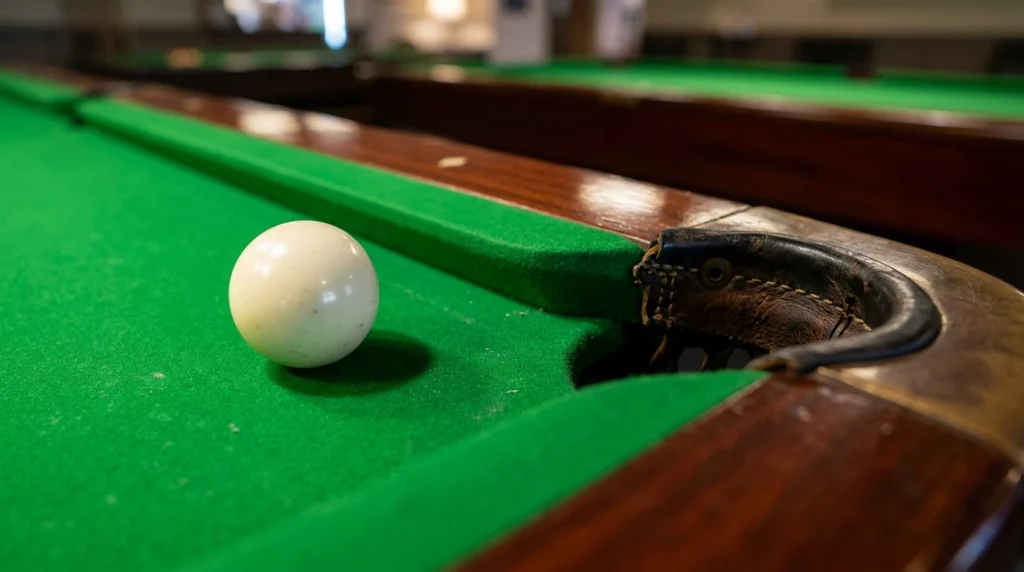
Corner Pocket (Noun Phrase) — US: /ˈkɔːr.nɚ ˈpɑː.kɪt/ | UK: /ˈkɔː.nər ˈpɒk.ɪt/
Meaning: The specific opening situated at the corner of a billiards or pool table.
Tone/Register: Sports, Casual
Examples:
He aimed carefully and sank the eight ball into the corner pocket.
The player called his final shot into the far corner pocket.
Synonyms by Tone
Tone matters when choosing spatial and figurative vocabulary because using informal slang in architectural reviews or legal documents weakens authority. For comprehensive reference on standard definitions and linguistic guidelines, consult trusted resources like Merriam-Webster’s usage guides.
- Positive / Cozy: Nook, Niche, Alcove, Sanctuary, Hideaway, Refuge, Cove.
- Neutral / Spatial: Angle, Apex, Vertex, Intersection, Junction, Recess, Bend, Border.
- Negative / Entrapped: Dilemma, Predicament, Tight spot, Quagmire, Trap, Hem in, Blind alley.
- Playful / Informal: Pocket, Perch, Turning, Elbow, Dead-end, Corner pocket.
Mini Comparison: “Corner” vs. Close Alternatives
| Term | Meaning Difference | Tone Difference | Best Context |
| Corner | General point where edges meet, or a position of entrapment | Neutral, Everyday | Daily speech, architectural basics, general writing |
| Nook | Small, cozy, sheltered, or secluded space within a room | Warm, Informal, Positive | Home design, interior decorating, creative writing |
| Angle | Precise geometric or mathematical space between lines | Technical, Formal, Neutral | Geometry, architectural blueprints, engineering |
Context-Based Usage
Daily Conversation
In everyday speech, choose words like corner, nook, turn, or tight spot. Consequently, these choices keep your spoken language warm, natural, and clear.
Writing or Blogging
Bloggers should opt for descriptive spatial terms like alcove, hideaway, bend, or sanctuary. Furthermore, these terms create vivid imagery without sounding dry.
Professional or Academic Tone
In academic papers, architecture reviews, and legal reports, select terms like intersection, apex, predicament, or convergence. Therefore, these choices establish precision and authority.
Common Mistakes & Native Usage
- Mistake 1: Using nook to describe a scary or trapped situation. Native speakers associate nook with cozy, safe comfort.
- Mistake 2: Confusing geometric terms like vertex or apex with simple street turns in casual speech.
- Mistake 3: Overusing corner when specialized architectural terms like alcove or niche describe interior spaces better.
Real-Life Mini Scenarios
- Workplace: The design team planned a private reading alcove near the main office lobby to give staff a quiet workspace.
- Social Situations: Friends gathered at an outdoor table tucked into a cozy nook on the restaurant patio.
- Media / Pop Culture: The political thriller centered on a protagonist trapped in a dangerous legal predicament.
- Storytelling: The traveler rounded the dark mountain bend, discovering a hidden valley illuminated by moonlight.
Interactive Practice Quiz
Test your understanding of these spatial and descriptive terms with this practical quiz.
- Which formal term best replaces corner in a geometry lesson about intersecting lines?
A) Nook
B) Vertex
C) Tight spot
D) Hideaway - If a homeowner builds a cozy reading spot set back into a living room wall, they created an:
A) Alcove
B) Intersection
C) Quagmire
D) Junction - Which informal idiom describes being trapped in a difficult financial situation?
A) Apex
B) Tight spot
C) Vertex
D) Margin - What is the best word for a place where two busy city avenues cross each other?
A) Intersection
B) Nook
C) Cove
D) Hideaway - A coastal area enclosed safely by cliffs and water is a:
A) Cove
B) Apex
C) Junction
D) Vertex - Which word carries a strong negative connotation of feeling stuck in a bad choice?
A) Nook
B) Predicament
C) Sanctuary
D) Alcove - What tone does the word nook carry in home design writing?
A) Strictly negative
B) Warm and positive
C) Cold and technical
D) Highly legal - Which term fits best when describing the highest point of a triangle?
A) Apex
B) Nook
C) Cove
D) Refuge - Which choice is best for an official city traffic planning report?
A) The street nook needs a light.
B) The road turn needs a sign.
C) The street intersection requires traffic control installation.
D) The little corner needs help. - What part of speech is corner when used in “they cornered the market”?
A) Noun
B) Adjective
C) Verb
D) Adverb
Application Task: Write one short sentence describing your favorite quiet reading spot using either nook or alcove.
Answer Key:
1: B | 2: A | 3: B | 4: A | 5: A | 6: B | 7: B | 8: A | 9: C | 10: C
1. What is the best formal synonym for corner in spatial contexts?
In formal, mathematical, or architectural contexts, terms like intersection, angle, vertex, apex, or recess provide precise spatial descriptions.
2. What word can replace corner when referring to a difficult situation?
When referring to a tough situation, terms like dilemma, predicament, quagmire, or informal idioms like tight spot serve as ideal replacements.
3. Is a nook the same thing as a corner?
Not entirely. While a nook is usually situated in or around a corner, it specifically implies a cozy, recessed, or sheltered pocket designed for comfort or privacy.
4. How can using spatial synonyms improve architectural and creative writing?
Using precise terms like alcove, niche, or recess gives readers a clear visual image of structural layout while preventing monotonous word repetition.
5. What are good casual alternatives for corner in everyday speech?
In daily speech, words like nook, bend, turn, edge, or spot fit naturally without sounding stiff.
Conclusion
Finding an exact synonym for corner enriches your spatial descriptions and sharpens your overall communication skills. Replacing repetitive words allows you to express geometric points, cozy rooms, and difficult situations clearly across all settings.
Mastering a new synonym for corner enhances your essay writing, professional blogging, and daily spoken English significantly. Words like angle, alcove, or predicament allow you to match your tone perfectly to your target audience.
Start practicing these vocabulary choices in your emails, essays, and daily conversations today. Building better language habits takes simple daily practice, so pick a synonym for corner and use it in your next sentence!

Sawera Rani is the founder and content creator behind VocabularyFinder.com, a platform designed to help learners improve their English vocabulary simply and effectively. With a passion for language learning, Sawera Rani creates easy-to-understand vocabulary guides, word meanings, definitions, and practical examples that make learning new words easier. She aims to provide useful and reliable resources for students, professionals, and English learners who want to improve their communication skills. Through VocabularyFinder.com, she focuses on making vocabulary learning more accessible, engaging, and helpful for everyday use.