A synonym for beach can transform your everyday coastal descriptions into vivid imagery instantly. Imagine sitting near the water while listening to soft waves crash against sandy shores. You want your travel journal to capture the relaxing atmosphere perfectly.
Finding the exact synonym for beach helps you describe coastal views with great accuracy. For example, using the word coastline adds a clear geographic feel to your writing.
Because clear communication matters, building your ocean vocabulary makes your writing far stronger. Therefore, learning each synonym for beach will help you express beautiful coastal scenes easily.
Students, bloggers, content writers, and daily English speakers need fresh word choices. Consequently, expanding your language skills boosts your confidence, enriches essays, and improves overall communication skills.
What Does “Beach” Really Mean?
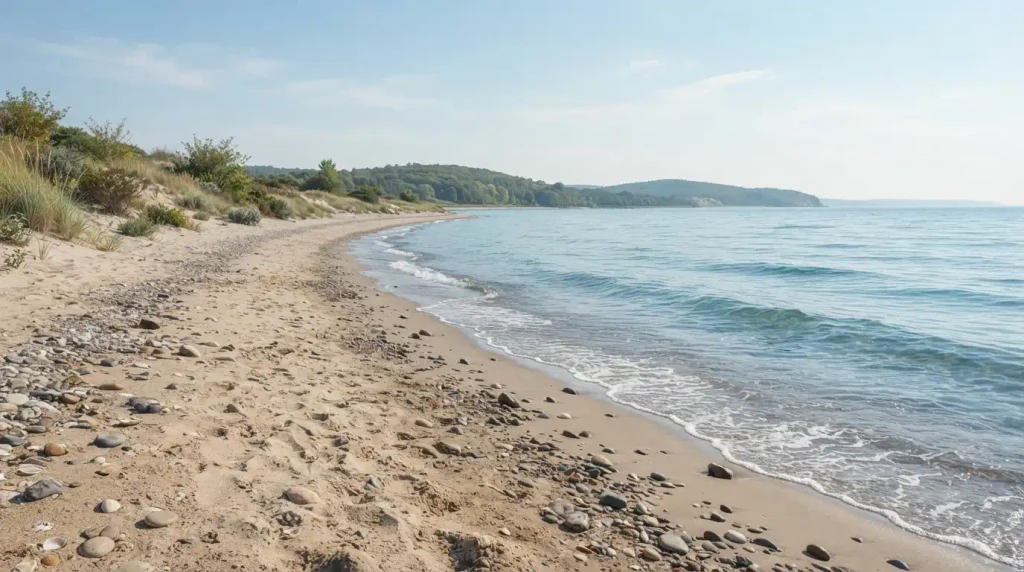
The word beach refers to a sloping shoreline along a body of water covered with sand, pebbles, or small stones. It describes the precise land area where water meets dry ground directly. Native speakers use it to talk about vacations, coastal geography, and ocean ecosystems. Thus, you will hear it in casual travel chats, weather reports, and nature documentaries.
- Part of Speech: Noun (can also act as a verb)
- Definition: A pebbly or sandy shore by the ocean, sea, lake, or river.
Connotative Meaning
(Connotation is the emotional feeling or cultural association attached to a word beyond its literal dictionary definition.)
- Positive tone: Evokes feelings of relaxation, sunshine, warm summer days, and fun family vacations.
- Negative tone: Hints at severe coastal erosion, dangerous ocean tides, extreme weather, or trash pollution.
- Neutral tone: Simply identifies the geographic boundary between land and a body of water.
Etymology
The origin of beach comes from the Old English word bece, which originally meant a brook or small stream. Later, in Early Modern English, the term shifted toward describing pebble-strewn ocean margins.
- Old English (450–1100): Rooted in bece (stream, brook, or small watercourse).
- Middle English (1100–1500): Evolved to describe pebbly banks and gravelly river edges.
- Modern English (1500–Present): Shifted completely to mean sandy ocean coasts or lake shores.
Pronunciation
- US: /biːtʃ/
- UK: /biːtʃ/
Syllables
- beach (1 syllable)
Affixation Pattern
- Root: Beach
- Prefix: None
- Suffix: None
Synonyms List
Shore (Noun) — US /ʃɔːr/ | UK /ʃɔː/
Meaning: The land along the edge of a sea, lake, or broad river.
Tone/Register: Neutral, Standard, General.
Examples:
- We walked along the quiet shore as the sun began to set.
- The boat docked safely near the rocky lake shore.
Coastline (Noun) — US /ˈkoʊstlaɪn/ | UK /ˈkəʊstlaɪn/
Meaning: The boundary line between the land and the ocean or sea.
Tone/Register: Formal, Geographic, Technical.
Examples:
- The rugged coastline stretches across hundreds of scenic miles.
- New environmental policies protect the local coastline from pollution.
Seashore (Noun) — US /ˈsiːʃɔːr/ | UK /ˈsiːʃɔː/
Meaning: The land right next to the sea, typically sandy or pebbly.
Tone/Register: Literary, Descriptive, Nostalgic.
Examples:
- Children love hunting for colorful seashells along the seashore.
- Fresh air makes a morning walk by the seashore invigorating.
Coast (Noun) — US /koʊst/ | UK /kəʊst/
Meaning: The land near a shore or sea on a large regional scale.
Tone/Register: General, Geographical, Casual.
Examples:
- They decided to drive down the west coast for summer break.
- Strong winds hit the southern coast early this morning.
Oceanfront (Noun) — US /ˈoʊʃnfrʌnt/ | UK /ˈəʊʃnfrʌnt/
Meaning: Land or property directly facing the open ocean waters.
Tone/Register: Business, Real Estate, Descriptive.
Examples:
- They reserved a luxury room right on the oceanfront.
- The town built a long paved walkway along the oceanfront.
Waterfront (Noun) — US /ˈwɔːtərfrʌnt/ | UK /ˈwɔːtəfrʌnt/
Meaning: A section of a town or harbor that borders a body of water.
Tone/Register: Business, Urban, General.
Examples:
- The city renovated its historic waterfront into a popular tourist hub.
- Local restaurants offer excellent outdoor dining along the waterfront.
Seaside (Noun) — US /ˈsiːsaɪd/ | UK /ˈsiːsaɪd/
Meaning: A location or resort area adjacent to the sea.
Tone/Register: Casual, British English, Tourism.
Examples:
- Families flock to the peaceful seaside town every July.
- Enjoying fried fish by the seaside is a classic holiday tradition.
Littoral (Noun) — US /ˈlɪtərəl/ | UK /ˈlɪtərəl/
Meaning: The region or shore zone lying along a coastal water body.
Tone/Register: Academic, Scientific, Technical.
Examples:
- Marine biologists study coastal wildlife across the littoral zone.
- Heavy ocean storms often disrupt delicate littoral ecosystems.
Strand (Noun) — US /strænd/ | UK /strænd/
Meaning: A poetic or old-fashioned term for a shore or beachfront.
Tone/Register: Literary, Poetic, Archaic.
Examples:
- The travelers rested upon the golden strand after their long voyage.
- Gentle waves washed over the lonely ocean strand.
Bank (Noun) — US /bæŋk/ | UK /bæŋk/
Meaning: The rising ground bordering a river, canal, or lake.
Tone/Register: Neutral, Geographic, Everyday.
Examples:
- Fishermen gathered quietly along the muddy river bank.
- We sat on the grassy bank to watch the kayaks sail past.
Margins (Noun) — US /ˈmɑːrdʒɪnz/ | UK /ˈmɑːdʒɪnz/
Meaning: The outer border or water boundary of a body of land.
Tone/Register: Academic, Literary, Formal.
Examples:
- Small marine crabs burrow into the wet margins of the estuary.
- Wild mangrove forests grow thickly around the water margins.
Sands (Noun) — US /sændz/ | UK /sændz/
Meaning: A broad area composed entirely of sand along a coast.
Tone/Register: Expressive, Poetic, Travel.
Examples:
- Tourists stretched out across the warm sands under large umbrellas.
- We tracked tiny footprints leading far across the coastal sands.
Foreshore (Noun) — US /ˈfɔːrʃɔːr/ | UK /ˈfɔːʃɔː/
Meaning: The land area lying between the high and low water marks.
Tone/Register: Legal, Environmental, Scientific.
Examples:
- The coastal authority strictly regulates construction on the foreshore.
- Low tide revealed a vast foreshore full of small tidal pools.

Seabank (Noun) — US /ˈsiːbæŋk/ | UK /ˈsiːbæŋk/
Meaning: A protective wall or natural embankment bordering the sea.
Tone/Register: Formal, Technical, Regional.
Examples:
- Engineers reinforced the old seabank before the hurricane arrived.
- Wild grass grows densely along the top of the coastal seabank.
Waterbrink (Noun) — US /ˈwɔːtərbrɪŋk/ | UK /ˈwɔːtəbrɪŋk/
Meaning: The extreme edge or rim of a body of water.
Tone/Register: Literary, Uncommon, Descriptive.
Examples:
- She stood right at the water’s brink, feeling the cool spray.
- Wild ducks gathered closely near the peaceful water’s brink.
Playas (Noun) — US /ˈplaɪəz/ | UK /ˈplaɪəz/
Meaning: Flat, sandy beaches or dry lake beds in Spanish-influenced regions.
Tone/Register: Regional, Informal, Spanish Origin.
Examples:
- Millions of vacationers visit the beautiful playas of Mexico each year.
- Palm trees line the pristine playas across the tropical resort.
Shoreline (Noun) — US /ˈʃɔːrlaɪn/ | UK /ˈʃɔːlaɪn/
Meaning: The actual edge where a body of water meets the land.
Tone/Register: Technical, General, Informational.
Examples:
- Satellite images reveal significant changes along the lake shoreline.
- Trash cleanups help preserve local wildlife around the shoreline.
Coastland (Noun) — US /ˈkoʊstlænd/ | UK /ˈkəʊstlænd/
Meaning: Land lying adjacent to the sea or ocean coast.
Tone/Register: Geographic, Formal, Descriptive.
Examples:
- Fertile coastland allows small seaside farms to thrive easily.
- The wild coastland features high cliffs and deep rock caves.
Estuary (Noun) — US /ˈestʃueri/ | UK /ˈestʃuəri/
Meaning: The tidal mouth of a large river where the tide meets the stream.
Tone/Register: Scientific, Environmental, Academic.
Examples:
- Rare bird species nest safely within the coastal estuary.
- Fresh river water mixes naturally with salt water in the estuary.
Delta (Noun) — US /ˈdeltə/ | UK /ˈdeltə/
Meaning: A triangular landform created by sediment at a river mouth.
Tone/Register: Geographic, Academic, Scientific.
Examples:
- Farmers cultivated rich soil across the wide river delta.
- The boat navigated slowly through the shallow channels of the delta.
Bay (Noun) — US /beɪ/ | UK /beɪ/
Meaning: A broad inlet of the sea where the land curves inward.
Tone/Register: General, Maritime, Travel.
Examples:
- Sailing ships anchored safely inside the calm waters of the bay.
- The resort overlooks a picturesque horseshoe-shaped bay.
Cove (Noun) — US /koʊv/ | UK /kəʊv/
Meaning: A small, sheltered bay surrounded by steep rocks or trees.
Tone/Register: Descriptive, Literary, Travel.
Examples:
- Swimmers discovered a hidden cove tucked away behind high cliffs.
- Smugglers historically used this quiet cove to store secret cargo.
Inlet (Noun) — US /ˈɪnlet/ | UK /ˈɪnlet/
Meaning: A narrow strip of water leading inland from a coast.
Tone/Register: Technical, Geographical, Navigation.
Examples:
- Small fishing vessels anchored safely along the quiet inlet.
- Tides flow rapidly through the narrow ocean inlet every morning.
Lagoon (Noun) — US /ləˈɡuːn/ | UK /ləˈɡuːn/
Meaning: A shallow body of water separated from the ocean by reefs.
Tone/Register: Positive, Tropical, Descriptive.
Examples:
- Crystal-clear blue water makes the lagoon perfect for snorkeling.
- Colorful fish swim peacefully around the tropical coral lagoon.
Atoll (Noun) — US /ˈætɔːl/ | UK /ˈætɒl/
Meaning: A ring-shaped coral reef surrounding a central lagoon.
Tone/Register: Geographic, Scientific, Specific.
Examples:
- The remote Pacific atoll remains largely untouched by modern life.
- Divers explored rich sea life around the outer rim of the atoll.
Cay (Noun) — US /kiː/ | UK /kiː/
Meaning: A low-elevation island or sandy reef formed on coral reefs.
Tone/Register: Regional, Travel, Geographical.
Examples:
- Tourists took a ferry out to the sandy cay for a day trip.
- Green sea turtles lay eggs safely on the uninhabited cay.
Key (Noun) — US /kiː/ | UK /kiː/
Meaning: A low-lying island or reef along a tropical coast.
Tone/Register: Regional, Daily Usage, Geographic.
Examples:
- They spent their winter holiday relaxing down in the Florida Keys.
- A long concrete bridge connects the mainland to the offshore key.
Reef (Noun) — US /riːf/ | UK /riːf/
Meaning: A ridge of jagged rock or coral near the ocean surface.
Tone/Register: Marine, Scientific, General.
Examples:
- Coral reefs protect sandy shores from strong coastal wave impacts.
- The ship captain steered carefully to avoid striking the hidden reef.
Bar (Noun) — US /bɑːr/ | UK /bɑː/
Meaning: An offshore ridge of sand built up by river currents.
Tone/Register: Marine, Technical, Navigation.
Examples:
- High tides make crossing the shallow sandbar very dangerous.
- Waves break heavily across the submerged outer bar.
Sandbar (Noun) — US /ˈsændbɑːr/ | UK /ˈsændbɑː/
Meaning: A long underwater ridge of sand exposed at low tide.
Tone/Register: Casual, Marine, Recreational.
Examples:
- Swimmers walked clear out to the sandbar during low tide.
- Seabirds gather in huge flocks along the exposed sandbar.
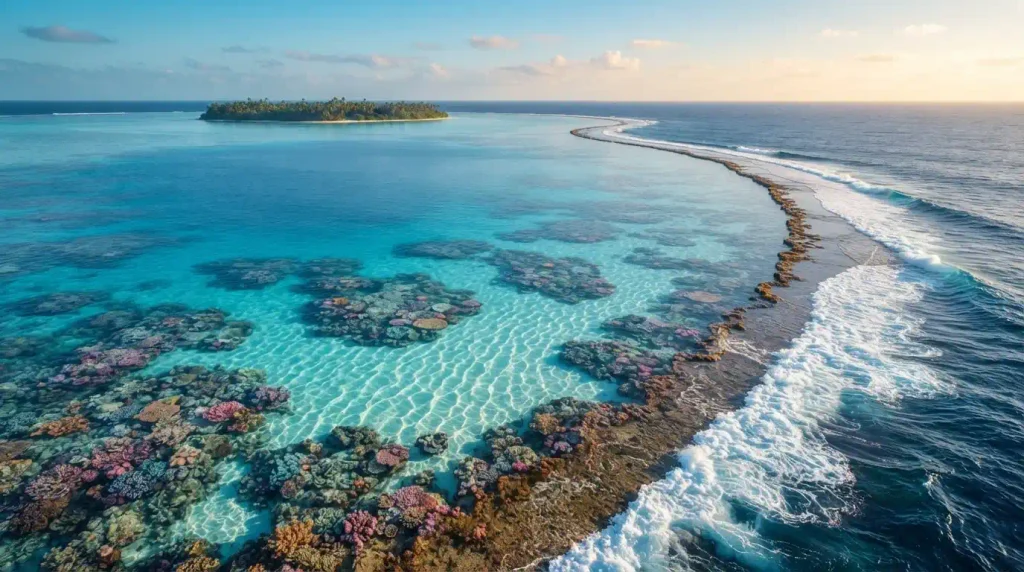
Spit (Noun) — US /spɪt/ | UK /spɪt/
Meaning: A narrow coastal landform extending into a body of water.
Tone/Register: Geographic, Technical, Academic.
Examples:
- A long sandy spit creates a safe harbor for local boats.
- Coastal erosion slowly washes away the tip of the spit.
Shorefront (Noun) — US /ˈʃɔːrfrʌnt/ | UK /ˈʃɔːfrʌnt/
Meaning: Land that borders directly along a body of water.
Tone/Register: Business, Real Estate, Formal.
Examples:
- Developers built modern apartments along the busy shorefront.
- Property values increase sharply right along the natural shorefront.
Bankside (Noun) — US /ˈbæŋksaɪd/ | UK /ˈbæŋksaɪd/
Meaning: The land sloping down toward the edge of a river or stream.
Tone/Register: Literary, Regional, Descriptive.
Examples:
- We enjoyed a pleasant afternoon picnic along the peaceful bankside.
- Wildflowers bloom brightly along the river bankside every spring.
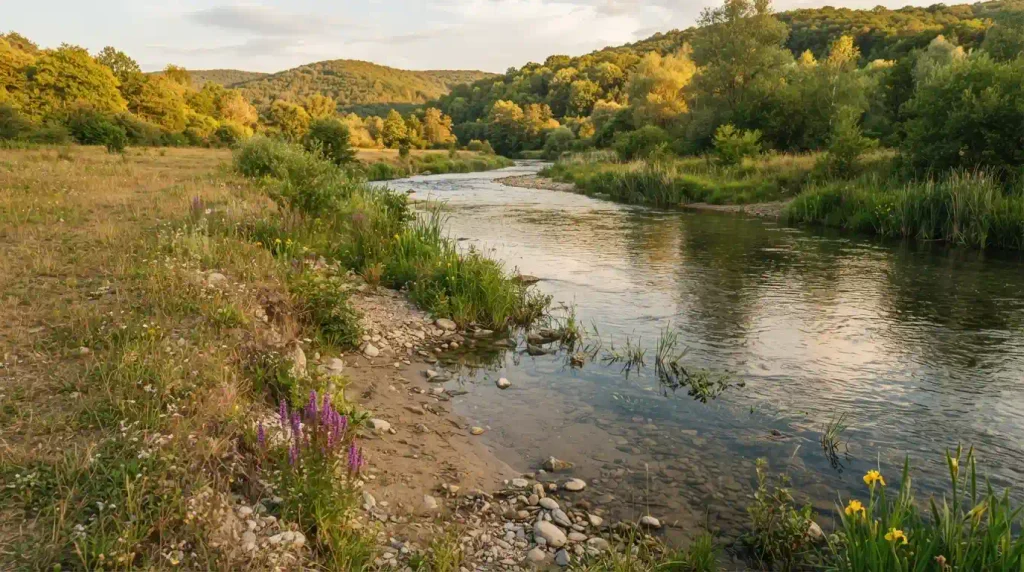
Riparian Zone (Noun) — US /raɪˈperiən zoʊn/ | UK /raɪˈpeəriən zəʊn/
Meaning: The interface area between dry land and a river or stream.
Tone/Register: Environmental, Highly Academic, Scientific.
Examples:
- Healthy riparian zones filter rainwater pollutants before reaching rivers.
- Conservationists protect the local riparian zone from urban buildup.
Coast-edge (Noun) — US /koʊst edʒ/ | UK /kəʊst edʒ/
Meaning: The outer physical rim of coastal land where it meets water.
Tone/Register: Descriptive, General, Informational.
Examples:
- Caution signs warn tourists about steep drops along the coast-edge.
- Seabirds build secure nests high above the windy coast-edge.
Synonyms by Tone
Positive Tone
- Seaside
- Oceanfront
- Lagoon
- Sands
- Playas
Neutral Tone
- Beach
- Shore
- Coastline
- Shoreline
- Waterfront
Technical / Academic Tone
- Littoral
- Foreshore
- Estuary
- Riparian Zone
- Delta
Informal / Conversational Tone
- Coast
- Key
- Sandbar
- Cove
- Bay
Why Tone Matters: Choosing the proper tone prevents serious misunderstandings. For instance, using “littoral zone” in a personal travel blog sounds far too stiff, whereas calling a river bank “the beach” in a geography essay lacks scientific accuracy.
Beach vs. Close Alternatives
| Word | Specific Focus | Typical Tone | Best Usage Scenario |
|---|---|---|---|
| Beach | Sandy shore covered with small pebbles | Friendly / Universal | Vacations, casual summer chats, resort descriptions. |
| Shore | Any general land edge touching water | Neutral / Standard | River edges, lake sides, general water limits. |
| Coastline | Large geographic boundary line | Formal / Technical | Maps, scientific environmental reports, land policy. |
How “Beach” Changes by Context
Daily Conversation
In everyday speech, people prefer direct choices like beach, coast, or seaside. Consequently, telling friends about a vacation sounds completely natural when using these accessible options.
Writing and Blogging
Travel bloggers rely heavily on expressive options like oceanfront, sands, or playas. Thus, these descriptive words create vibrant imagery without annoying readers with repetitive word choice.
Professional and Academic Tone
Geographers, environmentalists, and researchers prefer precise terms like coastal margin, foreshore, or littoral zone. Therefore, using these terms maintains professional standards and scientific accuracy.
Creative Writing
Novelists use atmospheric terms like strand, cove, or seabanks. Consequently, these artistic words build deep emotional immersion and vivid landscape scenes.
Common Mistakes & Native Usage
Common Mistakes
- Using “Beach” for muddy river edges: Calling a muddy river bank a “beach” is inaccurate. Reserve “beach” for sandy or pebbly shores.
- Confusing “Coast” with “Shore”: “Coast” refers to large regional land areas near oceans, whereas “shore” refers strictly to the water’s edge itself.
- Overusing “Beach” in descriptive writing: Repeating “beach” in every single sentence makes travel content sound repetitive and boring.
Register Notes
In written English, coastline and foreshore carry significant authority in environmental studies. Conversely, in spoken English, the coast or the water usually replaces formal geographic nouns naturally.
For additional language resources, review our related guides on descriptive vocabulary.
Real-Life Mini Scenarios
- Workplace: “Our company chose a scenic waterfront hotel for the corporate retreat.”
- Social Situations: “Let’s gather near the seaside cafe around four o’clock.”
- Media & Pop Culture: “Documentaries highlight rising water levels affecting the local coastline.”
- Writing or Storytelling: “The lonely sailor stared out across the misty strand.”
Interactive Practice Quiz
- Which synonym for beach best describes a small, hidden bay enclosed by high cliffs?
A) Delta
B) Cove
C) Sandbar
D) Riparian Zone - What word is best suited for an environmental scientist documenting water boundaries? A) Sands
B) Playas
C) Littoral
D) Seaside - Which term refers specifically to property or land directly facing open ocean waters?
A) Oceanfront
B) Riverbank
C) Estuary
D) Spit - What is the best word for describing a ring-shaped coral reef surrounding a lagoon?
A) Atoll
B) Strand
C) Coastline
D) Seabank - Which word describes the land edge touching a river rather than an ocean?
A) Beach
B) Bank
C) Cay
D) Key - What poetic or literary word can replace beach in a classic storytelling novel?
A) Foreshore
B) Strand
C) Inlet
D) Delta - Which option fits best when writing a casual blog post about a sunny resort trip?
A) Seaside
B) Riparian Zone
C) Littoral
D) Estuary - What geographical term describes a triangular landform created at a river mouth?
A) Delta
B) Sandbar
C) Oceanfront
D) Coast-edge - Which adjective/noun combination fits the land interface next to fresh streams?
A) Playas
B) Atoll
C) Riparian Zone
D) Cay - What is the best choice for describing exposed sand during low ocean tides?
A) Sandbar
B) Bankside
C) Waterbrink
D) Littoral
Reflection Task: Write one original sentence about a coastal trip using two new synonyms from this guide.
Answer Key: 1-B, 2-C, 3-A, 4-A, 5-B, 6-B, 7-A, 8-A, 9-C, 10-A
Frequently Asked Questions
1. What is the most common formal synonym for beach?
“Shore” or “coastline” serves as the most widely accepted formal synonym for beach. Writers use these terms in geography, academic papers, and official reports to describe coastal land boundaries accurately without sounding overly casual.
2. Can “shore” and “beach” be used interchangeably?
While very similar, “shore” refers broadly to any land bordering a large body of water, including lakes and rivers. Conversely, “beach” specifically describes a shore covered in sand, pebbles, or loose stones.
3. What is the difference between coast and beach?
“Coast” refers to a large geographic region of land near the ocean, including nearby towns and cliffs. “Beach” refers strictly to the narrow strip of sand or pebbles right where water meets land.
4. What is a poetic synonym for beach?
“Strand” is a classic poetic and literary synonym for beach. Authors use it in fiction and poetry to evoke romantic, lonely, or historical imagery along ocean margins.
5. How do I choose the right coastal synonym in my writing?
Consider your specific setting and audience. Use “oceanfront” for real estate, “coastline” or “foreshore” for academic papers, and “seaside” or “shore” for creative travel blogging.
Conclusion
Mastering a synonym for beach allows you to create captivating coastal descriptions effortlessly. Choosing precise vocabulary helps you describe landscapes clearly without relying on repetitive terms.
Because tone and context matter greatly, selecting the best word improves your essays and creative travel posts. Therefore, your writing becomes far more engaging when your chosen terms match your precise intent.
Start using words like shore, coastline, and waterfront in your daily writing today. Practicing these coastal synonyms builds lasting vocabulary mastery while elevating your overall communication skills.

Sawera Rani is the founder and content creator behind VocabularyFinder.com, a platform designed to help learners improve their English vocabulary simply and effectively. With a passion for language learning, Sawera Rani creates easy-to-understand vocabulary guides, word meanings, definitions, and practical examples that make learning new words easier. She aims to provide useful and reliable resources for students, professionals, and English learners who want to improve their communication skills. Through VocabularyFinder.com, she focuses on making vocabulary learning more accessible, engaging, and helpful for everyday use.