
A synonym for copycat refers to words like imitator, plagiarist, mimic, emulator, or counterfeiter that describe someone or something that closely reproduces the work, style, or behavior of another. Depending on context, alternatives range from formal legal terms like infringer to casual slang like wannabe.
Synonym for copycat helps you describe imitation clearly without repeating childish playground slang. Imagine a brand releasing a phone design that looks identical to a rival device. Calling it a derivative design sounds far more professional than calling it a basic clone.
Using a precise synonym for copycat improves your vocabulary depth across essays, articles, and reviews. For instance, replacing informal terms with words like impersonator or fraudster strengthens your written tone immediately.
Finding a reliable synonym for copycat empowers students, bloggers, SEO content writers, and daily English speakers. Expanding your lexical range keeps your prose fresh, captivating, and natural across all communication channels.
What Does “Copycat” Really Mean?
Copycat means a person or thing that adopts, mimics, or plagiarizes the work, appearance, or style of someone else.
In English, it functions primarily as a noun (that artist is a copycat), an adjective (a copycat crime), and occasionally a verb (to copycat a design).
Part of Speech: Noun / Adjective / Verb
Definition: One who closely mimics or replicates another’s ideas, style, or actions without original creativity.
Connotative Meaning
(Connotation is the emotional feeling or cultural association that a word carries beyond its literal dictionary definition.)
- Positive tone: Very rare; occasionally used playfully to describe a young child admiring an older sibling.
- Negative tone: Expresses laziness, intellectual theft, unoriginality, and cheap imitation.
- Neutral tone: Used analytically when discussing biological mimicry or artistic influences.
Etymology and Syllables
The term originated in 19th-century American folklore and schoolyard slang. It combined “copy” (reproduce) with “cat” (a playful or contemptuous reference to a person).
- Old English (450–1100): Early Anglo-Saxon terms relied on roots like geefenlæcan (to emulate or match).
- Middle English (1100–1500): French influences introduced copie (abundance or manuscript duplicate).
- Modern English (1500–Present): The compound copycat first appeared in American print around the 1880s as informal slang.
Pronunciation (IPA):
- US: /ˈkɑː.pi.kæt/
- UK: /ˈkɒp.i.kæt/
Syllables: cop-y-cat
- Root: Copy (from Latin copia, meaning abundance or transcript)
- Prefix: None
- Suffix: Cat (informal noun suffix referring to a person)

Comprehensive List of 45 Synonyms
Imitator (Noun) — US: /ˈɪm.ə.teɪ.t̬ɚ/ | UK: /ˈɪm.ɪ.teɪ.tər/
Meaning: A person who copies the behavior, appearance, or work of another.
Tone/Register: Neutral, Standard
Examples:
The young painter was a talented imitator of classical Renaissance techniques.
Several market imitators launched cheap versions of the popular smartphone.
Mimic (Noun) — US: /ˈmɪm.ɪk/ | UK: /ˈmɪm.ɪk/
Meaning: Someone who cleverly imitates voices, gestures, or mannerisms for entertainment or deception.
Tone/Register: Neutral, Performance
Examples:
The comedian was a skilled mimic who could replicate famous actors effortlessly.
Parrots are natural mimics that copy human speech patterns easily.
Plagiarist (Noun) — US: /ˈpleɪ.dʒɚ.ɪst/ | UK: /ˈpleɪ.dʒər.ɪst/
Meaning: A person who takes another person’s written work or ideas and passes them off as their own.
Tone/Register: Formal, Academic, Legal
Examples:
The university expelled the student after proving he was a chronic plagiarist.
Scholars exposed the author as a plagiarist who stole entire research chapters.
Emulator (Noun) — US: /ˈem.jə.leɪ.t̬ɚ/ | UK: /ˈem.jə.leɪ.tər/
Meaning: Someone who strives to equal or excel a person or achievement through admiration.
Tone/Register: Positive, Formal
Examples:
The ambitious young athlete proved to be a dedicated emulator of his coach.
Great leaders inspire a new generation of respectful emulators in business.
Impersonator (Noun) — US: /ɪmˈpɝː.sə.neɪ.t̬ɚ/ | UK: /ɪmˈpɜː.sən.eɪ.tər/
Meaning: A person who pretends to be another individual for entertainment or fraudulent purposes.
Tone/Register: Formal, Legal
Examples:
An Elvis impersonator entertained guests at the charity gala event last night.
Police arrested an impersonator who was pretending to be a court official.
Counterfeiter (Noun) — US: /ˈkaʊn.t̬ɚ.fɪ.t̬ɚ/ | UK: /ˈkaʊn.tə.fɪ.tər/
Meaning: Someone who manufactures fake goods or currency with intent to deceive buyers.
Tone/Register: Formal, Legal
Examples:
Federal agents tracked down a ring of currency counterfeiters in the city.
The brand sued a counterfeiter for distributing fake luxury handbags online.
Forger (Noun) — US: /ˈfɔːr.dʒɚ/ | UK: /ˈfɔː.dʒər/
Meaning: A criminal who creates fake documents, signatures, or artwork fraudulently.
Tone/Register: Legal, Formal
Examples:
The art museum discovered that the newly acquired painting was made by a master forger.
Bank officials identified the check signature as the work of an experienced forger.
Doubler (Noun) — US: /ˈdʌb.lɚ/ | UK: /ˈdʌb.lər/
Meaning: A person or device that duplicates or repeats something exactly.
Tone/Register: Technical, Neutral
Examples:
The studio used a voice doubler to layer the chorus track in the song.
He acted as a stunt double for the lead actor during dangerous action scenes.
Clone (Noun) — US: /kloʊn/ | UK: /kləʊn/
Meaning: An exact duplicate or replica of a person, product, or idea.
Tone/Register: Informal, Modern
Examples:
The new budget car looks like an exact clone of the premium German model.
Software developers created an open-source clone of the popular application.
Wannabe (Noun) — US: /ˈwɑː.nə.bi/ | UK: /ˈwɒn.ə.bi/
Meaning: An informal, disparaging term for someone who aspires to be like someone else.
Tone/Register: Informal, Slang
Examples:
The club was filled with rockstar wannabes wearing leather jackets.
Critics dismissed the new band as a group of unoriginal wannabes.
Copyist (Noun) — US: /ˈkɑː.pi.ɪst/ | UK: /ˈkɒp.i.ɪst/
Meaning: A person who makes manual copies of manuscripts, documents, or music scores.
Tone/Register: Historical, Formal
Examples:
Monks worked as diligent copyists in medieval monastery libraries.
The composer hired a professional copyist to transcribe his orchestral score.
Ape (Verb / Noun) — US: /eɪp/ | UK: /eɪp/
Meaning: To imitate the behavior, style, or mannerisms of someone clumsily or foolishly.
Tone/Register: Informal, Critical
Examples:
Stop trying to ape the speech patterns of television celebrities.
His performance was a clumsy attempt to ape classic jazz musicians.
Parrot (Verb / Noun) — US: /ˈper.ət/ | UK: /ˈpær.ət/
Meaning: To repeat someone’s words or ideas mindlessly without real understanding.
Tone/Register: Critical, Conversational
Examples:
The candidate simply parroted the party slogans during the live debate.
Avoid parroting textbook definitions without understanding the core concepts.
Echo (Noun / Verb) — US: /ˈek.oʊ/ | UK: /ˈek.əʊ/
Meaning: A close repetition or reflection of an idea, style, or voice.
Tone/Register: Literary, Neutral
Examples:
Her novel contains a clear echo of nineteenth-century Gothic literature.
The junior senator echoed the president’s economic speech today.
Mirror (Verb) — US: /ˈmɪr.ɚ/ | UK: /ˈmɪr.ər/
Meaning: To correspond closely to or reproduce the characteristics of another.
Tone/Register: Professional, Analytical
Examples:
The company’s rapid growth mirrored the expansion of the broader tech market.
His actions mirrored the advice given by his financial team.

Impressionist (Noun) — US: /ɪmˈpreʃ.ən.ɪst/ | UK: /ɪmˈpreʃ.ən.ɪst/
Meaning: An entertainer who impersonates famous people for comedic performance.
Tone/Register: Creative, Neutral
Examples:
The impressionist performed hilarious takes on prominent political figures.
She works as a professional impressionist on popular comedy shows.
Mockingbird (Noun) — US: /ˈmɑː.kɪŋ.bɝːd/ | UK: /ˈmɒk.ɪŋ.bɜːd/
Meaning: A person who mimics others continuously, or a bird known for mimicking sounds.
Tone/Register: Literary, Descriptive
Examples:
He acted like a human mockingbird, repeating every joke he heard online.
The mockingbird sang varied melodies outside the bedroom window all morning.
Pretender (Noun) — US: /prɪˈten.dɚ/ | UK: /prɪˈten.dər/
Meaning: A person who claims a title, status, or position without genuine right or skill.
Tone/Register: Formal, Critical
Examples:
The critic declared the young painter to be a pretender to the artistic crown.
History books record the defeat of the royal pretender during the rebellion.
Fraud (Noun) — US: /frɑːd/ | UK: /frɔːd/
Meaning: A deceitful person who pretends to have skills or status they do not possess.
Tone/Register: Formal, Legal
Examples:
The fake doctor was exposed as an absolute fraud by investigative reporters.
Investors realized the CEO was a fraud after reviewing the audited books.
Sham (Noun / Adjective) — US: /ʃæm/ | UK: /ʃæm/
Meaning: Something or someone that is fake, counterfeit, or falsely presented.
Tone/Register: Critical, Informal
Examples:
Their advertised discount sale turned out to be a complete sham.
He put on a sham display of interest during the boring business meeting.
Duplicate (Noun) — US: /ˈduː.plə.kət/ | UK: /ˈdjuː.plɪ.kət/
Meaning: An exact copy of an original document, key, or item.
Tone/Register: Neutral, Technical
Examples:
Please keep a signed duplicate of the lease contract in your files.
He duplicated the office key in case of emergencies.
Replica (Noun) — US: /ˈrep.lɪ.kə/ | UK: /ˈrep.lɪ.kə/
Meaning: An accurate copy or reproduction of an artwork, building, or object.
Tone/Register: Formal, Artistic
Examples:
The museum features a full-scale replica of the ancient Greek ship.
She purchased a miniature replica of the Eiffel Tower during her trip.
Lookalike (Noun) — US: /ˈlʊk.ə.laɪk/ | UK: /ˈlʊk.ə.laɪk/
Meaning: A person or thing that has a strong physical resemblance to another.
Tone/Register: Informal, Conversational
Examples:
The celebrity hired a lookalike to distract paparazzi outside the hotel.
This affordable jacket is a stylish lookalike of high-end designer coats.
Double (Noun) — US: /ˈdʌb.əl/ | UK: /ˈdʌb.əl/
Meaning: A person who bears a striking physical resemblance to another individual.
Tone/Register: General, Neutral
Examples:
She looked so much like her cousin that people took her for her double.
The movie director used a body double for the dangerous mountain scene.
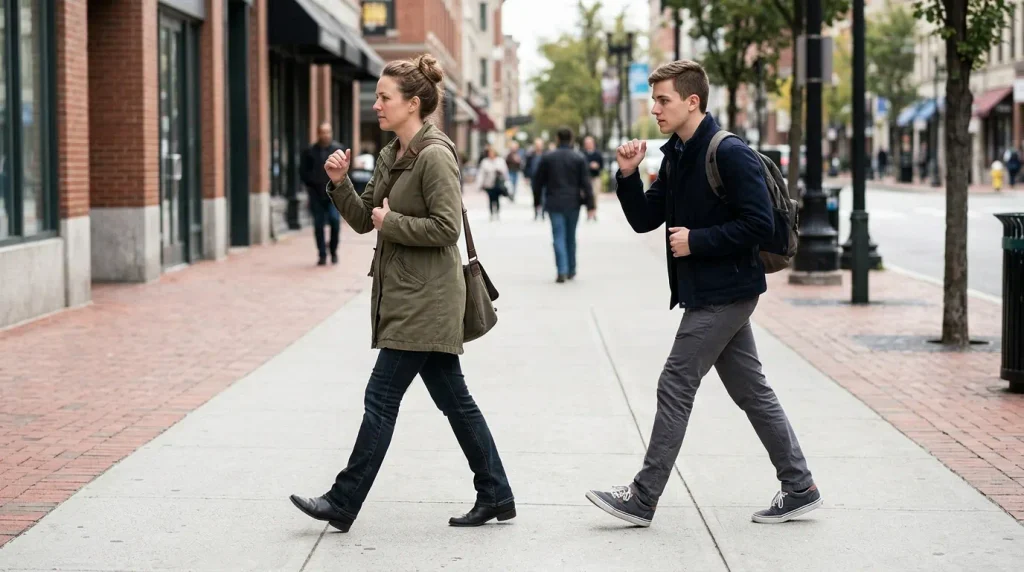
Shadow (Noun / Verb) — US: /ˈʃæd.oʊ/ | UK: /ˈʃæd.əʊ/
Meaning: Someone who follows another closely, imitating or observing their actions.
Tone/Register: Workplace, Descriptive
Examples:
The new intern will shadow the senior manager throughout the work week.
His younger brother was a constant shadow during summer vacations.
Derivative Work (Noun Phrase) — US: /dɪˈrɪv.ə.t̬ɪv wɝːk/ | UK: /dɪˈrɪv.ə.tɪv wɜːk/
Meaning: Something based on or created from pre-existing original works.
Tone/Register: Legal, Academic
Examples:
The film adaptation was classified legally as a derivative work.
Scholars criticized the novel as a derivative work lacking fresh imagination.
Rip-off (Noun) — US: /ˈrɪp.ɑːf/ | UK: /ˈrɪp.ɒf/
Meaning: A cheap, inferior, or exploitative copy of an original idea or product.
Tone/Register: Informal, Slang
Examples:
That action movie was a blundering rip-off of classic sci-fi films.
Consumers avoided the product because it felt like an overpriced rip-off.
Knockoff (Noun) — US: /ˈnɑːk.ɑːf/ | UK: /ˈnɒk.ɒf/
Meaning: An unauthorized copy or cheap imitation of a famous brand product.
Tone/Register: Informal, Commercial
Examples:
Street vendors were selling cheap knockoff watches near the tourist square.
She bought a stylish knockoff bag that resembled luxury designer luggage.
Cheater (Noun) — US: /ˈtʃiː.t̬ɚ/ | UK: /ˈtʃiː.tər/
Meaning: A person who acts dishonestly or breaks rules to gain an unfair advantage.
Tone/Register: Critical, Informal
Examples:
The exam supervisor caught the cheater looking at another student’s paper.
Game developers banned the online cheater for using illegal software hacks.
Infringer (Noun) — US: /ɪnˈfrɪn.dʒɚ/ | UK: /ɪnˈfrɪn.dʒər/
Meaning: A person or company that violates legal copyrights, patents, or trademarks.
Tone/Register: Formal, Legal
Examples:
The court ordered the patent infringer to pay substantial financial damages.
Copyright owners issued a cease-and-desist letter to the digital infringer.
Simulator (Noun) — US: /ˈsɪm.jə.leɪ.t̬ɚ/ | UK: /ˈsɪm.jə.leɪ.tər/
Meaning: A machine or system that recreates the conditions of a real activity.
Tone/Register: Technical, Professional
Examples:
Flight students trained in a realistic flight simulator before flying real planes.
The medical center uses a surgical simulator for training young doctors.
Follower (Noun) — US: /ˈfɑː.loʊ.ɚ/ | UK: /ˈfɒl.əʊ.ər/
Meaning: Someone who accepts or copies the teachings, style, or methods of another.
Tone/Register: General, Neutral
Examples:
The philosopher had many devoted followers across ancient universities.
Rather than leading trends, the company remained a passive market follower.
Disciple (Noun) — US: /dɪˈsaɪ.pəl/ | UK: /dɪˈsaɪ.pəl/
Meaning: A follower who learns from and spreads the doctrines of a teacher or mentor.
Tone/Register: Formal, Academic, Spiritual
Examples:
The young architect considered himself a disciple of Frank Lloyd Wright.
Disciples of the famous scientist continued his laboratory research after his retirement.
Protégé (Noun) — US: /ˈproʊ.t̬ə.ʒeɪ/ | UK: /ˈprɒt.ə.ʒeɪ/
Meaning: A person whose career or development is guided by an influential mentor.
Tone/Register: Formal, Professional
Examples:
The veteran CEO selected a promising protégé to succeed her upon retirement.
He was the star protégé of the world-renowned violin instructor.
Carbon Copy (Idiom / Noun) — US: /ˈkɑːr.bən ˈkɑː.pi/ | UK: /ˈkɑː.bən ˈkɒp.i/
Meaning: A person or thing that is identical or extremely similar to another.
Tone/Register: Idiomatic, Informal
Examples:
The young girl is a carbon copy of her mother at that age.
The new policy is a carbon copy of the previous legislative bill.
Second Coming (Idiom / Noun) — US: /ˈsek.ənd ˈkʌm.ɪŋ/ | UK: /ˈsek.ənd ˈkʌm.ɪŋ/
Meaning: Someone who resembles a famous historical figure in talent or impact.
Tone/Register: Idiomatic, Dramatic
Examples:
Sports journalists hailed the rookie player as the second coming of Michael Jordan.
Critics viewed the young chef as the second coming of classic culinary masters.
Mime (Noun / Verb) — US: /maɪm/ | UK: /maɪm/
Meaning: To imitate physical actions and expressions silently without vocal sound.
Tone/Register: Artistic, Neutral
Examples:
The street performer mimed opening an invisible door for passersby.
Actors practiced miming complex physical actions during theater rehearsals.
Replicant (Noun) — US: /ˈrep.lɪ.kənt/ | UK: /ˈrep.lɪ.kənt/
Meaning: An artificial clone or duplicate designed to resemble a human closely.
Tone/Register: Sci-Fi, Literary
Examples:
Sci-fi writers often explore ethical questions surrounding artificial replicants.
The story featured a bio-engineered replicant seeking emotional identity.
Reproducer (Noun) — US: /ˌriː.prəˈduː.sɚ/ | UK: /ˌriː.prəˈdjuː.sər/
Meaning: A person or mechanical device that creates copies of images or sounds.
Tone/Register: Technical, Formal
Examples:
High-end sound reproducers deliver crystal-clear audio fidelity for listeners.
The museum hired a master reproducer to recreate ancient mosaic tiles.
Echo Chamber (Idiom / Noun) — US: /ˈek.oʊ ˌtʃeɪm.bɚ/ | UK: /ˈek.əʊ ˌtʃeɪm.bər/
Meaning: An environment where people only hear and repeat the same opinions.
Tone/Register: Modern, Political
Examples:
Social media algorithms often create an online echo chamber for users.
The advisory committee dissolved after turning into an unproductive echo chamber.
Copycat Artist (Noun Phrase) — US: /ˈkɑː.pi.kæt ˈɑːr.t̬ɪst/ | UK: /ˈkɒp.i.kæt ˈɑː.tɪst/
Meaning: An artist who lacks originality and steals styles from famous creators.
Tone/Register: Critical, Creative
Examples:
Art critics dismissed the exhibition as the work of a copycat artist.
A copycat artist copied the signature brushstrokes of modern painters.
Spitting Image (Idiom) — US: /ˈspɪt.ɪŋ ˈɪm.ɪdʒ/ | UK: /ˈspɪt.ɪŋ ˈɪm.ɪdʒ/
Meaning: An exact physical double or perfect likeness of another person.
Tone/Register: Idiomatic, Casual
Examples:
The boy is the spitting image of his grandfather in old photographs.
She met a stranger at the station who was the spitting image of her sister.
Fake (Noun / Adjective) — US: /feɪk/ | UK: /feɪk/
Meaning: Someone or something that is not genuine, authentic, or real.
Tone/Register: Informal, General
Examples:
The antique dealer confirmed that the rare coin was a cheap fake.
He put on a fake smile to hide his frustration during the interview.
Fraudster (Noun) — US: /ˈfrɑːd.stɚ/ | UK: /ˈfrɔːd.stər/
Meaning: A criminal who deceives others to gain money or property illegally.
Tone/Register: Legal, Formal
Examples:
The convicted fraudster served three years in prison for financial scams.
Online fraudsters target unsuspecting users with fake banking emails.
Impostor (Noun) — US: /ɪmˈpɑː.stɚ/ | UK: /ɪmˈpɒs.tər/
Meaning: A deceitful person who pretends to be someone else to deceive people.
Tone/Register: Formal, Dramatic
Examples:
Security guards removed the impostor from the backstage VIP area.
The historical novel told the story of an impostor claiming royal birth.

Synonyms by Tone
Tone plays an essential role when choosing vocabulary. Selecting standard words ensures your prose remains authoritative and clear across various mediums. For authoritative background on word usage and linguistic definitions, check standard resources like Merriam-Webster’s usage guidelines.
- Positive: Emulator, Protégé, Disciple, Replica.
- Neutral: Imitator, Mimic, Duplicate, Double, Impressionist, Mirror.
- Negative: Plagiarist, Counterfeiter, Forger, Fraud, Impostor, Infringer, Rip-off.
- Playful / Informal: Clone, Wannabe, Knockoff, Carbon copy, Spitting image, Ape.
Mini Comparison: “Copycat” vs. Close Alternatives
| Term | Meaning Difference | Tone Difference | Best Context |
| Copycat | Informal term for someone who mimics another’s ideas | Informal, Critical | Casual talk, schoolyard settings, light blogging |
| Plagiarist | Someone who steals another’s written work or ideas illegally | Formal, Academic, Legal | Academic essays, legal briefs, publishing reviews |
| Imitator | General term for someone copying behavior or style | Neutral, Standard | Art reviews, general writing, daily conversations |
Context-Based Usage
Daily Conversation
In casual speech, use expressions like clone, knockoff, carbon copy, or spitting image. Consequently, these options keep your spoken English natural, friendly, and expressive.
Writing or Blogging
Bloggers should opt for dynamic terms like imitator, mimic, or lookalike. Furthermore, these words keep your writing lively without sounding childish.
Professional or Academic Tone
In formal essays and business reports, choose terms like plagiarist, infringer, derivative work, or counterfeiter. Therefore, these choices establish strong academic authority.
Common Mistakes & Native Usage
- Mistake 1: Using copycat in legal or academic papers. Native speakers view it as casual slang. Use plagiarist or infringer instead.
- Mistake 2: Confusing emulator with a thief. An emulator copies out of respect or ambition, while a copycat usually lacks original talent.
- Mistake 3: Overusing knockoff when referring to written ideas. Knockoff applies to physical products, while written ideas involve plagiarism.
Real-Life Mini Scenarios
- Workplace: The software team sued a competitor for launching an unauthorized knockoff of their patented interface.
- Social Situations: Guests laughed when the comedian performed as an uncanny impressionist mimicking the party host.
- Media / Pop Culture: Film critics dismissed the horror movie as a cheap rip-off of classic eighties cinema.
- Storytelling: The detective realized the suspect in custody was an impostor hired to throw off the investigation.
Interactive Practice Quiz
Test your understanding of these vocabulary nuances with this quick quiz.
- Which formal term best replaces copycat in an academic essay about stolen literature?
A) Knockoff
B) Plagiarist
C) Wannabe
D) Rip-off - If a company manufactures unauthorized fake designer watches, the producer is a:
A) Counterfeiter
B) Protégé
C) Disciple
D) Emulator - Which informal idiom describes a child who looks identical to their parent?
A) Infringer
B) Carbon copy
C) Plagiarist
D) Fraudster - A person who copies another’s achievements out of genuine respect and admiration is an:
A) Emulator
B) Impostor
C) Cheater
D) Rip-off - What is the proper legal term for someone violating a patent?
A) Knockoff
B) Infringer
C) Ape
D) Parrot - Which term carries a strong negative legal connotation for forging signatures?
A) Forger
B) Mimic
C) Double
D) Lookalike - What tone does the word wannabe carry in everyday speech?
A) Highly formal
B) Informal and disparaging
C) Strictly academic
D) Legal - Which word fits best when describing a physical item crafted as an exact museum copy?A) Replica
B) Plagiarist
C) Pretender
D) Fraudster - Which choice is best for an official corporate legal document?
A) The rival firm is a copycat.
B) The rival firm created a knockoff.
C) The rival firm produced a derivative work without authorization.
D) The rival firm copped our product. - What part of speech is plagiarist?
A) Adjective
B) Verb
C) Noun
D) Adverb
Application Task: Write one short sentence describing a situation where someone copied an idea, using either imitator or plagiarist.
Answer Key:
1: B | 2: A | 3: B | 4: A | 5: B | 6: A | 7: B | 8: A | 9: C | 10: C
1. What is the most formal synonym for copycat?
The most accepted formal terms are plagiarist (for written/creative work), infringer (for legal copyright/patents), and counterfeiter (for physical goods and currency).
2. Is copycat considered a rude word?
While not vulgar, copycat is a childish and slightly derogatory term. Using it in professional or adult settings can make your speech or writing sound overly informal.
3. Why should writers avoid using copycat in academic essays?
Academic writing requires precise legal and scholarly terminology. Using copycat sounds informal, whereas terms like plagiarist, derivative work, or unauthorized duplication provide exact meaning.
4. How can using vocabulary variants improve my writing skills?
Using precise variants prevents repetitive phrasing and allows you to match your exact tone to your target audience. Consequently, it builds authority and improves overall reader engagement.
5. What are casual alternatives for copycat in daily speech?
In daily conversations, expressions like knockoff, clone, carbon copy, lookalike, or rip-off sound natural and express the sentiment clearly.
Conclusion
Finding a precise synonym for copycat elevates your everyday vocabulary and sharpens your communication skills. Replacing repetitive slang allows you to convey specific shades of imitation clearly across all settings.
Mastering a new synonym for copycat improves your essay writing, blogging, and daily spoken English significantly. Words like plagiarist, imitator, or counterfeiter allow you to match your tone perfectly to your audience.
Start practicing these vocabulary choices in your emails, essays, and daily conversations today. Building better vocabulary habits takes simple daily practice, so pick a synonym for copycat and use it in your next sentence!

Sawera Rani is the founder and content creator behind VocabularyFinder.com, a platform designed to help learners improve their English vocabulary simply and effectively. With a passion for language learning, Sawera Rani creates easy-to-understand vocabulary guides, word meanings, definitions, and practical examples that make learning new words easier. She aims to provide useful and reliable resources for students, professionals, and English learners who want to improve their communication skills. Through VocabularyFinder.com, she focuses on making vocabulary learning more accessible, engaging, and helpful for everyday use.