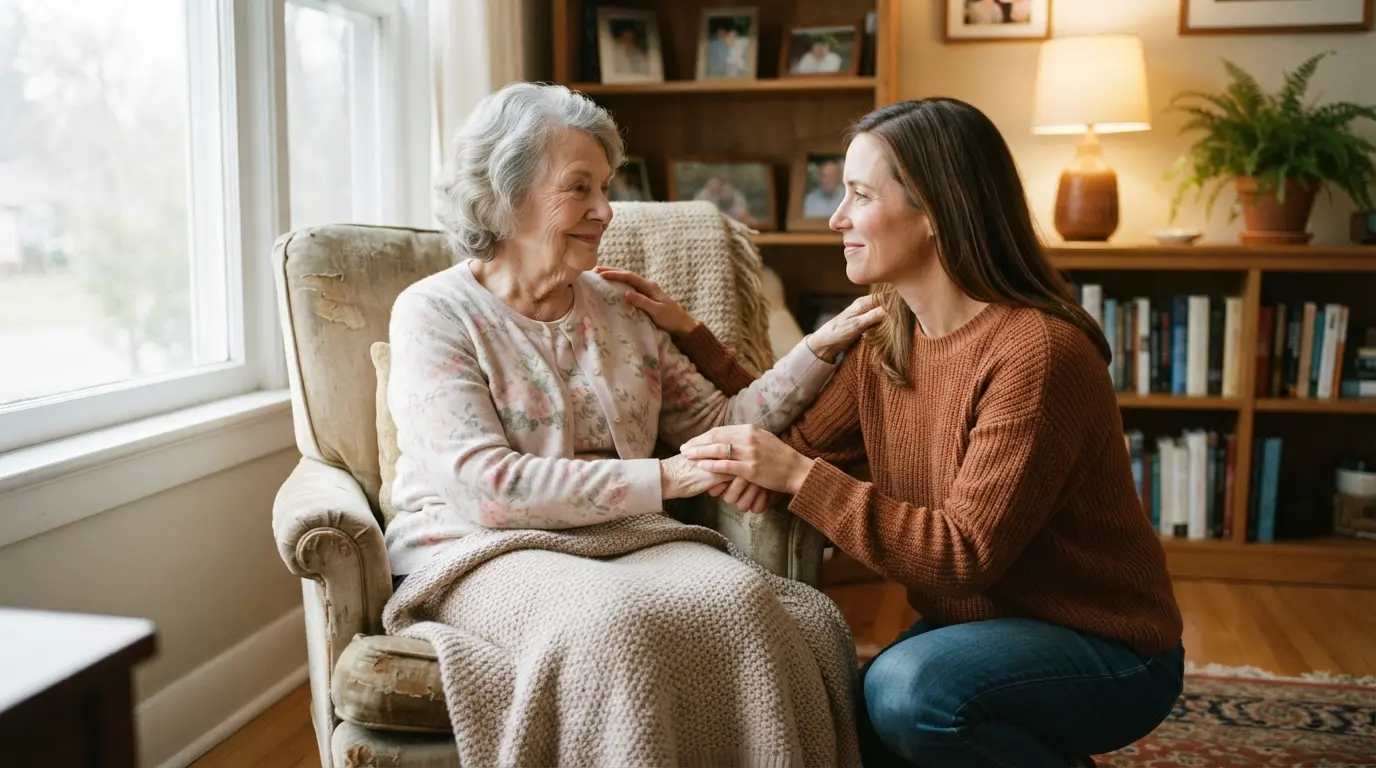
A synonym for caring for is vital for anyone looking to describe support, nurture, and attention with emotional clarity.
Yesterday, Sarah tried writing a heartfelt thank-you note to her nurse, but she kept repeating the same phrase over and over again.
Using a fitting synonym for caring for enriches your everyday writing, allowing you to highlight empathy, duty, and affection smoothly.
Consequently, mastering every useful synonym for caring for empowers students, bloggers, authors, and daily English speakers to connect deeply.
What Does “Caring For” Really Mean?
“Caring for” means attending to the physical, emotional, or social needs of a person, animal, or object with consistent warmth.
It carries a gentle, protective, and responsible tone that suggests active goodwill, personal attention, and genuine human dedication.
Native speakers understand it as an ongoing commitment, whether referring to looking after a sick relative or preserving an ancient garden.
You will encounter this phrase in medical updates, personal essays, family memoirs, and community news.
- Part of Speech: Verb Phrase (Phrasal Verb)
- Definition: To provide attention, protection, health care, or maintenance to someone or something in need.
Connotative Meaning
Connotation is the emotional feeling or idea that a word evokes beyond its literal meaning (the emotional tone or attitude a word carries).
- Positive tone: Evokes deep compassion, devotion, warmth, healing, and genuine human kindness.
- Negative tone: Can imply burden, heavy emotional fatigue, strict supervision, or unwanted overprotection.
- Neutral tone: Simply describes the objective act of managing health, maintaining property, or handling custody.
Etymology
The verb phrase combines the Old English word caru or cearu, meaning anxiety, sorrow, or grief, with the preposition for.
- Old English (450–1100): Originally meant to feel sorrow or show concern, reflecting deep personal concern for others during hardship.
- Middle English (1100–1500): Evolved into caren, meaning to feel interest, concern, or affection for specific people or duties.
- Modern English (1500–Present): Shifted into an active phrasal verb meaning to tend, nurse, maintain, or protect living beings and items.
Pronunciation (US & UK)
- US: /ˈker.ɪŋ fɔːr/
- UK: /ˈkeə.rɪŋ fɔː/
Syllables & Affixation
- Syllable Break: car – ing for
- Root: care
- Prefix: None
- Suffix: -ing

Synonyms List
Nurturing (Verb) — US: /ˈnɝː.tʃɚ.ɪŋ/ | UK: /ˈnɜː.tʃər.ɪŋ/
Meaning: Encouraging the growth, development, and well-being of someone or something through consistent loving care.
Tone/Register: Warm, Educational, Supportive
Examples: She spent years nurturing the young seedlings in her greenhouse.
Parents focus on nurturing emotional confidence in their children.
Tending (Verb) — US: /ˈten.dɪŋ/ | UK: /ˈten.dɪŋ/
Meaning: Applying steady, practical attention to the physical needs of people, plants, or domestic animals.
Tone/Register: Practical, Gentle, Traditional
Examples: The alternative farmer spent his morning tending his sheep.
In addition, she was tending her flower garden after lunch.
Fostering (Verb) — US: /ˈfɑː.stɚ.ɪŋ/ | UK: /ˈfɒs.tər.ɪŋ/
Meaning: Promoting the development and safety of others by offering temporary care, shelter, or encouragement.
Tone/Register: Professional, Supportive, Formal
Examples: The agency works hard at fostering rescue animals until adoption.
Moreover, good teachers excel at fostering positive learning spaces.
Minded (Verb) — US: /ˈmaɪn.dɪd/ | UK: /ˈmaɪn.dɪd/
Meaning: Looking after or watching over a person or place for a short period.
Tone/Register: Informal, Casual, Everyday
Examples: He minded his younger cousin while his aunt ran errands.
Furthermore, a neighbor minded the house while they traveled away.
Nursing (Verb) — US: /ˈnɝː.sɪŋ/ | UK: /ˈnɜː.sɪŋ/
Meaning: Providing medical treatment, rest, support, and comfort to an injured or ill individual.
Tone/Register: Medical, Compassionate, Formal
Examples: The clinic team stayed awake nursing injured wildlife overnight.
She spent two quiet weeks nursing her brother back to health.
Looking After (Verb Phrase) — US: /ˈlʊk.ɪŋ ˈæf.tɚ/ | UK: /ˈlʊk.ɪŋ ˈɑːf.tə/
Meaning: Taking responsibility for the safety, health, or overall general welfare of someone or something.
Tone/Register: Everyday, Conversational, Friendly
Examples: Thanks for looking after my pet cat during the long weekend.
Consequently, she is looking after her grandmother this winter.
Watching Over (Verb Phrase) — US: /ˈwɑːtʃ.ɪŋ ˈoʊ.vɚ/ | UK: /ˈwɒtʃ.ɪŋ ˈəʊ.və/
Meaning: Guarding and monitoring someone closely to protect them from harm or danger.
Tone/Register: Protective, Warm, Guarded
Examples: The elder dog kept watching over the sleeping baby.
Therefore, security guards were watching over the museum exhibit.
Safeguarding (Verb) — US: /ˈseɪf.ɡɑːr.dɪŋ/ | UK: /ˈseɪf.ɡɑː.dɪŋ/
Meaning: Protecting someone or something from injury, damage, loss, or dangerous social environments.
Tone/Register: Formal, Legal, Professional
Examples: The new policy focuses on safeguarding vulnerable alternative residents.
Consequently, staff work continuously to safeguard confidential patient files.
Protecting (Verb) — US: /prəˈtek.tɪŋ/ | UK: /prəˈtek.tɪŋ/
Meaning: Keeping someone or something safe from physical harm, illness, or external threats.
Tone/Register: Strong, Direct, General
Examples: The loyal guard dog enjoys protecting the family property.
In addition, thick winter coats assist in protecting young lambs.
Sheltering (Verb) — US: /ˈʃel.t̬ɚ.ɪŋ/ | UK: /ˈʃel.tər.ɪŋ/
Meaning: Giving physical safety, cover, and refuge from harsh weather or dangerous circumstances.
Tone/Register: Protective, Warm, Empathetic
Examples: The local community hall started sheltering homeless families overnight.
Furthermore, dense forests excel at sheltering rare bird species.
Supporting (Verb) — US: /səˈpɔːr.t̬ɪŋ/ | UK: /səˈpɔː.tɪŋ/
Meaning: Providing essential financial, emotional, or physical aid to help someone succeed or survive.
Tone/Register: Business, General, Encouraging
Examples: Family members were supporting his decision to change careers.
Thus, local charities spend resources supporting low-income homes.
Attending To (Verb Phrase) — US: /əˈten.dɪŋ tuː/ | UK: /əˈten.dɪŋ tuː/
Meaning: Directing practical effort, care, or medical service toward specific physical needs or requests.
Tone/Register: Professional, Formal, Service-Oriented
Examples: The head nurse was attending to three emergency patients at once.
As a result, technicians spent hours attending to equipment repairs.
Sustaining (Verb) — US: /səˈsteɪ.nɪŋ/ | UK: /səˈsteɪ.nɪŋ/
Meaning: Giving vital nourishment, energy, or strength necessary to keep someone alive or functioning.
Tone/Register: Academic, Serious, Formal
Examples: Clean fresh water is essential for sustaining remote mountain villages.
Furthermore, gentle words were sustaining her spirit through hardship.
Ministering To (Verb Phrase) — US: /ˈmɪn.ə.stɚ.ɪŋ tuː/ | UK: /ˈmɪn.ɪ.stər.ɪŋ tuː/
Meaning: Giving spiritual comfort, emotional solace, or physical aid to people experiencing suffering.
Tone/Register: Literary, Spiritual, Formal
Examples: Volunteers moved through the district ministering to storm victims.
She spent years ministering to alternative citizens in hospices.
Maintaining (Verb) — US: /meɪnˈteɪ.nɪŋ/ | UK: /meɪnˈteɪ.nɪŋ/
Meaning: Keeping property, equipment, or health conditions in a clean, working, and orderly state.
Tone/Register: Technical, Business, Practical
Examples: The dedicated crew works daily maintaining the historic bridge.
Proper nutrition is mandatory for maintaining personal physical health.
Preserving (Verb) — US: /prɪˈzɝː.vɪŋ/ | UK: /prɪˈzɜː.vɪŋ/
Meaning: Protecting something valuable from decay, damage, or destruction over long periods.
Tone/Register: Historical, Formal, Academic
Examples: The curator spends long hours preserving medieval paper manuscripts.
Consequently, environmental groups prioritize preserving ancient coastal forests.
Shielding (Verb) — US: /ˈʃiːl.dɪŋ/ | UK: /ˈʃiːl.dɪŋ/
Meaning: Interposing protection between a vulnerable person or object and a harsh element or threat.
Tone/Register: Protective, Dramatic, Empathetic
Examples: The mother hen was shielding her tiny chicks from rain.
Thus, thick safety gear works to shield workers from heat.

Cherishing (Verb) — US: /ˈtʃer.ɪ.ʃɪŋ/ | UK: /ˈtʃer.ɪ.ʃɪŋ/
Meaning: Holding someone or something dear and treating them with tender affection and deep care.
Tone/Register: Emotional, Loving, Warm
Examples: She spent a lifetime cherishing every family heirloom album.
Furthermore, he enjoys cherishing moments spent with his grandchildren.
Pampering (Verb) — US: /ˈpæm.pɚ.ɪŋ/ | UK: /ˈpæm.pər.ɪŋ/
Meaning: Providing extraordinary comfort, luxurious attention, and special indulgence to someone.
Tone/Register: Informal, Relaxed, Playful
Examples: The luxury spa staff enjoys pampering visitors on weekends.
She spent Sunday afternoon pampering her pet senior dog.
Mollycoddling (Verb) — US: /ˈmɑː.liˌkɑː.dəl.ɪŋ/ | UK: /ˈmɒl.iˌkɒd.əl.ɪŋ/
Meaning: Protecting or caring for someone to an excessive, overly protective degree.
Tone/Register: Critical, Informal, Colloquial
Examples: Stop mollycoddling the boy so he learns independence.
Consequently, overprotective habits risk mollycoddling growing teenagers unnecessarily.
Spoiling (Verb) — US: /ˈspɔɪ.lɪŋ/ | UK: /ˈspɔɪ.lɪŋ/
Meaning: Giving someone excessive attention, gifts, or continuous comfort out of deep affection.
Tone/Register: Informal, Conversational, Playful
Examples: Grandparents love spoiling their young grandchildren with treats.
In addition, they plan on spoiling their mother on Mother’s Day.
Looking Over (Verb Phrase) — US: /ˈlʊk.ɪŋ ˈoʊ.vɚ/ | UK: /ˈlʊk.ɪŋ ˈəʊ.və/
Meaning: Inspecting or watching someone carefully to ensure their well-being or safety.
Tone/Register: Casual, Supervisory, Practical
Examples: The senior instructor was looking over new trainees closely.
She asked her neighbor to keep looking over the house.
Keeping (Verb) — US: /ˈkiː.pɪŋ/ | UK: /ˈkiː.pɪŋ/
Meaning: Holding responsibility for guarding, supporting, or managing someone or something.
Tone/Register: Traditional, Simple, Direct
Examples: He took full responsibility for keeping his family secure.
Consequently, she was keeping the working farm running smoothly.
Guiding (Verb) — US: /ˈɡaɪ.dɪŋ/ | UK: /ˈɡaɪ.dɪŋ/
Meaning: Directing the growth, choices, and developmental welfare of another person.
Tone/Register: Educational, Mentoring, Warm
Examples: Mentors spend valuable hours guiding younger software developers along.
She loves guiding student artists through complex studio projects.
Shepherding (Verb) — US: /ˈʃep.ɚ.dɪŋ/ | UK: /ˈʃep.ə.dɪŋ/
Meaning: Guiding, protecting, and leading a group of people carefully through a complex process.
Tone/Register: Strategic, Leadership, Metaphorical
Examples: The project manager excelled at shepherding the team forward.
In addition, guides were shepherding tourists safely across trails.
Monitoring (Verb) — US: /ˈmɑː.nə.t̬ɚ.ɪŋ/ | UK: /ˈmɒn.ɪ.tər.ɪŋ/
Meaning: Observing and checking the health or progress of someone continuously over time.
Tone/Register: Technical, Medical, Objective
Examples: Nurses were constantly monitoring his vital signs overnight.
Consequently, sensors work well at monitoring room temperature changes automatically.
Managing (Verb) — US: /ˈmæn.ə.dʒɪŋ/ | UK: /ˈmæn.ɪ.dʒɪŋ/
Meaning: Taking administrative and physical responsibility for the welfare or maintenance of something.
Tone/Register: Business, Formal, Professional
Examples: She is responsible for managing the senior care home.
Therefore, he handles the household budget every month.
Accommodating (Verb) — US: /əˈkɑː.mə.deɪ.t̬ɪŋ/ | UK: /əˈkɒm.ə.deɪ.tɪŋ/
Meaning: Fitting the specific physical, medical, or personal needs of others generously.
Tone/Register: Hospitable, Formal, Professional
Examples: Hotel staff excelled at accommodating guests with mobility needs.
Thus, schools focus on accommodating diverse student learning styles.

Benefitting (Verb) — US: /ˈben.ə.fɪ.t̬ɪŋ/ | UK: /ˈben.ɪ.fɪ.tɪŋ/
Meaning: Actively improving the health, wellbeing, or happiness of another person through care.
Tone/Register: Positive, Formal, General
Examples: Daily outdoor walking is benefiting her overall joint mobility.
Furthermore, new medical resources are benefiting patients across cities.
Serving (Verb) — US: /ˈsɝː.vɪŋ/ | UK: /ˈsɜː.vɪŋ/
Meaning: Performing duties that help, support, or care for individuals or entire communities.
Tone/Register: Noble, Formal, Dedicated
Examples: She spent twenty years serving people older than patients in hospitals.
Consequently, community centers focus on serving neighborhood families daily.
Assisting (Verb) — US: /əˈsɪs.tɪŋ/ | UK: /əˈsɪs.tɪŋ/
Meaning: Giving practical help and physical support to someone performing daily tasks.
Tone/Register: Professional, Practical, Supportive
Examples: The health aide enjoys assisting older clients during walks.
Therefore, volunteers were assisting visitors with check-in procedures.
Watching (Verb) — US: /ˈwɑːtʃ.ɪŋ/ | UK: /ˈwɒtʃ.ɪŋ/
Meaning: Keeping eyes on someone or something to ensure safety and quick help.
Tone/Register: Informal, Casual, Everyday
Examples: Please keep watching my luggage while I buy water.
She spent the afternoon watching her toddlers at the park.
Overseeing (Verb) — US: /ˌoʊ.vɚˈsiː.ɪŋ/ | UK: /ˌəʊ.vəˈsiː.ɪŋ/
Meaning: Supervising and directing care procedures to guarantee safety and high quality.
Tone/Register: Professional, Administrative, Formal
Examples: The senior doctor is overseeing patient rehabilitation plans daily.
In addition, administrators work overseeing facility safety checks regularly.
Servicing (Verb) — US: /ˈsɝː.vɪs.ɪŋ/ | UK: /ˈsɜː.vɪs.ɪŋ/
Meaning: Performing maintenance and necessary repairs to keep mechanical systems working.
Tone/Register: Technical, Practical, Industrial
Examples: Technicians spent hours servicing the hospital generator system.
Consequently, mechanics recommend servicing vehicles before winter starts.
Championing (Verb) — US: /ˈtʃæm.pi.ən.ɪŋ/ | UK: /ˈtʃæm.pi.ən.ɪŋ/
Meaning: Actively defending, supporting, and promoting the rights and needs of others.
Tone/Register: Inspiring, Professional, Advocate
Examples: The organization spends time championing patient healthcare rights.
In addition, leaders are championing mental health awareness initiatives.
Supervising (Verb) — US: /ˈsuː.pɚ.vaɪ.zɪŋ/ | UK: /ˈsuː.pə.vaɪ.zɪŋ/
Meaning: Observing and directing the daily execution of tasks to ensure safety and accuracy.
Tone/Register: Professional, Administrative, Formal
Examples: The chief physician was supervising the surgical interns directly.
Thus, safety officers are supervising factory floor workers today.
Coddling (Verb) — US: /ˈkɑː.dəl.ɪŋ/ | UK: /ˈkɒd.əl.ɪŋ/
Meaning: Treating someone with extreme tenderness and overprotective leniency.
Tone/Register: Informal, Critical, Conversational
Examples: Parents should avoid coddling children when they make minor mistakes.
Moreover, overprotective habits risk coddling teenagers unnecessarily.
Supporting (Verb) — US: /səˈpɔːr.t̬ɪŋ/ | UK: /səˈpɔː.tɪŋ/
Meaning: Holding someone up emotionally or physically during times of personal difficulty.
Tone/Register: Warm, Empathetic, General
Examples: Her close friends were supporting her throughout her long recovery.
Consequently, counselors focus on supporting grieving family members.
Harboring (Verb) — US: /ˈhɑːr.bɚ.ɪŋ/ | UK: /ˈhɑː.bər.ɪŋ/
Meaning: Giving shelter, protection, or safe refuge to someone in need.
Tone/Register: Dramatic, Protective, Literary
Examples: The island monastery was harboring refugees during the storm.
Furthermore, dense foliage helps harbor small animals from predators.
Guarding (Verb) — US: /ˈɡɑːr.dɪŋ/ | UK: /ˈɡɑː.dɪŋ/
Meaning: Watching over someone or something attentively to prevent harm, loss, or injury.
Tone/Register: Protective, Strong, Vigilant
Examples: The loyal shepherd dog was guarding the flock near the river.
In addition, security staff are guarding the entrance doors.
Synonyms by Tone
Positive
- Nurturing: Connotes love, growth, positive emotional bonding, and emotional warmth.
- Cherishing: Evokes deep affection, heartfelt appreciation, and gentle lifelong dedication.
- Fostering: Suggests hopeful encouragement, safe environment building, and supportive progress.
Neutral
- Looking After: Standard, highly adaptable term for general daily responsibility.
- Attending To: Direct, service-focused phrase appropriate for professional and practical contexts.
- Maintaining: Objective phrase focused on physical upkeep, health, or mechanical condition.
Negative / Restrictive
- Mollycoddling: Implies excessive overprotection that stifles personal growth and independence.
- Coddling: Suggests smothering someone with overprotective habits that weaken self-reliance.
Playful / Informal
- Pampering: Focuses on luxury, fun treats, and relaxing indulgent comfort.
- Spoiling: Lighthearted phrase about giving extra gifts and affection generously.
Understanding tone matters tremendously in word choice because using a critical term like “mollycoddling” in a medical report would sound unprofessional, while using “attending to” in a love letter would feel cold and robotic.
Mini Comparison
Caring For vs. Nurturing vs. Attending To
| Synonym | Core Meaning | Tone | Best Usage |
|---|---|---|---|
| Caring For | Providing overall support, health, and attention | Warm / General | Family health, pet ownership, general welfare |
| Nurturing | Encouraging development, emotional strength, and growth | Emotional / Educational | Parenting, teaching, coaching, plant care |
| Attending To | Directing practical or medical tasks toward needs | Professional / Practical | Medical clinics, technical maintenance, service jobs |
Choose caring for when emphasizing broad personal responsibility and affection. Select nurturing when focusing specifically on growth and emotional development. Use attending to when highlighting precise tasks or medical duties.
Context-Based Usage
Daily Conversation
In everyday speech, native English speakers rely heavily on short phrasal verbs like “looking after” or “watching over.” These phrases feel casual, warm, and natural in home settings.
- Example: “Therefore, my brother is looking after my dog while I travel.”
Writing and Blogging
Content creators and bloggers often choose expressive words like nurturing or fostering to build deep emotional connections with readers and paint vivid images.
- Example: “In addition, fostering supportive online spaces helps quiet readers thrive.”
Professional and Academic Tone
In healthcare reports, legal papers, or corporate settings, precise terms like safeguarding, attending to, or overseeing are expected.
- Example: “Consequently, the hospital management focuses on safeguarding patient privacy standards.”
Common Mistakes & Native Usage
- Mistake 1: Using mollycoddling when you mean standard, healthy parenting. Mollycoddling carries a negative connotation of smothering someone with overprotection.
- Mistake 2: Confusing attending to with attending. To attend means to go to an event, whereas to attend to means to care for or handle a need.
- Mistake 3: Overusing caring for in technical manuals. When describing machines or property, prefer terms like maintaining or servicing.
Register Note: In informal spoken English, expressions like “minding” or “looking after” are favored. Conversely, formal written English prioritizes terms like safeguarding or ministering to. For deeper insights on language registers, reviewing formal writing style guides can expand your vocabulary skills.
Real-Life Mini Scenarios
Workplace
When an office manager manages facility safety and employee wellness, colleagues describe her as safeguarding team welfare while managing daily office needs.
Social Situations
While organizing a neighborhood charity drive, friends praise a volunteer who spent her entire weekend looking after senior neighbors during the winter storm.
Media & Pop Culture
Documentaries about wildlife conservation showcase dedicated scientists fostering orphaned elephant calves before releasing them safely back into native forests.
Interactive Practice Quiz
Test your understanding of tone, context, and word choice with these scenario-based questions.
- Which synonym best describes encouraging a child’s artistic talents over time?
a) Mollycoddling
b) Nurturing
c) Maintaining
d) Overseeing - What is the emotional tone of the term “safeguarding”?
a) Playful
b) Formal and protective
c) Casual
d) Archaic - Choose the best phrase for a nurse taking care of emergency patients:
a) Pampering
b) Attending to
c) Mollycoddling
d) Spoiling - Which phrase fits casual spoken conversation about a pet best?
a) Ministering to
b) Looking after
c) Safeguarding
d) Preserving - What does the term “mollycoddling” imply?
a) Noble military duty
b) Excessive overprotection
c) Medical care
d) Scientific study - “The museum curator spends hours _____ ancient silk garments.”
a) Pampering
b) Preserving
c) Minded
d) Spoiling - Which word works best for giving someone a luxurious spa day?
a) Pampering
b) Safeguarding
c) Overseeing
d) Maintaining - What is the key difference between “attending” and “attending to”?
a) No difference
b) Attending means presence; attending to means caring for
c) Attending is informal
d) Attending to means running - Choose the best term for a manager directing a project team’s welfare:
a) Pampering
b) Overseeing
c) Mollying
d) Nursing - Which word fits best in a formal legal document protecting children?
a) Looking after
b) Safeguarding
c) Minding
d) Spoiling
Application Task: Write a short, two-sentence story scene using the synonym nurturing.
Answer Key: 1-b, 2-b, 3-b, 4-b, 5-b, 6-b, 7-a, 8-b, 9-b, 10-b
Frequently Asked Questions
1. What is the best synonym for caring for in a professional resume?
Words like overseeing, managing, attending to, or safeguarding work best on a professional resume. In addition, these terms emphasize leadership, responsibility, and professional capability clearly to hiring managers.
2. How does nurturing differ from basic caring for?
While caring for covers basic daily support and maintenance, nurturing specifically implies actively helping someone or something grow, develop emotional strength, and reach full potential over time.
3. Can I use caring for when talking about inanimate objects?
Yes, you can use caring for when discussing delicate items like antique furniture, historic gardens, or classic cars. However, technical terms like maintaining or preserving sound more precise in formal writing.
4. What is the difference between looking after and watching over?
Looking after refers to general daily care, like feeding pets or managing tasks. Conversely, watching over carries a stronger protective tone, suggesting guarding someone against potential harm or danger continuously.
5. Why is mollycoddling considered a negative synonym?
Mollycoddling implies overprotective care that smothers independence. As a result, it suggests that the person receiving care is being overly coddled to the point where they cannot develop personal resilience.
6. Which synonym for caring for works best in medical contexts?
In medical and clinical environments, terms like nursing, attending to, or monitoring are preferred. Consequently, these words convey medical expertise, focused observation, and formal clinical responsibility accurately.
Conclusion
Expanding your vocabulary with every synonym for caring for gives you the exact tools needed to express affection, duty, and support with total precision.
When you select a tailored synonym for caring for, such as nurturing, safeguarding, or attending to, your writing gains emotional depth and clarity instantly.
Practicing a rich synonym for caring for across daily communications allows students, writers, and bloggers to connect authentically with their audience every time.
Try integrating these versatile words into your emails, essays, and everyday conversations today to elevate your English vocabulary effortlessly!

Sawera Rani is the founder and content creator behind VocabularyFinder.com, a platform designed to help learners improve their English vocabulary simply and effectively. With a passion for language learning, Sawera Rani creates easy-to-understand vocabulary guides, word meanings, definitions, and practical examples that make learning new words easier. She aims to provide useful and reliable resources for students, professionals, and English learners who want to improve their communication skills. Through VocabularyFinder.com, she focuses on making vocabulary learning more accessible, engaging, and helpful for everyday use.