Finding a rich synonym for biodiversity helps you describe natural variety, delicate ecosystems, and living systems with absolute precision.
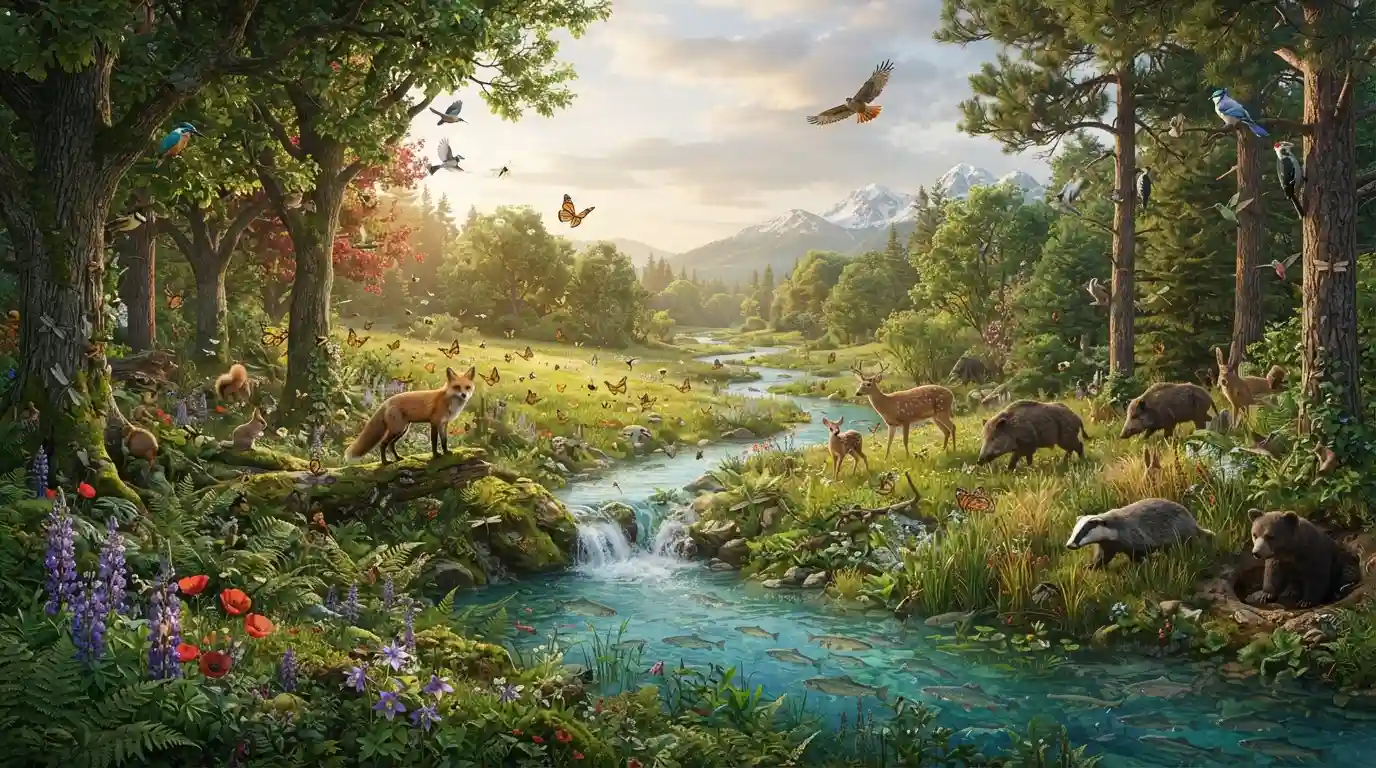
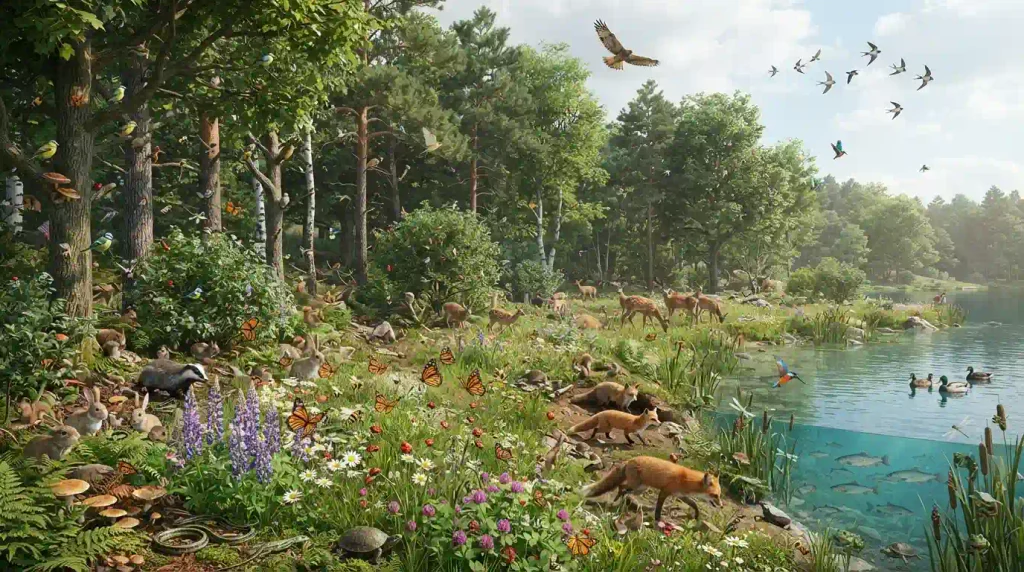
Imagine walking through a dense forest full of rare birds, towering trees, and hidden insects. Learning the right synonym for biodiversity allows you to capture that rich environment effortlessly in your writing.
Using a varied synonym for biodiversity enriches your vocabulary and elevates your essays, articles, and daily speeches.
As a result, these expressive choices empower students, bloggers, content writers, and everyday English users to communicate environmental topics effectively without repeating complex scientific jargon. Furthermore, expanding your word choices makes your prose far more engaging for modern readers.
What Does “Biodiversity” Really Mean?
“Biodiversity” refers to the entire variety of life found on Earth or within a specific natural habitat. Native speakers and environmental scientists use it when discussing ecological balance, wildlife conservation, and natural habitats. Therefore, you will hear it frequently in science news, documentaries, and academic papers.
- Part of Speech: Noun
- Definition: The variety of plant and animal life in the world or in a particular habitat, a high level of which is usually considered to be important and desirable.
Connotative Meaning
(Connotation refers to the emotional association or implied feeling that a word carries beyond its literal definition.)
- Positive tone: Represents ecological health, environmental richness, natural beauty, and environmental resilience.
- Negative tone: Used in warnings about habitat destruction, species loss, or environmental collapse.
- Neutral tone: Identifies scientific measurements, biological surveys, or ecosystem classifications without emotional bias.
Etymology
The term “biodiversity” is a modern contraction formed by combining the Greek prefix bio- (meaning life) with the Latin-derived word diversity.
- Old English (450–1100): Not present in the language; speakers described nature using terms like cynd (nature) or deor (wild animals).
- Middle English (1100–1500): Absent; medieval scholars used broad phrases referring to God’s creation or living creatures.
- Modern English (1500–Present): Coined in 1985 by biologist Walter G. Rosen during the planning of the National Forum on Biodiversity, quickly becoming a standard scientific term.
Syllables
- bi-o-di-ver-si-ty (5 syllables)
Affixation Pattern
- Root: Diversity (from Latin diversitas, meaning variety)
- Prefix: Bio- (Greek origin, meaning life)
- Suffix: -ity (Latin origin, forming abstract nouns of state or quality)

Synonyms List
Ecosystem Variety (Noun)
Meaning: The range of different habitats and ecological processes existing within a region.
Tone/Register: Academic, Formal, Scientific.
Examples:
The national park is famous for its incredible ecosystem variety.
Protecting ecosystem variety helps coastal communities withstand severe weather events.
Wildlife Variety (Noun)
Meaning: The diverse range of wild animals and plants residing within an area.
Tone/Register: Casual, Informative, Everyday.
Examples:
The island boasts an extraordinary wildlife variety that attracts tourists.
Local farmers work hard to preserve the native wildlife variety around their fields.
Biological Diversity (Noun)
Meaning: The full scientific spectrum of life forms, genetic variations, and natural habitats.
Tone/Register: Formal, Technical, Scholarly.
Examples:
Scientists measured the biological diversity of the coral reef.
International treaties aim to protect global biological diversity from industrial pollution.
Ecological Richness (Noun)
Meaning: The abundance and prosperity of living species within an environment.
Tone/Register: Descriptive, Literary, Environmental.
Examples:
The Amazon rainforest is famous for its unmatched ecological richness.
Conservationists celebrated the restored wetland project’s ecological richness.
Species Diversity (Noun)
Meaning: The total number and relative abundance of different species in a community.
Tone/Register: Scientific, Precise, Professional.
Examples:
High species diversity makes a forest much more resilient to diseases.
Researchers documented the impressive species diversity of native insects.
Natural Variety (Noun)
Meaning: The inherent multi-faceted assortment of living things found in nature.
Tone/Register: General, Clear, Conversational.
Examples:
We should always appreciate the natural variety of plants in our local parks.
Pollinators thrive when gardens offer a wide natural variety of wildflowers.
Environmental Plurality (Noun)
Meaning: The presence of multiple coexisting ecological forms and habitats.
Tone/Register: High-formal, Academic, Policy-oriented.
Examples:
Urban planners must consider environmental plurality during city expansion projects.
The conference focused on preserving environmental plurality across mountain regions.
Bio-Assortment (Noun)
Meaning: A broad collection or mixture of different living organisms.
Tone/Register: Descriptive, Modern, Semi-formal.
Examples:
The botanical garden features a stunning bio-assortment of tropical vegetation.
Exploring the tide pools revealed a fascinating bio-assortment of sea creatures.
Nature’s Spectrum (Noun)
Meaning: The wide, continuous range of life forms created by natural evolution.
Tone/Register: Poetic, Inspiring, Literary.
Examples:
Documentary filmmakers captured nature’s spectrum across the vast savanna.
Protecting nature’s spectrum ensures future generations inherit a healthy planet.
Ecological Multiplicity (Noun)
Meaning: The state of having numerous varied ecological components within one system.
Tone/Register: Technical, Scholarly, Formal.
Examples:
Ecological multiplicity prevents single pests from destroying entire forest systems.
The paper highlights ecological multiplicity as a pillar of planetary stability.
Flora and Fauna Variety (Noun)
Meaning: The combined assortment of plant life (flora) and animal life (fauna).
Tone/Register: Standard, Educational, Descriptive.
Examples:
The reserve protects an incredible variety of flora and fauna native to the hills.
Tourists love exploring the rich flora and fauna on the nature trail.
Living Multiplicity (Noun)
Meaning: The condition of encompassing countless varied living organisms.
Tone/Register: Literary, Conceptual, Philosophical.
Examples:
Philosophers often marvel at the living multiplicity found in microscopic soil.
The preserve celebrates the living multiplicity of life in freshwater streams.
Biospheric Wealth (Noun)
Meaning: The immense ecological value and richness of Earth’s living systems.
Tone/Register: Formal, Economic-environmental, Dramatic.
Examples:
Industrial expansion should never destroy our shared biospheric wealth.
Investing in forest protection safeguards our planetary biospheric wealth.
Genetic Diversity (Noun)
Meaning: The variety of genetic characteristics present within a single species population.
Tone/Register: Scientific, Medical, Technical.
Examples:
Low genetic diversity makes endangered species far more vulnerable to disease.
Seed banks help preserve the genetic diversity of traditional crops.
Ecosystem Heterogeneity (Noun)
Meaning: The structural non-uniformity and variation of habitats across a landscape.
Tone/Register: Highly Technical, Scientific, Specialist.
Examples:
Landscape architects design parks to enhance ecosystem heterogeneity.
The study proves that ecosystem heterogeneity supports diverse insect communities.
Life Assortment (Noun)
Meaning: An informal grouping or combination of different living organisms.
Tone/Register: Casual, Simple, Descriptive.
Examples:
The pond hosts a surprising life assortment of frogs, fish, and lilies.
Kids love observing the busy life assortment beneath decaying forest logs.
Ecological Variation (Noun)
Meaning: The measurable differences and shifts across various biological ecosystems.
Tone/Register: Academic, Analytical, Objective.
Examples:
Climate shifts cause significant ecological variation across alpine regions.
Researchers tracked seasonal ecological variation in the marshland reserve.
Biotic Diversity (Noun)
Meaning: The total variation among all living entities within a biological community.
Tone/Register: Technical, Environmental, Scholarly.
Examples:
Pollution severely threatens the biotic diversity of river ecosystems worldwide.
Maintaining biotic diversity is essential for sustainable agricultural practices.
Habitat Variety (Noun)
Meaning: The range of different physical environments available for wildlife.
Tone/Register: Direct, Educational, Clear.
Examples:
The sanctuary offers habitat variety ranging from wetlands to dry forests.
Migratory birds depend heavily on habitat variety along their flight paths.
Environmental Array (Noun)
Meaning: An impressive, orderly display of varied environmental life forms.
Tone/Register: Professional, Formal, Descriptive.
Examples:
The continent exhibits an astonishing environmental array of wild creatures.
Protected marine zones safeguard a rich environmental array of sea life.
Nature’s Plurality (Noun)
Meaning: The natural state of existing as countless diverse living entities.
Tone/Register: Literary, Reflective, Formal.
Examples:
The book celebrates nature’s plurality across isolated oceanic islands.
Writers often draw inspiration from nature’s plurality during quiet walks.
Bio-Abundance (Noun)
Meaning: A plentiful, rich supply of varied living organisms in one space.
Tone/Register: Positive, Energetic, Environmental.
Examples:
Organic farms frequently boast greater bio-abundance than commercial fields.
The ocean sanctuary overflowed with visible bio-abundance after ten years.
Ecological Divergence (Noun)
Meaning: The evolutionary branching of species into distinct ecological forms.
Tone/Register: Scientific, Evolutionary, Technical.
Examples:
Island isolation often accelerates rapid ecological divergence among finches.
The museum exhibit illustrates ecological divergence over millions of years.
Natural Complex (Noun)
Meaning: An interconnected system comprising varied natural organisms and habitats.
Tone/Register: Professional, System-level, Objective.
Examples:
Engineers mapped the natural complex before designing the eco-friendly bridge.
The river basin acts as a vital natural complex for surrounding wildlife.
Life Diversity (Noun)
Meaning: The general assortment and variety of living organisms overall.
Tone/Register: Simple, Accessible, Direct.
Examples:
Protecting global life diversity requires global cooperation and strong laws.
Teachers use simple garden tours to explain basic life diversity to kids.
Organic Variety (Noun)
Meaning: The natural presence of varied living species within an ecosystem.
Tone/Register: Informative, Clear, Natural.
Examples:
The valley displays an impressive organic variety of wild flowers and bushes.
Preserving organic variety keeps local soil fertile for future harvests.
Biological Spectrum (Noun)
Meaning: The complete range of biological forms existing in a given zone.
Tone/Register: Scientific, Academic, Descriptive.
Examples:
Researchers mapped the biological spectrum across the ancient forest floor.
Climate shifts directly impact the delicate biological spectrum of alpine zones.
Natural Richness (Noun)
Meaning: An abundance of living creatures, plants, and natural resources.
Tone/Register: General, Warm, Conversational.
Examples:
Visitors admire the natural richness of the protected ocean bay.
Sustainable logging helps preserve the natural richness of wood ecosystems.
Wildlife Range (Noun)
Meaning: The full extent of different animal species living in an area.
Tone/Register: Casual, Informative, Accessible.
Examples:
The safari park preserves a huge wildlife range for visitors to observe.
Constructing highways can disrupt the natural wildlife range in the mountains.
Species Spectrum (Noun)
Meaning: The entire spread or continuum of species present in a habitat.
Tone/Register: Professional, Analytical, Scientific.
Examples:
The survey detailed the full species spectrum found near the freshwater river.
Understanding the species spectrum helps conservationists build better reserves.
Environmental Wealth (Noun)
Meaning: The rich natural resources and living organisms in a region.
Tone/Register: Formal, Economic-environmental, Direct.
Examples:
The country protects its environmental wealth through strict forestry regulations.
Eco-tourism flourishes when regions invest in protecting environmental wealth.

Habitat Plurality (Noun)
Meaning: The coexistence of multiple distinct habitat types in one geography.
Tone/Register: Technical, Policy-oriented, Academic.
Examples:
Coastlines with high habitat plurality support both land and sea creatures.
The paper outlines how habitat plurality protects species from severe climate shocks.
Ecological Multi-Formity (Noun)
Meaning: The state of manifesting diverse ecological structures and traits.
Tone/Register: Specialist, Academic, Scholarly.
Examples:
The wetlands showcase impressive ecological multi-formity across seasons.
Scientists study ecological multi-formity to understand forest adaptation.
Biological Array (Noun)
Meaning: An organized or natural arrangement of diverse living organisms.
Tone/Register: Descriptive, Professional, Formal.
Examples:
The coral reef presents a colorful biological array of fish and organisms.
Biologists cataloged the complete biological array present in the soil samples.
Living Spectrum (Noun)
Meaning: The vast array of life forms spanning across ecosystems.
Tone/Register: Inspiring, Literary, Universal.
Examples:
Every organism plays a vital role across the whole living spectrum.
Documentaries help people appreciate the living spectrum of our planet.
Biotic Array (Noun)
Meaning: A grouped range of living organisms within an ecological unit.
Tone/Register: Technical, Scientific, Precise.
Examples:
The estuary contains a unique biotic array adapted to salty water.
Pollution alters the biotic array of river systems over time.
Nature’s Variance (Noun)
Meaning: The natural tendency of life forms to differ and evolve.
Tone/Register: Literary, Scientific, Reflective.
Examples:
Genetics explains nature’s variance across different animal populations.
Observing nature’s variance helps scientists track evolutionary trends.
Environmental Multiplicity (Noun)
Meaning: The existence of manifold environmental traits and systems.
Tone/Register: Formal, Policy-focused, Scholarly.
Examples:
Conservation policies must respect the environmental multiplicity of coastal lands.
Urban planning benefits from preserving environmental multiplicity in green zones.
Species Range (Noun)
Meaning: The geographic or ecological extent of varied species populations.
Tone/Register: Scientific, Objective, Direct.
Examples:
The national park protects the full species range of native songbirds.
Global warming is causing a shift in the species range of Arctic mammals.
Natural Assortment (Noun)
Meaning: A natural collection of varied plants and animals in one region.
Tone/Register: Simple, Friendly, Conversational.
Examples:
The forest trail features a natural assortment of mosses, ferns, and trees.
Kids enjoyed identifying the natural assortment of bugs in the garden.
Ecosystem Multiplicity (Noun)
Meaning: The presence of various interlinked ecosystems in one biome.
Tone/Register: High-formal, Academic, Scientific.
Examples:
The delta region relies on ecosystem multiplicity to absorb floodwaters.
Researchers noted that ecosystem multiplicity enhances overall regional health.
Flora-Fauna Range (Noun)
Meaning: The full diversity of plant and animal species in an environment.
Tone/Register: Educational, Standard, Descriptive.
Examples:
The reserve maintains an extensive flora-fauna range across its hills.
Travelers visit the island to photograph its unique flora-fauna range.
Biological Variation (Noun)
Meaning: The natural differences observed among biological organisms.
Tone/Register: Scientific, Objective, Analytical.
Examples:
Studying biological variation provides insights into species survival strategies.
The lab tracks biological variation in crops exposed to dry conditions.
Living Richness (Noun)
Meaning: An abundance and vibrant variety of life forms.
Tone/Register: Expressive, Warm, General.
Examples:
Rainforests exhibit a breathtaking living richness that captivates explorers.
Protecting oceans ensures that future generations enjoy this living richness.
Bio-Divergence (Noun)
Meaning: The process of biological forms splitting into varied types.
Tone/Register: Technical, Evolutionary, Scholarly.
Examples:
Islands are famous hotspots for rapid bio-divergence among bird species.
The evolutionary study focuses on bio-divergence in cave organisms.
Organic Plurality (Noun)
Meaning: The multi-layered presence of organic life forms in nature.
Tone/Register: Literary, Academic, Philosophical.
Examples:
Deep-sea vents harbor an unexpected organic plurality despite extreme heat.
Scholars write about organic plurality as evidence of life’s resilience.
Wildlife Spectrum (Noun)
Meaning: The broad range of animal species coexisting in a habitat.
Tone/Register: Casual, Descriptive, Informative.
Examples:
The sanctuary protects a wide wildlife spectrum from poaching threats.
Photographers capture the vibrant wildlife spectrum along the riverbanks.
Ecological Multi-Variety (Noun)
Meaning: A comprehensive state of having manifold ecological variations.
Tone/Register: Formal, Specialist, Descriptive.
Examples:
The nature park thrives due to its rich ecological multi-variety.
Conservation plans preserve the ecological multi-variety of marshlands.

Nature’s Multiplicity (Noun)
Meaning: The infinite variety and complex forms present in nature.
Tone/Register: Poetic, Reflective, Inspiring.
Examples:
Poets often find peace in nature’s multiplicity during quiet walks.
Understanding nature’s multiplicity inspires better environmental care.
Habitat Heterogeneity (Noun)
Meaning: The structural diversity and variation within natural habitats.
Tone/Register: Highly Technical, Scientific, Specialist.
Examples:
Habitat heterogeneity allows different bird species to nest together without conflict.
Increasing habitat heterogeneity in urban parks boosts native insect populations.
Biotic Spectrum (Noun)
Meaning: The complete range of living components within a biological system.
Tone/Register: Scientific, Technical, Professional.
Examples:
The team evaluated the entire biotic spectrum of the wetland ecosystem.
Disrupting one part of the biotic spectrum affects the whole environment.
Natural Multiplicity (Noun)
Meaning: The diverse and manifold nature of living organisms and systems.
Tone/Register: Literary, Standard, Clear.
Examples:
The island displays natural multiplicity through its varied landscapes.
Teachers explain natural multiplicity using simple outdoor observations.
Organic Assortment (Noun)
Meaning: A varied mixture of natural, living components in an area.
Tone/Register: Informal, Descriptive, Conversational.
Examples:
The garden bed supports a rich organic assortment of beneficial insects.
A healthy compost pile contains a diverse organic assortment of microbes.
Ecological Array (Noun)
Meaning: An expansive, structured range of ecological forms and habitats.
Tone/Register: Formal, Professional, Descriptive.
Examples:
The valley boasts an impressive ecological array ranging from meadows to pine forests.
Protecting this ecological array requires cooperation between local communities.
Environmental Spectrum (Noun)
Meaning: The full span of natural conditions, habitats, and living forms.
Tone/Register: Analytical, General, Academic.
Examples:
The research covers the full environmental spectrum of coastal ecosystems.
Changes along the environmental spectrum indicate shifting global climate patterns.
Synonyms by Tone
Positive Tone
- Ecological Richness: Emphasizes prosperity, natural beauty, and environmental health.
- Biospheric Wealth: Highlights the great value and richness of natural ecosystems.
- Bio-Abundance: Connotes energy, overflowing life, and thriving habitats.
Neutral Tone
- Biological Diversity: Provides an objective, scientific baseline without emotional spin.
- Species Diversity: Focuses strictly on statistical measurements of species count.
- Ecological Variation: Describes natural shifts and differences in purely analytical terms.
Negative Tone
- (Note: While synonyms for biodiversity are inherently neutral or positive, context can lend negative undertones.)
- Genetic Bottleneck (Related contrast): Used when discussing severe loss in genetic variation.
- Ecosystem Homogeneity (Opposite context): Used when natural variety declines into monotonous landscapes.
Playful / Informal Tone
- Life Assortment: A friendly, casual phrase suitable for everyday chat or kids’ education.
- Wildlife Variety: Easy-going, conversational expression common in casual travel talk.
Why Tone Matters in Word Choice: Selecting the correct tone prevents social or professional misunderstandings. For instance, using “life assortment” in an academic research proposal might sound overly casual, whereas “biological diversity” or “species diversity” fits professional standards seamlessly.
Mini Comparison
Biodiversity vs. Close Alternatives
| Word | Specific Focus | Typical Tone | Best Usage Scenario |
|---|---|---|---|
| Biodiversity | Overall variety of life, habitats, and genes combined | Scientific / General | Policy papers, environmental articles, broad discussions. |
| Biological Diversity | Formal scientific spectrum of organisms and ecosystems | Academic / Formal | Research papers, international conservation treaties. |
| Species Diversity | Specific numerical count and balance of species | Technical / Precise | Statistical ecological studies, field surveys. |
Context-Based Usage
Daily Conversation
In casual chats, native speakers prefer clear, simple phrases over dense academic jargon. Consequently, instead of heavy scientific terminology, people naturally use phrases like wildlife variety or natural variety when discussing local parks, backyard gardens, or outdoor vacation trips.
Writing and Blogging
Digital content creators use engaging terms to inspire readers. Therefore, phrases like ecological richness, nature’s spectrum, and biospheric wealth make travel blogs, conservation posts, and educational articles far more vivid and memorable.
Professional and Academic Tone
In academic dissertations, environmental policy briefs, and scientific journals, precise terminology is mandatory. As a result, experts consistently select terms like biological diversity, species diversity, or ecosystem heterogeneity to maintain high credibility.
Creative Writing
Authors select evocative vocabulary to build rich, immersive settings. Furthermore, incorporating terms like living multiplicity, nature’s plurality, or bio-abundance adds deep poetic atmosphere to descriptive fiction and environmental essays.

Common Mistakes & Native Usage
Common Mistakes Learners Make
- Overusing Technical Terms in Casual Chat: Avoid saying “ecosystem heterogeneity” when simply chatting about a pretty forest; use “natural variety” instead.
- Confusing “Species Diversity” with “Biodiversity”: Remember that “species diversity” only counts individual species, whereas “biodiversity” also includes genetic variations and whole habitats.
- Using “Bio-Abundance” to Mean Population Count: “Bio-abundance” refers to a plentiful mixture of life forms, not just a large swarm of a single animal.
Register Notes
In casual spoken English, brief descriptive noun phrases sound most natural. However, written formal prose requires complete technical terms like biological diversity or genetic diversity.
For more vocabulary resources, explore our comprehensive guides on environmental writing and terminology.
Real-Life Mini Scenarios
- Workplace: “Our environmental consulting firm evaluated the species diversity of the river basin before construction began.”
- Social Situations: “We loved hiking through the nature reserve because of the amazing wildlife variety visible along the trails.”
- Media & Pop Culture: “The new nature documentary highlights the fragile ecological richness of deep-sea hydrothermal vents.”
- Writing or Storytelling: “Stepping into the ancient woodland, the explorer marvelled at nature’s spectrum thriving under the dense canopy.”
Interactive Practice Quiz
- Which synonym for biodiversity fits best in a formal scientific research paper?
A) Life assortment
B) Biological diversity
C) Wildlife variety
D) Nature’s spectrum - What phrase carries a poetic tone ideal for creative writing?
A) Species diversity
B) Genetic diversity
C) Nature’s spectrum
D) Ecosystem heterogeneity - Which term specifically measures the number and balance of individual species?
A) Species diversity
B) Life assortment
C) Bio-abundance
D) Habitat variety - What choice is most appropriate for a casual chat about a city park?
A) Ecosystem heterogeneity
B) Environmental plurality
C) Wildlife variety
D) Biotic diversity - What prefix in biodiversity comes from Greek and means life?
A) Eco-
B) Bio-
C) Geo-
D) Syn- - Which phrase emphasizes the immense economic or societal value of nature?
A) Biospheric wealth
B) Life assortment
C) Natural variety
D) Species diversity - Which technical term refers to variations in genes within a single species?
A) Habitat variety
B) Genetic diversity
C) Environmental array
D) Nature’s plurality - What term describes non-uniformity across a natural landscape?
A) Bio-abundance
B) Ecosystem heterogeneity
C) Wildlife variety
D) Life diversity - Which option serves as a great, simple synonym for young learners?
A) Natural variety
B) Biotic diversity
C) Ecological divergence
D) Environmental plurality - Which phrase suggests a booming, highly healthy ecosystem?
A) Bio-abundance
B) Ecosystem homogeneity
C) Genetic bottleneck
D) Species decline
Reflection Task: Write one short, real-life sentence describing your local environment, using one new synonym from this guide.
Answer Key: 1-B, 2-C, 3-A, 4-C, 5-B, 6-A, 7-B, 8-B, 9-A, 10-A
Frequently Asked Questions
1. What is the most common formal synonym for biodiversity?
The most common formal synonym for biodiversity is “biological diversity.” It covers the exact same scientific scope while fitting seamlessly into academic journals, legal policy documents, and formal environmental reports.
2. Can I use “wildlife variety” instead of biodiversity in everyday writing?
Yes, “wildlife variety” is an excellent conversational alternative. It communicates the general concept of varied animals and plants without sounding overly technical or academic to casual readers.
3. What is the main difference between biodiversity and species diversity?
Biodiversity is a broad umbrella term that encompasses habitat variety, genetic differences, and species numbers. In contrast, species diversity specifically measures the number and relative abundance of different species within a set area.
4. How does using synonyms for biodiversity improve SEO writing?
Using semantic variations prevents keyword stuffing while signaling topic depth to search engines. Consequently, incorporating diverse terms helps your content rank higher for related long-tail environmental search queries.
5. Which synonym for biodiversity works best in business sustainability reports?
In corporate sustainability reports, professional terms like “ecological richness,” “biospheric wealth,” or “biological diversity” work best because they convey seriousness, environmental responsibility, and scientific accuracy.
Conclusion
Mastering a new synonym for biodiversity expands your ability to articulate complex environmental concepts accurately. Understanding how these vocabulary choices differ helps you pick the perfect tone for every setting.
Using a fresh synonym for biodiversity enriches your writing style and makes your academic essays far more engaging. Therefore, practicing diverse expressions ensures your environmental communication stays sharp and persuasive.
Try incorporating a new synonym for biodiversity into your next essay or email today.

Sawera Rani is the founder and content creator behind VocabularyFinder.com, a platform designed to help learners improve their English vocabulary simply and effectively. With a passion for language learning, Sawera Rani creates easy-to-understand vocabulary guides, word meanings, definitions, and practical examples that make learning new words easier. She aims to provide useful and reliable resources for students, professionals, and English learners who want to improve their communication skills. Through VocabularyFinder.com, she focuses on making vocabulary learning more accessible, engaging, and helpful for everyday use.