
Finding a rich synonym for bit helps you describe small amounts, tiny pieces, and short moments with absolute precision.
Imagine trying to explain a tiny piece of chocolate or a brief moment of quiet without repeating yourself. Learning the right synonym for bit allows you to capture those tiny details effortlessly in your daily writing.
Using a varied synonym for bit enriches your vocabulary and elevates your essays, articles, and daily speeches.
As a result, these expressive choices empower students, bloggers, content writers, and everyday English users to communicate specific amounts clearly without relying on repetitive basic words. Furthermore, expanding your word choices makes your prose far more engaging for modern readers.
What Does “Bit” Really Mean?
“Bit” refers to a small piece, a tiny amount, or a brief unit of time or quantity. Native speakers use it daily when discussing food portions, time durations, or small physical fragments. Therefore, you will hear it frequently in casual chats, literature, and practical instructions.
- Part of Speech: Noun
- Definition: A small piece, amount, or quantity of something.
Connotative Meaning
(Connotation refers to the emotional association or implied feeling that a word carries beyond its literal definition.)
- Positive tone: Represents delicate portions, modest requests, or subtle hints of pleasant qualities.
- Negative tone: Used to describe scrap materials, trivial issues, or minimal remains.
- Neutral tone: Identifies standard measurements, tiny physical parts, or short intervals without emotional bias.
Etymology
The term “bit” comes from the Old English word bita, which originally meant a mouthful or a small piece bitten off.
- Old English (450–1100): Written as bita or bite, directly related to biting and small portions of food.
- Middle English (1100–1500): Evolved into bite or byt, expanding to mean small fragments of any physical material.
- Modern English (1500–Present): Shifted into its current spelling “bit”, broadening to cover abstract amounts, short times, and digital binary digits.
Syllables
- bit (1 syllable)
Affixation Pattern
- Root: Bit (Base Germanic root)
- Prefix: None
- Suffix: None

Synonyms List
Piece (Noun)
Meaning: A distinct part or portion cut, broken, or separated from a whole.
Tone/Register: General, Everyday, Standard.
Examples:
She cut a small piece of cheese for her afternoon snack.
He handed me a piece of paper to write down the address.
Fragment (Noun)
Meaning: A small, broken, or incomplete part of something larger.
Tone/Register: Formal, Descriptive, Scientific.
Examples:
Archaeologists found a tiny fragment of ancient pottery in the soil.
The glass shattered into thousands of sharp fragments on the floor.
Morsel (Noun)
Meaning: A small piece or mouthful of food.
Tone/Register: Literary, Warm, Expressive.
Examples:
The hungry bird pecked at every last morsel of bread on the ground.
She enjoyed every single morsel of the delicious chocolate cake.
Particle (Noun)
Meaning: A minute portion, piece, or amount of matter.
Tone/Register: Technical, Scientific, Precise.
Examples:
Tiny dust particles floated visibly in the bright beam of sunlight.
The laboratory filter traps every microscopic particle in the water.
Speck (Noun)
Meaning: A tiny spot or extremely small patch of color or material.
Tone/Register: Visual, Descriptive, Informal.
Examples:
There was a speck of dirt on his clean white shirt.
We could see a distant speck of light in the dark tunnel.
Shred (Noun)
Meaning: A strip of material cut or torn off from a whole piece.
Tone/Register: Direct, Emphatic, General.
Examples:
She tore the old document into shreds before throwing it away.
There was not a single shred of evidence to support the claim.
Scrap (Noun)
Meaning: A small detached piece of something, often left over from use.
Tone/Register: Casual, Practical, Everyday.
Examples:
He wrote the phone number on a scrap of paper from his pocket.
The dog waited patiently for any leftover scraps from the dinner table.
Smidgen (Noun)
Meaning: A very small amount of something, especially food or drink.
Tone/Register: Playful, Informal, Friendly.
Examples:
Add just a smidgen of salt to bring out the soup’s natural flavor.
Could you step a smidgen to the left so everyone fits in the photo?
Trace (Noun)
Meaning: A very small present quantity of a substance or quality.
Tone/Register: Objective, Analytical, Formal.
Examples:
The chemical test detected a tiny trace of iron in the water sample.
Her voice carried a subtle trace of nervousness during the speech.
Pinch (Noun)
Meaning: An amount of a powder or spice that can be taken between the fingers and thumb.
Tone/Register: Practical, Culinary, Informal.
Examples:
The chef added a pinch of red pepper to spice up the sauce.
A pinch of baking soda helps neutralize the acidic taste.
Touch (Noun)
Meaning: A slight trace or small added amount of a quality or detail.
Tone/Register: Conversational, Descriptive, Gentle.
Examples:
The room needed just a touch of paint to look fresh again.
He greeted his guests with a touch of polite humor.
Hint (Noun)
Meaning: A very small amount or indirect sign of something.
Tone/Register: Subtle, Informal, Suggestive.
Examples:
The morning breeze brought a cool hint of autumn air.
Her cake recipe contains a tiny hint of vanilla extract.
Fraction (Noun)
Meaning: A small or tiny part of a whole amount.
Tone/Register: Academic, Analytical, Clear.
Examples:
The new machine completes the work in a fraction of the time.
Only a fraction of the original forest remains standing today.
Segment (Noun)
Meaning: One of the parts into which something naturally separates or divides.
Tone/Register: Structured, Formal, Technical.
Examples:
She divided the orange into neat individual segments.
The news channel aired a special segment on local conservation efforts.
Slice (Noun)
Meaning: A thin, broad piece cut from a larger object.
Tone/Register: Standard, Everyday, Culinary.
Examples:
He enjoyed a warm slice of fresh apple pie with ice cream.
The carpenter cut a thin slice of wood to balance the table.
Chunk (Noun)
Meaning: A thick, solid piece of something substantial.
Tone/Register: Informal, Heavy, Descriptive.
Examples:
She dropped a large chunk of ice into her water glass.
The project absorbed a huge chunk of our monthly budget.
Portion (Noun)
Meaning: A part of a whole allocated to a person or purpose.
Tone/Register: Standard, Formal, Business.
Examples:
Save a generous portion of dinner for your brother.
A significant portion of profits goes toward community projects.

Section (Noun)
Meaning: Any of the distinct parts into which something is divided.
Tone/Register: Clear, Formal, Organizational.
Examples:
Please read the third section of the user manual carefully.
The garden features a peaceful section dedicated to native herbs.
Snippet (Noun)
Meaning: A small piece or brief extract of information or music.
Tone/Register: Informal, Modern, Media-friendly.
Examples:
I heard a fascinating snippet of news on the radio this morning.
The preview plays a short snippet of the upcoming song release.
Dab (Noun)
Meaning: A small amount of a liquid or soft substance applied gently.
Tone/Register: Casual, Practical, Visual.
Examples:
Apply a small dab of ointment to the minor scratch on your arm.
A quick dab of glue will hold the paper decoration in place.
Drop (Noun)
Meaning: A small quantity of liquid that forms a spherical shape.
Tone/Register: Direct, Standard, Visual.
Examples:
A single drop of rain fell on her forehead as she stepped outside.
Add a drop of lemon juice to enhance the flavor of the tea.
Speckle (Noun)
Meaning: A small spot or patch of color or light.
Tone/Register: Descriptive, Visual, Soft.
Examples:
The robin’s egg is light blue with brown speckles near the top.
Sunlight cast bright speckles through the thick leaves of the tree.
Grain (Noun)
Meaning: A single small, hard particle of a substance like sand or salt.
Tone/Register: Precise, Natural, Technical.
Examples:
There was not a single grain of sand left on the clean floor.
It takes a grain of wisdom to accept constructive feedback gracefully.
Atom (Noun)
Meaning: An extremely small amount or barely perceptible piece.
Tone/Register: Literary, Emphatic, Precise.
Examples:
He showed not an atom of fear during the challenging task.
The statement contained not a single atom of truth.
Iota (Noun)
Meaning: An extremely small amount of something abstract.
Tone/Register: Emphatic, Formal, Legal.
Examples:
The defense attorney argued that there was not an iota of proof.
Her decision did not make an iota of difference to the outcome.
Whit (Noun)
Meaning: The smallest bit or degree of something.
Tone/Register: Archaic, Emphatic, Literary.
Examples:
He did not care a whit about the petty gossip around the office.
The extra effort did not improve the situation one whit.
Tad (Noun)
Meaning: A small amount or a slight degree.
Tone/Register: Informal, Conversational, Friendly.
Examples:
The soup tastes just a tad too salty for my personal liking.
We arrived a tad earlier than expected for the evening meeting.
Skosh (Noun)
Meaning: A tiny bit or a small amount.
Tone/Register: Casual, Slang, Playful.
Examples:
Can you turn down the volume just a skosh, please?
I need a skosh more time to finish reading this paragraph.
Spot (Noun)
Meaning: A small amount of a drink or food offered socially.
Tone/Register: Conversational, Social, Warm.
Examples:
Would you like a spot of tea before we start our discussion?
He took a spot of lunch at the sidewalk café down the street.
Dash (Noun)
Meaning: A small quantity of a liquid or spice added quickly.
Tone/Register: Culinary, Active, Casual.
Examples:
Add a dash of hot sauce to kick the dish.
She splashed a dash of milk into her morning coffee.
Sliver (Noun)
Meaning: A thin, narrow piece cut or split off from a larger mass.
Tone/Register: Precise, Visual, Descriptive.
Examples:
He picked up a tiny sliver of wood that fell from the table.
She ate a small sliver of cake to satisfy her sweet tooth.
Shiver (Noun)
Meaning: A small fragment or splinter produced by shattering.
Tone/Register: Descriptive, Literary, Dramatic.
Examples:
The mirror broke into sharp shivers upon impact with the ground.
Fragments and shivers of glass covered the cold stone floor.
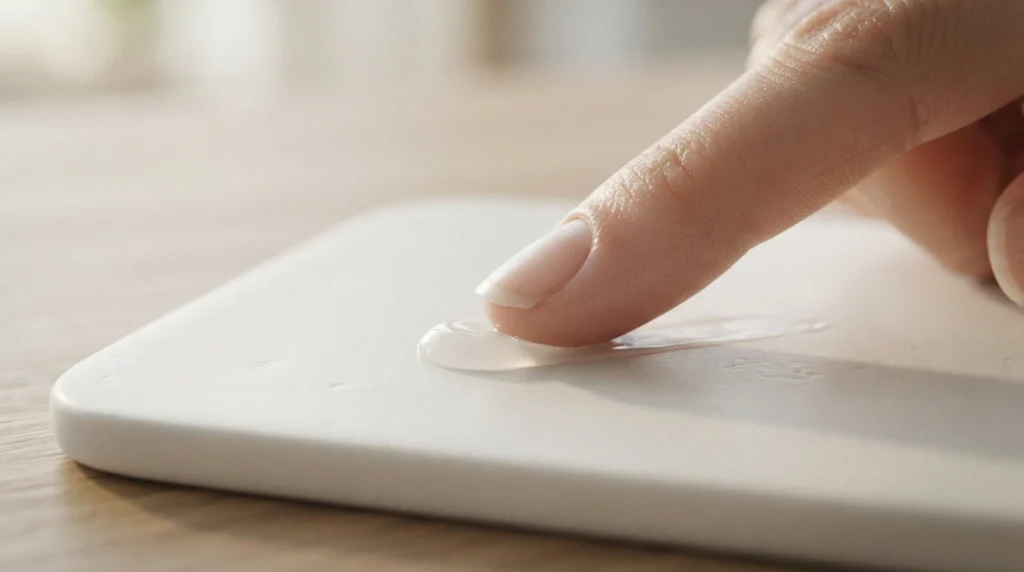
Chip (Noun)
Meaning: A small piece broken off from a hard material.
Tone/Register: Direct, Standard, Practical.
Examples:
A small chip of paint flaked off the wooden window frame.
Be careful not to leave a chip in the ceramic mug.
Flake (Noun)
Meaning: A small, thin, flat piece of something.
Tone/Register: Visual, Natural, Standard.
Examples:
Soft flakes of snow began falling gently from the gray winter sky.
Dry flakes of cereal spilled across the kitchen counter.
Crumb (Noun)
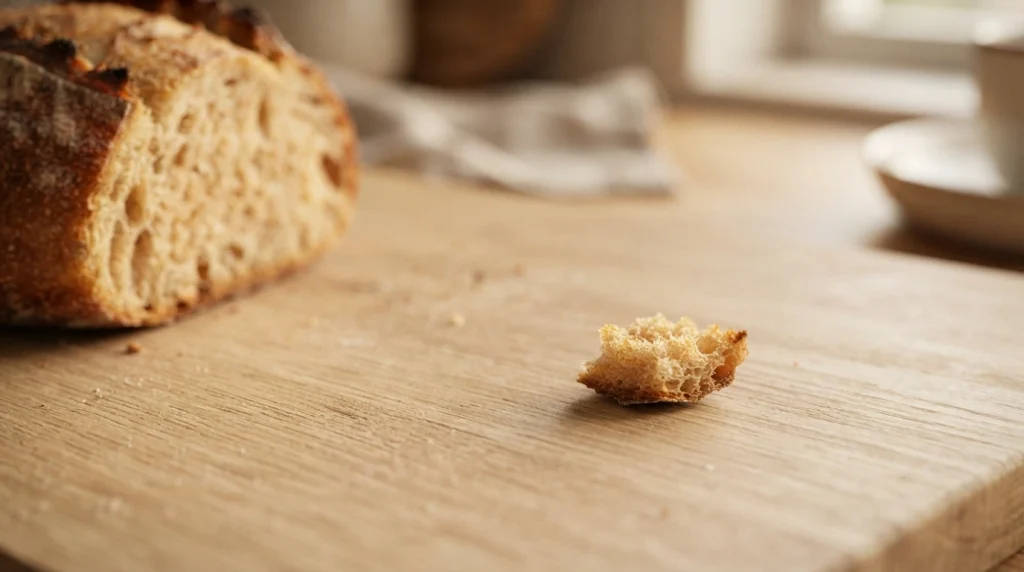
Meaning: A tiny fragment of bread, cake, or biscuit.
Tone/Register: Everyday, Culinary, Casual.
Examples:
He brushed every crumb off the tablecloth after finishing breakfast.
The birds gathered quickly to eat the bread crumbs on the path.
Particle (Abstract) (Noun)
Meaning: A tiny, minute unit or detail within a larger system.
Tone/Register: Academic, Formal, Structural.
Examples:
Every single particle of information must be verified by the team.
The research examines every particle of data collected during trials.
Fraction (Abstract) (Noun)
Meaning: An insignificantly small component of a broader issue.
Tone/Register: Professional, Analytical, Clear.
Examples:
The issue represents only a tiny fraction of our overall concerns.
They solved a fraction of the puzzle before running out of time.
Element (Noun)
Meaning: A distinct small component or part of a complex whole.
Tone/Register: Professional, Analytical, Standard.
Examples:
There is an element of risk in every new business venture.
Her storytelling contains a strong element of mystery and suspense.
Component (Noun)
Meaning: A constituent part or element of a larger system.
Tone/Register: Technical, Business, Formal.
Examples:
Engineers checked every small component before launching the system.
Each component plays a vital role in keeping the machine running.
Detail (Noun)
Meaning: An individual feature, fact, or small item in a larger work.
Tone/Register: Professional, Precise, General.
Examples:
Pay close attention to every small detail when editing the report.
The architect refined every detail of the building blueprint carefully.
Splinter (Noun)
Meaning: A small, sharp, thin piece broken off from wood, glass, or bone.
Tone/Register: Direct, Physical, Descriptive.
Examples:
He pulled a small wooden splinter out of his thumb using tweezers.
The force of the blast sent sharp splinters flying in every direction.
Speck (Abstract) (Noun)
Meaning: A barely noticeable trace or tiny amount of a feeling or idea.
Tone/Register: Literary, Gentle, Expressive.
Examples:
There was not even a speck of doubt left in her mind about the plan.
A speck of hope remained despite the difficult circumstances.
Modicum (Noun)
Meaning: A small quantity of a particular thing, especially something desirable.
Tone/Register: Formal, Academic, Literary.
Examples:
Everyone deserves to be treated with at least a modicum of respect.
He managed to complete the presentation with a modicum of dignity.
Minim (Noun)
Meaning: The smallest or a very small portion or amount of something.
Tone/Register: Archaic, Technical, Rare.
Examples:
The old recipe called for a single minim of medicinal oil.
She carefully added a minim of liquid to the precise mixture.
Ounce (Noun)
Meaning: A tiny amount of a quality, feeling, or abstract idea.
Tone/Register: Emphatic, Conversational, Idiomatic.
Examples:
It takes every single ounce of courage to stand up and speak in public.
He does not possess an ounce of common sense when making quick decisions.
Shred (Abstract) (Noun)
Meaning: A minute amount or tiny remaining piece of an abstract concept.
Tone/Register: Emphatic, Expressive, Serious.
Examples:
The defense attorney stated there was not a shred of truth in the accusation.
She held on tightly to the last shred of her dignity.
Pinch (Abstract) (Noun)
Meaning: A small, sudden hardship or minor feeling of pressure.
Tone/Register: Informal, Idiomatic, Practical.
Examples:
Many local families are feeling the financial pinch this winter.
We felt a minor pinch in time, but we still finished the project.
Drop (Abstract) (Noun)
Meaning: A tiny, isolated piece of help, contribution, or progress.
Tone/Register: Figurative, Reflective, Conversational.
Examples:
Every single donation is a vital drop in the bucket for the charity.
Her small contribution was a drop of kindness in a harsh world.
Grain (Abstract) (Noun)
Meaning: A tiny amount of a psychological state or feeling.
Tone/Register: Figurative, Clear, Expressive.
Examples:
You should take his wild stories with a grain of salt.
There is usually a grain of truth buried in old folklore tales.
Snippet (Abstract) (Noun)
Meaning: A brief, isolated part of a conversation, thought, or idea.
Tone/Register: Casual, Informative, Modern.
Examples:
I overheard a brief snippet of their conversation while walking past.
The article shares a useful snippet of advice for new home buyers.
Synonyms by Tone
Positive Tone
- Touch: Suggests a gentle, pleasant addition that improves something.
- Morsel: Highlights delicious food or a delightful small treat.
- Smidgen: Connotes a friendly, charmingly small quantity.
Neutral Tone
- Piece: Provides a standard, clear baseline without emotional emphasis.
- Fraction: Focuses purely on mathematical or proportional division.
- Segment: Objectively describes structural parts.
Negative Tone
- Fragment: Often implies brokenness, damage, or destruction.
- Scrap: Connotes leftover waste or discarded material.
- Shred: Evokes imagery of tearing, damage, or loss.
Playful / Informal Tone
- Skosh: A fun, casual term used in relaxed everyday chats.
- Tad: A friendly, easygoing word for small degrees or amounts.
Why Tone Matters in Word Choice: Selecting the correct tone prevents social or professional misunderstandings. For instance, using “skosh” in a formal legal document sounds overly casual, whereas “iota” or “trace” fits professional standards seamlessly.
Mini Comparison
Bit vs. Close Alternatives
| Word | Specific Focus | Typical Tone | Best Usage Scenario |
|---|---|---|---|
| Bit | General small piece, short time, or minor amount | Casual / Universal | Everyday speech, casual writing, instructions. |
| Fragment | Small broken piece from a larger whole | Formal / Scientific | Archaeology reports, structural analysis, damage descriptions. |
| Smidgen | Tiny amount of food, liquid, or movement | Informal / Friendly | Cooking recipes, informal requests, friendly chats. |
Context-Based Usage
Daily Conversation
In casual chats, native speakers prefer simple terms over formal vocabulary. Consequently, people naturally use words like tad, skosh, or scrap when making minor requests or describing everyday items.
Writing and Blogging
Digital content creators use engaging terms to inspire readers. Therefore, words like snippet, morsel, and touch make article previews, recipes, and blog posts far more vivid.
Professional and Academic Tone
In academic papers, legal briefs, and business reports, precise terminology is mandatory. As a result, experts consistently select terms like component, fraction, or iota to maintain high credibility.
Creative Writing
Authors select evocative vocabulary to build rich setting details. Furthermore, incorporating terms like fragment, sliver, or speckle adds deep visual atmosphere to narrative fiction.

Common Mistakes & Native Usage
Common Mistakes Learners Make
- Overusing Technical Terms in Casual Chat: Avoid saying “I need a fraction of sugar” when cooking; use “pinch” or “dash” instead.
- Confusing “Fragment” with “Bit”: Remember that “fragment” usually implies something broken, whereas “bit” can simply mean a small intended piece.
- Using “Iota” for Physical Objects: “Iota” refers strictly to abstract concepts like truth or evidence, not physical things like food.
Register Notes
In casual spoken English, brief descriptive terms sound most natural. However, written formal prose requires complete terms like component or element.
For more vocabulary resources, explore our comprehensive guides on precise writing and terminology.
Real-Life Mini Scenarios
- Workplace: “Our software team reviewed every single component of the code before release.”
- Social Situations: “Could I trouble you for a small spot of tea while we catch up?”
- Media & Pop Culture: “The studio released a short snippet of the movie trailer online today.”
- Writing or Storytelling: “She noticed a tiny sliver of moonlight breaking through the heavy curtains.”
Interactive Practice Quiz
- Which synonym for bit fits best in a formal legal argument?
A) Skosh
B) Iota
C) Tad
D) Smidgen - What word carries a warm culinary tone ideal for recipes?
A) Fragment
B) Pinch
C) Component
D) Segment - Which term specifically implies a broken piece from a whole object?
A) Fragment
B) Touch
C) Hint
D) Spot - What choice is most appropriate for a casual chat with friends?
A) Component
B) Particle
C) Tad
D) Heterogeneity - Which word refers to a brief excerpt of music or news?
A) Snippet
B) Sliver
C) Morsel
D) Grain - Which phrase emphasizes a tiny, light piece of food?
A) Morsel
B) Chunk
C) Portion
D) Section - Which technical term refers to tiny units of matter?
A) Touch
B) Particle
C) Spot
D) Dash - What term describes a very small physical strip torn off something?
A) Shred
B) Iota
C) Atom
D) Element - Which option serves as a casual slang word for a tiny amount?
A) Skosh
B) Fraction
C) Component
D) Trace - Which word suggests a subtle visual patch of light or color?
A) Speckle
B) Chunk
C) Portion
D) Scrap
Reflection Task: Write one short sentence about your day using a new synonym for bit from this guide.
Answer Key: 1-B, 2-B, 3-A, 4-C, 5-A, 6-A, 7-B, 8-A, 9-A, 10-A
Frequently Asked Questions
1. What is the most common formal synonym for bit?
The most common formal synonym for bit when referring to amounts is “portion” or “fraction.” In abstract or logical contexts, terms like “element” or “component” serve as excellent formal choices.
2. Can I use “skosh” in professional writing?
No, “skosh” is a casual slang term suitable only for informal speech or relaxed messaging. In professional documents, opt for precise words like “slight amount” or “trace.”
3. What is the difference between a bit and a fragment?
A bit is any small piece or minor quantity, regardless of how it was formed. A fragment specifically refers to a piece that has been broken, shattered, or detached from a larger whole.
4. Which synonym for bit works best when cooking?
In culinary settings, specific measurement terms like “pinch” for powders, “dash” for liquids, or “morsel” for solid food items work best.
5. How does learning synonyms for bit improve SEO content writing?
Using varied terms prevents keyword over-saturation while signaling semantic depth to search engines. Consequently, incorporating diverse synonyms helps your content cover user intent more effectively.
Conclusion
Mastering a new synonym for bit expands your ability to express small amounts accurately. Consequently, selecting precise words helps you communicate details without repeating basic terms.
Using a fresh synonym for bit enriches your overall writing style immediately. Therefore, choosing the right word ensures your prose stays clear, engaging, and polished.
Try incorporating a modern synonym for bit into your next email or essay today.

Sawera Rani is the founder and content creator behind VocabularyFinder.com, a platform designed to help learners improve their English vocabulary simply and effectively. With a passion for language learning, Sawera Rani creates easy-to-understand vocabulary guides, word meanings, definitions, and practical examples that make learning new words easier. She aims to provide useful and reliable resources for students, professionals, and English learners who want to improve their communication skills. Through VocabularyFinder.com, she focuses on making vocabulary learning more accessible, engaging, and helpful for everyday use.