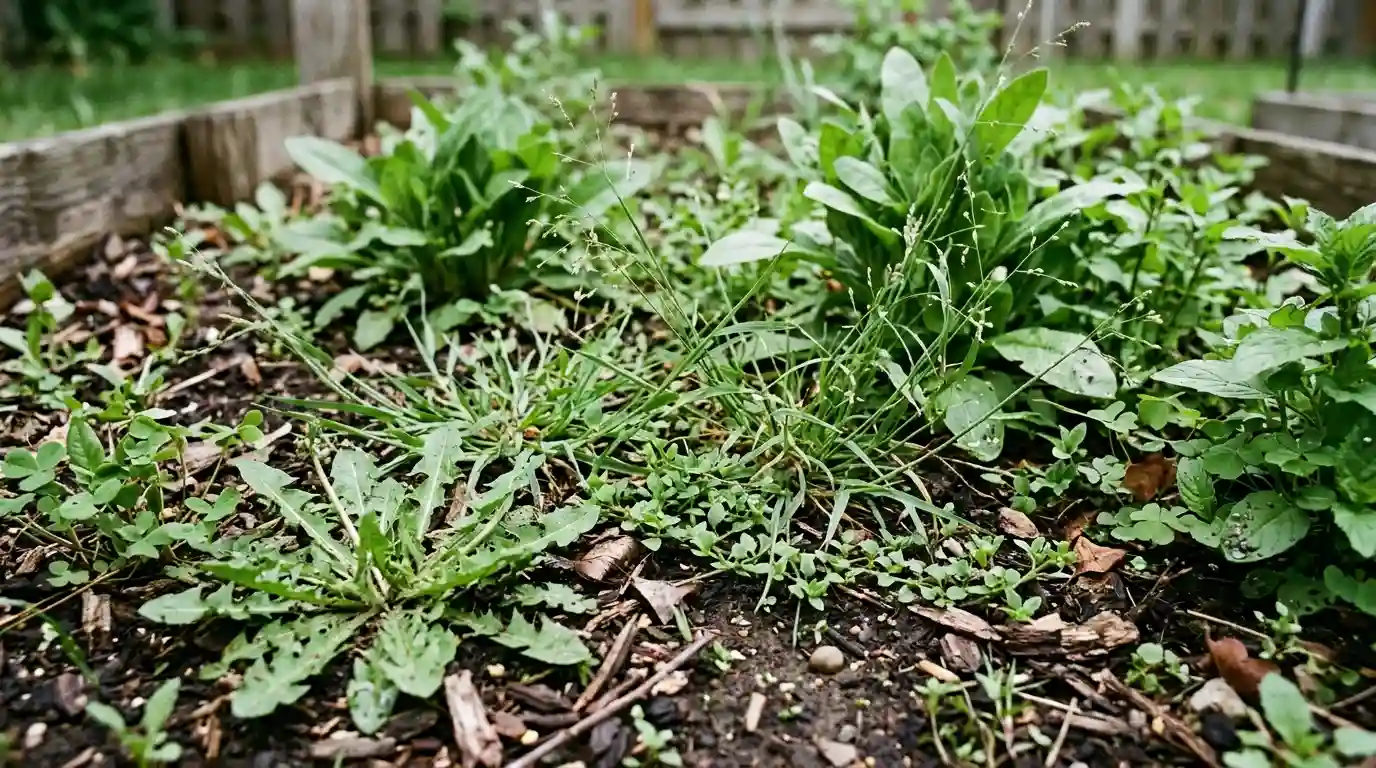
A synonym for weed includes botanical terms like wild plant, wild growth, unwanted flora, invasive plant, tare, or scrub, depending on whether the reference implies garden management, agriculture, or metaphorical removal. Common alternatives range from formal ecological terms like invasive species to casual gardening phrases like scrub.
Synonym for weed help you describe unwanted garden vegetation and invasive plant species without relying on repetitive vocabulary. Imagine spending a bright Saturday morning clearing stubborn dandelions from your vegetable garden bed. Calling those untamed plants unwanted flora or wild growth sounds far more precise than relying on basic terms.
Using a precise synonym for weed refines your writing across botany essays, gardening blogs, and daily conversation. For instance, replacing basic terms with words like tare or invasive species clarifies your exact meaning instantly.
Finding a versatile synonym for weed benefits students, bloggers, SEO content writers, and daily English speakers. Expanding your descriptive vocabulary ensures your writing stays engaging, natural, and expressive across all contexts.
What Does “Weed” Really Mean?
Weed refers to any wild plant growing where it is not wanted, especially one that crowds out cultivated crops or garden flowers. It can also refer to removing unwanted plants from soil.
In English, it functions primarily as a noun (pulling a stubborn weed from the garden) and as a verb (weeding the flower beds).
Part of Speech: Noun / Verb
Definition: A wild plant growing in an unwanted location, or the action of removing unwanted plants from soil.
Connotative Meaning
(Connotation is the emotional feeling or cultural association that a word carries beyond its literal dictionary definition.)
- Positive tone: Associated with wild nature, natural resilience, uninhibited growth, and herbal biodiversity.
- Negative tone: Implies unwanted invasion, disruption of crops, nuisance growth, neglect, and garden destruction.
- Neutral tone: Simply describes wild vegetation, uncultivated plants, or botanical species in environmental studies.
Etymology and Syllables
The word stems from the Old English wēod, which originally meant grass, herb, or general vegetation growing wild in fields.
- Old English (450–1100): Native Germanic root wēod described general herbs, wild grass, or low vegetation.
- Middle English (1100–1500): Evolved into wode or weede, specifically acquiring the negative sense of useless or harmful plants.
- Modern English (1500–Present): Expanded to include garden management verbs (to weed) and modern botanical classifications.
Pronunciation (IPA):
- US: /wiːd/
- UK: /wiːd/
Syllables: weed
- Root: Weed (from Old English wēod, meaning wild herb or grass)
- Prefix: None
- Suffix: None
Comprehensive List of 45 Synonyms
Wild plant (Noun Phrase) — US: /waɪld plænt/ | UK: /waɪld plɑːnt/
Meaning: A plant that grows naturally in the wild without human cultivation or planting.
Tone/Register: Standard, Botanical, Educational
Examples:
She collected wild plant specimens along the mountain trail for her herbarium.
A hardy wild plant broke through the cracks in the old pavement.
Wild growth (Noun Phrase) — US: /waɪld ɡroʊθ/ | UK: /waɪld ɡrəʊθ/
Meaning: Uncultivated vegetation growing freely and densely over an unmanaged area.
Tone/Register: Descriptive, General, Environmental
Examples:
Volunteers cleared the wild growth surrounding the historic stone cottage.
Dense wild growth covered the abandoned railway tracks.
Invasive species (Noun Phrase) — US: /ɪnˈveɪ.sɪv ˈspiː.ʃiːz/ | UK: /ɪnˈveɪ.sɪv ˈspiː.ʃiːz/
Meaning: Non-native plants that spread aggressively and disrupt local ecosystems.
Tone/Register: Scientific, Academic, Environmental
Examples:
Ecologists warn that the invasive species threatens native wetland flowers.
Local laws encourage homeowners to remove invasive species from property borders.
Unwanted flora (Noun Phrase) — US: /ʌnˈwɑːn.t̬ɪd ˈflɔːr.ə/ | UK: /ʌnˈwɒn.tɪd ˈflɔːr.ə/
Meaning: Plant life growing in an undesirable location where it competes with crops.
Tone/Register: Formal, Academic
Examples:
Farmers applied natural remedies to clear unwanted flora from wheat fields.
The botanical garden systematically removed unwanted flora each spring.
Tare (Noun) — US: /ter/ | UK: /teər/
Meaning: A harmful or unwanted weed growing among corn or grain crops.
Tone/Register: Literary, Historical, Biblical
Examples:
Old agricultural texts warned farmers about separating wheat from the nuisance tare.
The field was infested with wild tare after the rainy season.
Scrub (Noun) — US: /skrʌb/ | UK: /skrʌb/
Meaning: Stunted, low-growing vegetation or brush covering poor soil land.
Tone/Register: Descriptive, General, Geography
Examples:
Cattle grazed among sparse patches of dry scrub on the hillside.
Lizards scurried under the low desert scrub to escape afternoon heat.
Brush (Noun) — US: /brʌʃ/ | UK: /brʌʃ/
Meaning: Dense growth of small trees, bushes, and wild woody plants.
Tone/Register: Standard, Everyday, Outdoor
Examples:
Hikers cut a path through thick brush near the riverbank.
Dry brush increases fire risks during hot summer months.
Undergrowth (Noun) — US: /ˈʌn.dɚ.ɡroʊθ/ | UK: /ˈʌn.də.ɡrəʊθ/
Meaning: Dense bushes and wild plants growing under taller forest trees.
Tone/Register: Environmental, Storytelling, Descriptive
Examples:
Deer sheltered beneath the thick undergrowth as rain started falling.
Rangers cleared forest undergrowth to prevent wildfire propagation.
Thistle (Noun) — US: /ˈθɪs.əl/ | UK: /ˈθɪs.əl/
Meaning: A prickly wild plant with purple flower heads considered a troublesome weed.
Tone/Register: Botanical, Specific, Everyday
Examples:
Gloves protected her hands while pulling stubborn thistle from flower beds.
Sharp thistle spikes prevented livestock from grazing in that field section.
Bramble (Noun) — US: /ˈbræm.bəl/ | UK: /ˈbræm.bəl/
Meaning: Any rough, prickly wild shrub, especially wild blackberry bushes.
Tone/Register: Descriptive, Traditional, British English
Examples:
Children picked ripe berries along the edge of the thorny bramble.
A dense bramble formed a natural fence around the old orchard.
Nuisance plant (Noun Phrase) — US: /ˈnuː.səns plænt/ | UK: /ˈnjuː.səns plɑːnt/
Meaning: Any plant species that causes management trouble or ecological damage.
Tone/Register: Official, Agricultural, Policy
Examples:
City ordinances require property owners to remove nuisance plant growth.
The highway department treats nuisance plant species along road margins.
Noxious weed (Noun Phrase) — US: /ˈnɑːk.ʃəs wiːd/ | UK: /ˈnɒk.ʃəs wiːd/
Meaning: A plant designated by law as harmful to agriculture, livestock, or ecosystems.
Tone/Register: Legal, Official, Agricultural
Examples:
Ranchers reported a spreading patch of noxious weed near grazing pastures.
State inspectors monitor farms for prohibited noxious weed varieties.
Wild herb (Noun Phrase) — US: /waɪld ɝːb/ | UK: /waɪld hɜːb/
Meaning: A non-cultivated herbaceous plant growing naturally in fields or woods.
Tone/Register: Natural, Foraging, Herbal
Examples:
Foragers identified edible wild herb species along the forest path.
Grandmother collected wild herb leaves to brew traditional tea.
Wildflower (Noun) — US: /ˈwaɪld.flaʊ.ɚ/ | UK: /ˈwaɪld.flaʊ.ər/
Meaning: A flower growing freely in the wild without deliberate planting by humans.
Tone/Register: Positive, Nature, Descriptive
Examples:
Bright yellow wildflower petals covered the entire valley during spring.
Photographers captured stunning views of mountain wildflower meadows.
Dandelion (Noun) — US: /ˈdæn.də.laɪ.ən/ | UK: /ˈdæn.dɪ.laɪ.ən/
Meaning: A common wild plant with yellow flowers and fluffy seed heads often treated as a weed.
Tone/Register: Specific, Everyday
Examples:
Children blew soft white seeds off dandelion stems into the breeze.
Gardeners pulled every yellow dandelion from the front lawn.
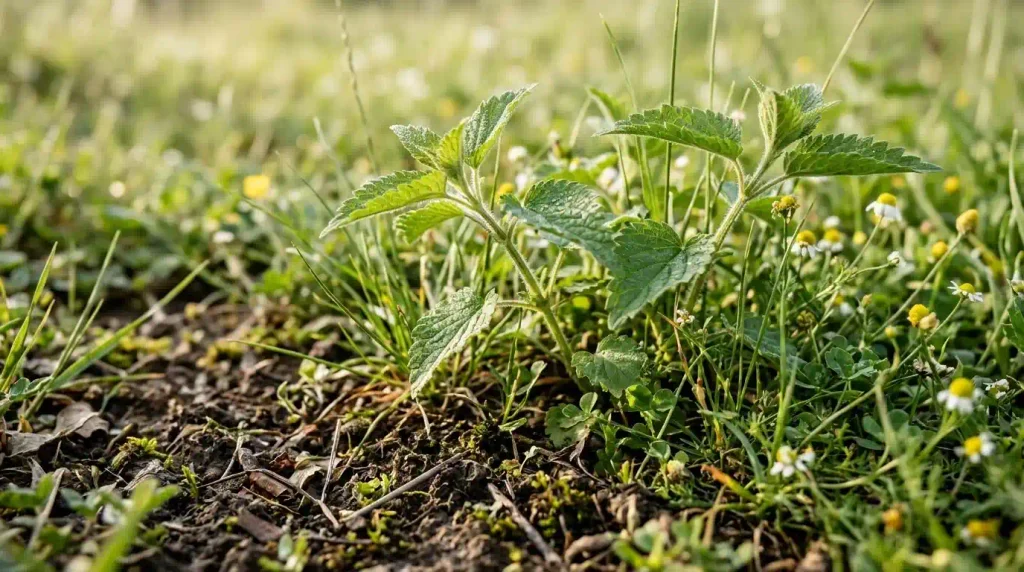
Nettle (Noun) — US: /ˈnet̬.əl/ | UK: /ˈnet.əl/
Meaning: A wild plant covered with stinging hairs that irritate skin upon contact.
Tone/Register: Specific, Outdoor, Descriptive
Examples:
He accidentally brushed against a patch of stinging nettle in the woods.
Nettle tea has been used in traditional herbal medicine for generations.
Couch grass (Noun Phrase) — US: /kaʊtʃ ɡræs/ | UK: /kaʊtʃ ɡrɑːs/
Meaning: A persistent wild grass with creeping underground stems that invade gardens.
Tone/Register: Gardening, British English, Specific
Examples:
Removing creeping couch grass requires digging deep into garden beds.
Couch grass roots spread quickly beneath flower borders.
Crabgrass (Noun) — US: /ˈkræb.ɡræs/ | UK: /ˈkræb.ɡrɑːs/
Meaning: An aggressive wild summer grass that smothers cultivated lawn turf.
Tone/Register: American English, Gardening, Specific
Examples:
He applied lawn treatment early in spring to stop crabgrass germination.
Crabgrass patches spread across the sunny parts of the backyard.
Chickweed (Noun) — US: /ˈtʃɪk.wiːd/ | UK: /ˈtʃɪk.wiːd/
Meaning: A low-growing wild plant with tiny white flowers that spreads rapidly over damp soil.
Tone/Register: Botanical, Gardening
Examples:
Soft green chickweed carpeted the vegetable garden after early rains.
Chickweed roots pull easily from moist garden beds.
Bindweed (Noun) — US: /ˈbaɪnd.wiːd/ | UK: /ˈbaɪnd.wiːd/
Meaning: A climbing wild vine with trumpet flowers that twines tightly around plants.
Tone/Register: Gardening, Agricultural
Examples:
Twisting bindweed strangled the sweet pea vines on the trellis.
Gardeners battle persistent bindweed roots throughout summer months.
Sprout (Noun / Verb) — US: /spraʊt/ | UK: /spraʊt/
Meaning: A newly emerging plant shoot growing from seed or root stock.
Tone/Register: General, Biological
Examples:
Fresh green sprout tips pushed up through garden mulch after watering.
Potato eyes begin to sprout if stored in dark, damp spaces.
Volunteer plant (Noun Phrase) — US: /ˌvɑː.lənˈtɪr plænt/
Meaning: An unsown plant growing spontaneously from self-seeded garden stock.
Tone/Register: Gardening, Friendly, Informative
Examples:
A volunteer tomato plant grew unexpectedly beside the patio step.
Gardeners often keep a healthy volunteer plant if space permits.
Self-sower (Noun) — US: /self ˈsoʊ.ɚ/ | UK: /self ˈsəʊ.ər/
Meaning: A plant that drops seeds naturally to propagate without human aid.
Tone/Register: Horticultural, Academic
Examples:
Poppies act as reliable self-sowing flowers in sunny cottage gardens.
This wild poppy is an aggressive self-sower across rocky gravel.
Stray growth (Noun Phrase) — US: /streɪ ɡroʊth/
Meaning: Random vegetative growth popping up outside intended plant beds.
Tone/Register: Descriptive, General
Examples:
She trimmed stray growth creeping onto the concrete driveway walkway.
Stray growth around tree trunks should be pruned regularly.
Overgrowth (Noun) — US: /ˈoʊ.vɚ.ɡroʊth/ | UK: /ˈəʊ.və.ɡrəʊth/
Meaning: Excessive, untamed vegetative covering taking over an area.
Tone/Register: General, Property, Environmental
Examples:
Landscapers cleared heavy overgrowth hiding the historic garden wall.
The abandoned house was buried beneath thick ivy overgrowth.
Thickers (Noun) — US: /ˈθɪk.ɚz/ | UK: /ˈθɪk.əz/
Meaning: Dense growth of low bushes and thorny vegetation; thickets.
Tone/Register: Regional, Outdoor, Literary
Examples:
Rabbits vanished quickly inside dense blackberry thickets.
A wall of thickets blocked the old forest path.
Thicket (Noun) — US: /ˈθɪk.ɪt/ | UK: /ˈθɪk.ɪt/
Meaning: A dense group of bushes, small trees, or tangled wild plants.
Tone/Register: Standard, Storytelling, Environmental
Examples:
Birds nested safely inside the thorny hawthorn thicket.
They pushed through a thicket of wild roses along the fence.
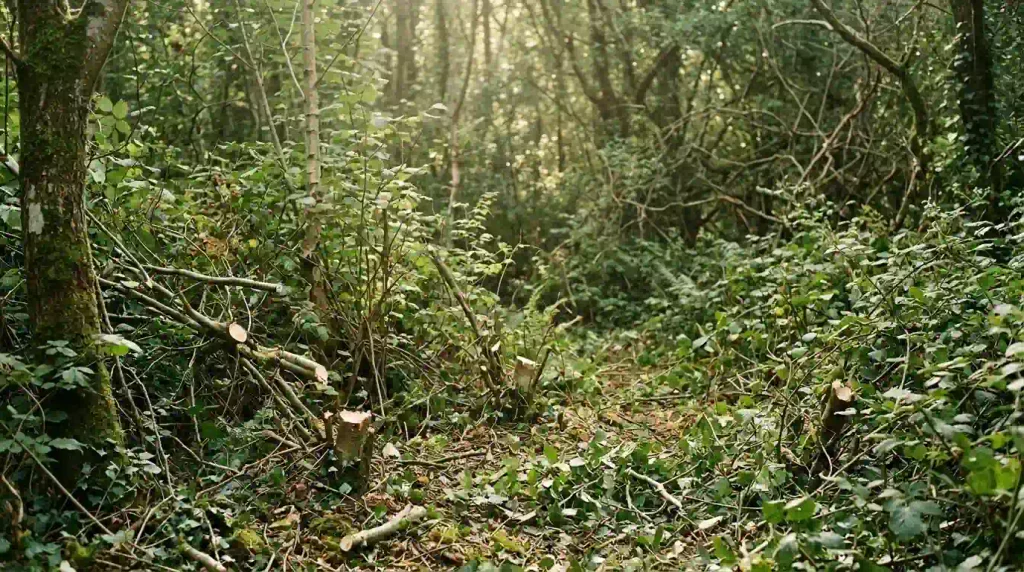
Coppice (Noun / Verb) — US: /ˈkɑː.pɪs/ | UK: /ˈkɒp.ɪs/
Meaning: An area of woodland dense with small trees periodically cut back.
Tone/Register: Forestry, Traditional, British English
Examples:
The forester harvested thin wood poles from the hazel coppice.
Sunlight reached the forest floor in the newly cut coppice.
Briar (Noun) — US: /ˈbraɪ.ɚ/ | UK: /ˈbraɪ.ər/
Meaning: A prickly, scrambled, woody plant or thorny shrub casing.
Tone/Register: Descriptive, Traditional, Literary
Examples:
Sharp briar thorns snagged his sweater as he walked past.
Wild briar roses bloomed along the dirt farm lane.
Offshoot (Noun) — US: /ˈɑːf.ʃuːt/ | UK: /ˈɒf.ʃuːt/
Meaning: A side shoot stemming from a main plant stem or root structure.
Tone/Register: Standard, Biological
Examples:
Prune secondary offshoot stems to encourage larger fruit yield.
A new offshoot sprouted from the base of the fig tree.
Runner (Noun) — US: /ˈrʌn.ɚ/ | UK: /ˈrʌn.ər/
Meaning: A horizontal stem growing along the ground producing root shoots.
Tone/Register: Botanical, Gardening
Examples:
Strawberry plants spread rapidly by sending out long runner stems.
Clip runner shoots to keep strawberry rows neat and organized.
Sucker (Noun) — US: /ˈsʌk.ɚ/ | UK: /ˈsʌk.ər/
Meaning: An unwanted shoot arising from the root or lower stem of a plant.
Tone/Register: Horticultural, Practical
Examples:
Remove every unwanted sucker from the base of fruit trees in spring.
Rose bush sucker growth drains energy from main blooming branches.
Weedling (Noun) — US: /ˈwiːd.lɪŋ/ | UK: /ˈwiːd.lɪŋ/
Meaning: A small, newly sprouted weed seedling emerging in soil.
Tone/Register: Informal, Gardening
Examples:
Tiny weedling sprouts covered the newly seeded vegetable bed.
Early cultivation removes weedling plants before roots take hold.
Greenery (Noun) — US: /ˈɡriː.nɚ.i/ | UK: /ˈɡriː.nər.i/
Meaning: Green foliage or growing plants considered collectively.
Tone/Register: General, Pleasant, Decorative
Examples:
Fresh greenery brightened the indoor living room window sill.
The city park features lush greenery during summer months.
Foliage (Noun) — US: /ˈfoʊ.li.ɪdʒ/ | UK: /ˈfəʊ.li.ɪdʒ/
Meaning: Plant leaves, collective vegetation, or leaf coverage.
Tone/Register: Formal, Visual, Botanical
Examples:
Autumn turned forest foliage into brilliant shades of red and gold.
Dense foliage provided shelter from scorching sun rays.
Vegetation (Noun) — US: /ˌvedʒ.əˈteɪ.ʃən/ | UK: /ˌvedʒ.ɪˈteɪ.ʃən/
Meaning: Plants considered collectively, especially those found in a particular area.
Tone/Register: Academic, Scientific, Environmental
Examples:
Desert vegetation adapts to harsh conditions with deep taproots.
Satellite images mapped changes in tropical rainforest vegetation.
Flora (Noun) — US: /ˈflɔːr.ə/ | UK: /ˈflɔːr.ə/
Meaning: The plant life characteristic of a particular region, period, or environment.
Tone/Register: Academic, Scientific, Formal
Examples:
Botanists cataloged alpine flora across mountain peaks.
Island flora includes several unique endemic plant species.
Herbage (Noun) — US: /ˈɝː.bɪdʒ/ | UK: /ˈhɜː.bɪdʒ/
Meaning: Herbaceous vegetation, especially green pasture grass for livestock.
Tone/Register: Agricultural, Formal
Examples:
Lush green herbage supplied rich nutrition for grazing dairy cows.
Spring rain increased herbage growth across open pastures.
Wilding (Noun) — US: /ˈwaɪl.dɪŋ/ | UK: /ˈwaɪl.dɪŋ/
Meaning: A wild plant or self-sown seedling growing naturally without cultivation.
Tone/Register: Poetic, Literary, Ecological
Examples:
An apple wilding tree grew near the edge of the abandoned meadow.
Rewilding projects allow native wilding plants to reclaim riverbanks.
Weed out (Phrasal Verb) — US: /wiːd aʊt/ | UK: /wiːd aʊt/
Meaning: To remove or eliminate undesirable elements, plants, or candidates.
Tone/Register: Figurative, Standard, Professional
Examples:
Recruiters work to weed out unqualified applicants during preliminary testing.
Editors weed out repetitive sentences to tighten book chapters.
Root out (Phrasal Verb) — US: /ruːt aʊt/ | UK: /ruːt aʊt/
Meaning: To eradicate or destroy completely by digging up from the roots.
Tone/Register: Metaphorical, Firm, General
Examples:
Investigators moved to root out corruption within department ranks.
Gardeners must root out dandelion tubers to stop regrowth.
Extirpate (Verb) — US: /ˈek.stɚ.peɪt/ | UK: /ˈek.stə.peɪt/
Meaning: To destroy or eradicate an invasive plant or species.
Tone/Register: High Academic, Legal, Formal
Examples:
Conservationists worked to extirpate non-native weed growth from reserves.
Efforts to extirpate invasive water hyacinths required aquatic harvesters.
Clear away (Phrasal Verb) — US: /klɪr əˈweɪ/ | UK: /klɪər əˈweɪ/
Meaning: To remove clutter, trash, or overgrown wild vegetation.
Tone/Register: Everyday, General
Examples:
We need to clear away dead leaves and wild shoots before planting.
Work crews clear away roadside brush after winter storms.
Clean out (Phrasal Verb) — US: /kliːn aʊt/ | UK: /kliːn aʊt/
Meaning: To thoroughly remove unwanted items, overgrown plants, or debris.
Tone/Register: Informal, Casual
Examples:
He spent Saturday morning cleaning out overgrown weeds from the greenhouse.
Clean out choked gutters to prevent water backup along roof lines.
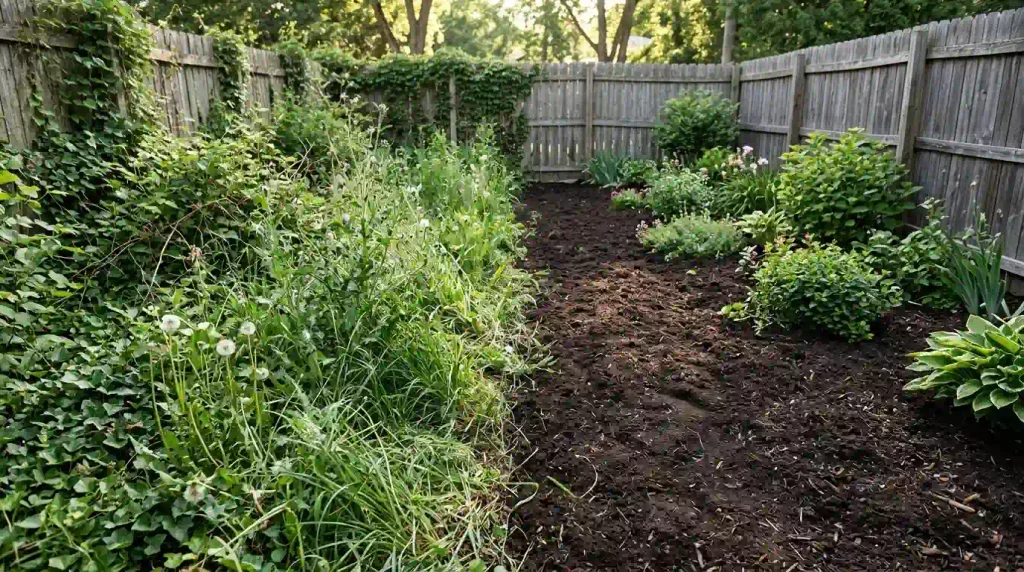
Eradicate (Verb) — US: /ɪˈræd.ə.keɪt/ | UK: /ɪˈræd.ɪ.keɪt/
Meaning: To wipe out or eliminate from a location or system.
Tone/Register: Formal, Environmental, Policy
Examples:
Agricultural programs aim to eradicate harmful invasive weeds.
Early treatment helps eradicate lawn weeds before seeds mature.
Synonyms by Tone
Tone plays a crucial role when selecting botanical and gardening terminology. Choosing standard terms ensures your writing remains clear, authoritative, and engaging. For authoritative background on ecological standards and plant classifications, check resources like Merriam-Webster’s dictionary guidelines.
- Positive / Nature-Focused: Wildflower, Wild herb, Greenery, Foliage, Flora, Volunteer plant.
- Neutral / Scientific: Wild plant, Vegetation, Undergrowth, Herbage, Offshoot, Runner.
- Negative / Invasive: Invasive species, Noxious weed, Nuisance plant, Unwanted flora, Overgrowth, Tare.
- Informal / Practical: Scrub, Brush, Weedling, Stray growth, Weed out, Clean out.
Mini Comparison: “Weed” vs. Close Alternatives
| Term | Meaning Difference | Tone Difference | Best Context |
|---|---|---|---|
| Weed | Any wild plant growing unwanted in cultivated garden beds or fields | Universal, Informal to General | Daily speech, home gardening, general writing |
| Invasive Species | Non-native plant that aggressively disrupts local ecosystems and native species | Scientific, Formal, Environmental | Ecological research, environmental policy, academia |
| Undergrowth | Low-growing bushes and wild plants naturally beneath forest canopies | Descriptive, Storytelling, Environmental | Nature writing, forestry, descriptive fiction |
Context-Based Usage
Daily Conversation
In everyday speech, use terms like wild plant, brush, scrub, stray growth, or clean out. Consequently, these choices keep your spoken English natural, friendly, and accessible.
Writing or Blogging
Bloggers should opt for engaging terms like wild growth, undergrowth, volunteer plant, or overgrowth. Furthermore, these terms build clear mental images for gardening enthusiasts.
Professional or Academic Tone
In formal papers and environmental research, select terms like invasive species, unwanted flora, noxious weed, vegetation, or extirpate. Therefore, these choices maintain scientific authority and precision.
Common Mistakes & Native Usage
- Mistake 1: Calling every wild plant an invasive species. Native wild plants are not invasive unless they threaten ecological balance.
- Mistake 2: Using tare in modern home gardening blogs. Tare is an archaic agricultural term best reserved for historical or biblical contexts.
- Mistake 3: Confusing undergrowth (natural forest foliage) with overgrowth (neglected untamed vegetation).
Real-Life Mini Scenarios
- Workplace: The groundskeeping supervisor instructed staff to remove noxious weed species along public park fences.
- Social Situations: Neighbors gathered to clear wild growth from the community playground corner.
- Media / Pop Culture: Documentaries highlighted how invasive species choke native river vegetation.
- Storytelling: The traveler pushed through thick forest undergrowth to discover a hidden stone path.
Interactive Practice Quiz
Test your understanding of these botanical and descriptive terms with this practical quiz.
- Which formal scientific term best replaces weed in an environmental study?
A) Scrub
B) Invasive species
C) Weedling
D) Brush - A non-cultivated plant that pops up naturally in garden beds without sowing is a:
A) Volunteer plant
B) Tare
C) Undergrowth
D) Coppice - Dense wild bushes growing underneath tall forest trees are called:
A) Undergrowth
B) Herbage
C) Runner
D) Offshoot - Which biblical or archaic term refers to unwanted plants growing among grain?
A) Tare
B) Scrub
C) Brush
D) Foliage - What is the best word for legally regulated harmful agricultural weeds?
A) Noxious weed
B) Wilding
C) Greenery
D) Sprout - Which term carries a positive nature register for attractive wild plants?
A) Wildflower
B) Nuisance plant
C) Overgrowth
D) Tare - What tone does the word extirpate carry in conservation policy?
A) Informal
B) Highly formal and scientific
C) Playful
D) Everyday - Which phrase fits best when describing removing unwanted applicants during hiring?
A) Weed out
B) Brush up
C) Overgrowth
D) Wild herb - Which choice is best for an official botanical journal header?
A) Study on Invasive Species in Local Wetlands
B) Quick Tips for Scrub Removal
C) Clearing Bad Weeds Fast
D) Fixing Nuisance Plants Easily - What part of speech is weed in “she went outside to weed”?
A) Verb
B) Noun
C) Adjective
D) Adverb
Application Task: Write one short sentence describing garden maintenance using either invasive species or wild growth.
Answer Key:
1: B | 2: A | 3: A | 4: A | 5: A | 6: A | 7: B | 8: A | 9: A | 10: A
1. What is the most formal synonym for weed?
The most accepted formal alternatives include invasive species, unwanted flora, noxious weed, vegetation, and wild plant.
2. Can a weed be a beneficial plant?
Yes. Many plants labeled as weeds (such as dandelions or wild clover) provide food for pollinators and possess medicinal or culinary uses.
3. What is the difference between a weed and an invasive species?
A weed is any plant growing where a person does not want it, while an invasive species is a non-native plant scientifically proven to disrupt ecosystems.
4. How does using varied botanical synonyms improve writing?
Using precise terms like volunteer plant, undergrowth, or herbage avoids repetition and fits your exact context.
5. What are good casual alternatives for weed in daily speech?
In daily speech, terms like wild plant, brush, scrub, overgrowth, or stray growth sound natural and accessible.
Conclusion
End the article with a conclusion written in 3-4 separate paragraphs (140-180 characters each). Finding a precise synonym for weed enriches your botanical vocabulary and sharpens your overall communication skills across all settings.
Replacing repetitive words allows you to describe garden care, environmental studies, and natural landscapes clearly and authoritatively.
Mastering a new synonym for weed improves your academic essays, nature blogs, and everyday conversations about plants and ecological preservation.
Start practicing these vocabulary choices in your emails, essays, and garden notes today to make your descriptive writing stand out effortlessly!

Sawera Rani is the founder and content creator behind VocabularyFinder.com, a platform designed to help learners improve their English vocabulary simply and effectively. With a passion for language learning, Sawera Rani creates easy-to-understand vocabulary guides, word meanings, definitions, and practical examples that make learning new words easier. She aims to provide useful and reliable resources for students, professionals, and English learners who want to improve their communication skills. Through VocabularyFinder.com, she focuses on making vocabulary learning more accessible, engaging, and helpful for everyday use.